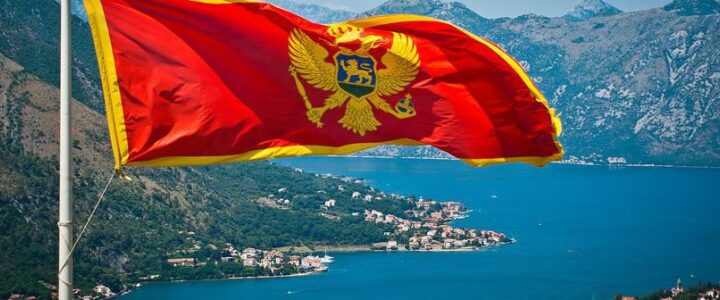
According to “Serbian Economist”, Montenegro expects to join the European Union as a full and equal member and does not agree to a model under which new member states would be granted limited rights, Minister of European Affairs Maida Gorčević stated on September 9.
According to her, Podgorica is prepared to adopt additional safeguards against a potential democratic backslide following EU accession, but does not want to become a “second-class member” with limited voting rights or other temporary restrictions.
Various models for future enlargement are currently being discussed within the European Union, including the possibility of temporarily restricting certain rights of new members regarding the budget, foreign policy, or the exercise of the veto. Gorčević emphasized that Montenegro is prepared to accept the strictest mechanisms for monitoring the rule of law, but considers the equality of members to be a fundamental condition.
At the same time, Podgorica is trying to dispel Brussels’ concerns about possible vetoes in advance. Gorčević stated that Montenegro has no intention of using the veto as a tool for exerting pressure and sees itself rather as part of a group of small and predictable EU members, such as Slovenia, Malta, or the Baltic states.
Montenegro remains the most advanced candidate for EU accession in the Western Balkans. Negotiations have been ongoing since 2012, and all 33 negotiation chapters have been opened. Following the closure in July of the chapters on competition and the customs union, the number of provisionally closed chapters reached 18.
The government expects to close the remaining chapters by the end of 2026 and is aiming for EU accession in 2028. Back in the spring, Gorčević stated that the country’s goal is full membership, rather than an interim or simplified form of integration.
For Ukraine, Podgorica’s position is also of interest as a potential precedent. If Brussels does indeed decide to impose transitional restrictions on new EU members regarding the right of veto or other powers, such a model could potentially be applied to other Western Balkan countries that join later. This model could also be applied to other EU candidate countries.