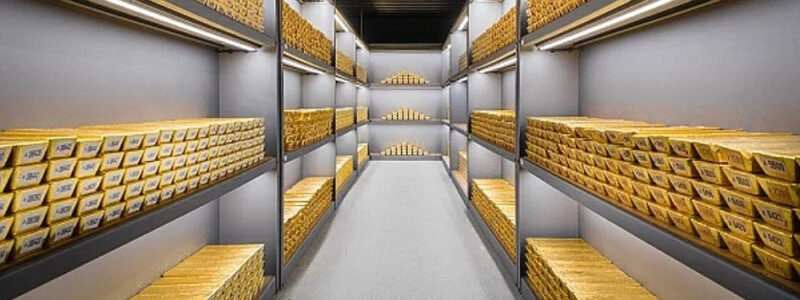
In August 2026, central banks around the world increased their official gold reserves by a total of 39 metric tons in net terms, with the People’s Bank of China emerging as the largest buyer, according to an analysis by Experts Club based on data from the World Gold Council (WGC) published on October 6.
According to the WGC, the main buyers of gold in August were:
China — 20.2 metric tons
Poland — 7.8 metric tons
Uzbekistan — 7.8 metric tons
Kazakhstan — 7.4 metric tons
Turkey — 2.9 metric tons
Czech Republic — 1.7 metric tons
Bolivia—about 1 metric ton
Ghana—about 1 metric ton
China continued to purchase gold for the 22nd consecutive month. In August, the People’s Bank of China increased its gold reserves by approximately 20.2 metric tons—the largest monthly increase since October 2023.
From January through August, China purchased about 80 metric tons of gold. The country’s official gold reserves reached approximately 2,387 metric tons, accounting for about 9% of China’s total international reserves.
Despite China’s lead in August alone, Poland remains the largest buyer of gold since the beginning of 2026. The National Bank of Poland purchased about 7.8 metric tons in August and 98 metric tons since the start of the year. Poland’s gold reserves have grown to approximately 648 metric tons, approaching its stated target of 700 metric tons.
Uzbekistan increased its reserves by approximately 7.8 metric tons. Since the beginning of the year, the country has purchased about 50 metric tons of gold, bringing its total gold reserves to approximately 439 metric tons. Gold accounts for about 90% of Uzbekistan’s reserves.
Kazakhstan purchased about 7.4 metric tons of gold in August, bringing its total purchases since the beginning of the year to approximately 36 metric tons. The country’s gold reserves reached about 377 metric tons, or 79% of its international reserves.
Turkey returned to net purchases after three months of sales, acquiring about 2.9 metric tons. However, since the beginning of 2026, the country has remained a major net seller—the total reduction in reserves amounts to about 82 metric tons, with the bulk of sales occurring in the first quarter.
The Czech National Bank purchased about 1.7 metric tons, thereby extending its streak of net gold purchases to 42 consecutive months. Since the start of the year, the Czech Republic has added about 14 metric tons, increasing its reserves to 86 metric tons.
Overall, from January through August 2026, central banks worldwide reported net purchases of approximately 170 metric tons of gold.
The World Gold Council notes that the composition of the largest buyers remains relatively stable. This indicates that central banks are purchasing gold primarily as part of their long-term reserve management policies, while monthly fluctuations are linked to the timing of program implementation, market conditions, and individual countries’ liquidity needs.
For comparison: in July, central banks worldwide purchased 23 metric tons of gold on a net basis. Thus, in August, the volume of net purchases increased by approximately 70% month-over-month.
Official source: World Gold Council, Central Bank Gold Statistics, published on October 6, 2026.