Following the resignation of Viktor Gorodovenko, a judge of the Constitutional Court of Ukraine (CCU), the Second Senate—which hears constitutional complaints from citizens—has lost its quorum, and the Grand Chamber is also unable to proceed with cases in which challenges to judges have been filed.
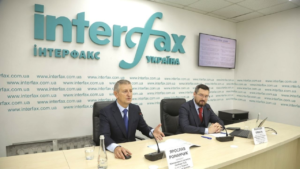
CCU Judge Viktor Gorodovenko spoke about this in an exclusive interview with the “Interfax-Ukraine” news agency on the eve of the end of his nine-year term.
“After my resignation, there will be 12 judges remaining (the minimum number of judges required for the Grand Chamber to function—IF-U). And this will effectively create significant obstacles to the Grand Chamber’s consideration of cases, because there are proceedings in which challenges to judges or self-recusals have been filed,” he noted.
At the same time, he said, there is another serious problem—the work of the Constitutional Court’s senates, which hear constitutional complaints from citizens. “I currently serve on the Second Senate, which consists of six judges. After my retirement, five judges will remain, while the minimum quorum requirement is six. This means that the Second Senate, unfortunately, will be completely unable to carry out its work until new judges are appointed,” Horodovenko explained.
He recalled that a similar situation had already occurred at the Constitutional Court in 2025, when the terms of three judges ended simultaneously, and the Constitutional Court did not function for half a year until new judges were elected.
As the judge clarified, the Constitutional Court operated at full strength—with all 18 judges—only from 2018 through May 2019.
“The issue of the court’s operational capacity is not hypothetical but very real. In early March 2027, Judge Vasyl Lemak’s term will expire, and the question of the Grand Chamber’s operation will arise,” Horodovenko emphasized.
In this context, he expressed hope that the bodies responsible for appointing CCU judges will certainly fulfill their constitutional duty and ensure the continuity of the Court’s work.
When asked how to motivate the appointing authorities to fulfill their constitutional duty, Horodovenko noted: “Believe me, they are strongly motivated by both our foreign partners and our civil society. The Constitutional Court has repeatedly appealed—and continues to appeal—as a vigilant monitor of how state authorities fulfill their functions—to the President, the Verkhovna Rada, and the Congress of Judges—since this is directly linked to our citizens’ ability to exercise their rights.”
Constitutional Court of Ukraine, COURT, Horodovenko, Quorum, UKRAINE

Related: