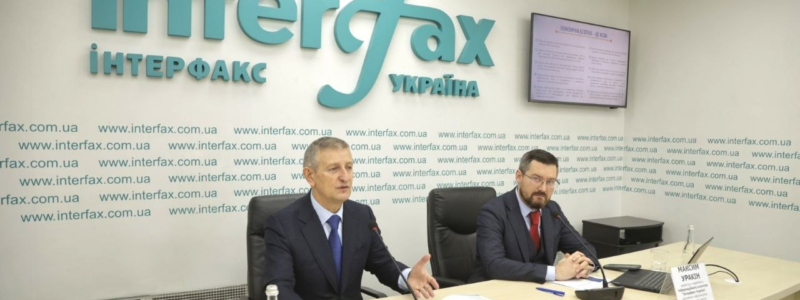
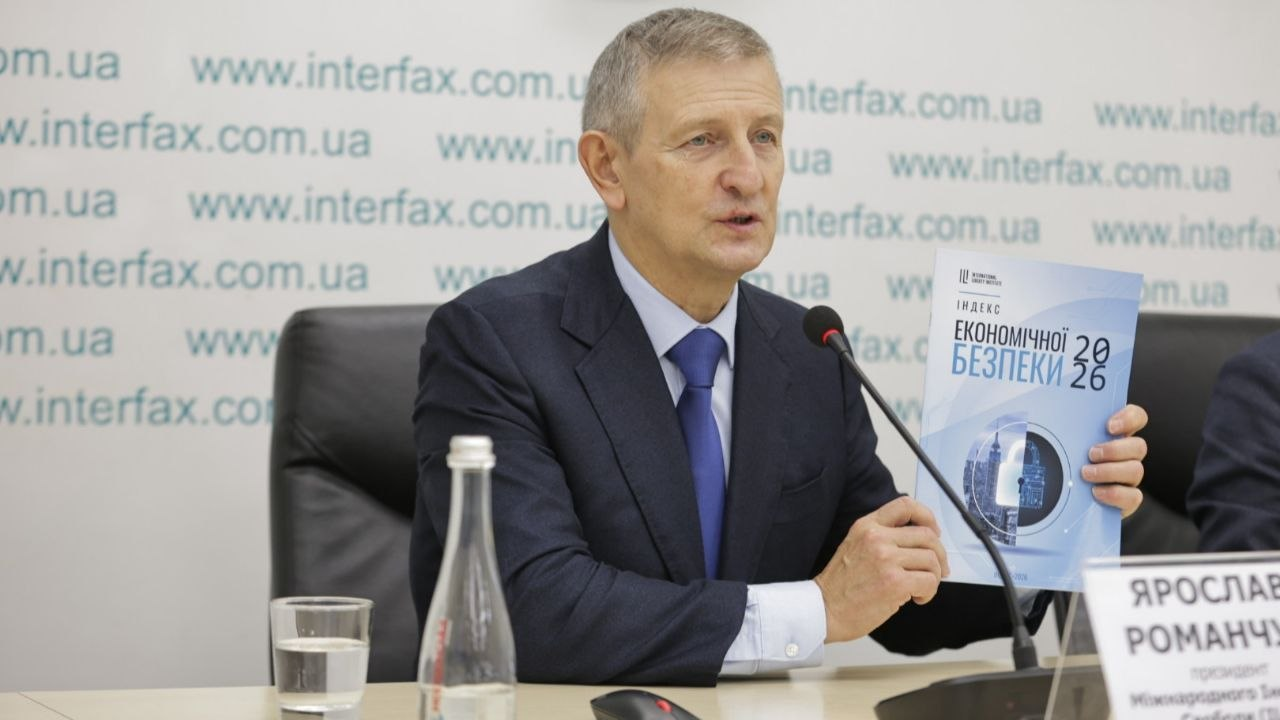
In 2026, Ukraine improved its Economic Security Index (ESI) score by 2.7 points to 36.1 out of a possible 100 points, but remained in last place among the 11 countries surveyed. The greatest threats to the resilience of the Ukrainian economy amid a prolonged war remain the low effectiveness of monetary, financial and fiscal policies, excessive government regulation, restrictions on capital movements and insufficient use of the private sector’s potential, believes Yaroslav Romanchuk, president of the International Liberty Institute (ILI) and author of the Economic Security Index.
“This is our most important flagship index. It is a scientific and analytical tool designed to contribute to the resilience and capacity of our economy,” he said at a press conference at the Interfax-Ukraine news agency on Thursday.
According to the economist, the study should become a tool for assessing the effectiveness of public administration bodies, determining economic policy priorities amid the war, and creating the prerequisites for post-war recovery and attracting investment, technology and human capital.
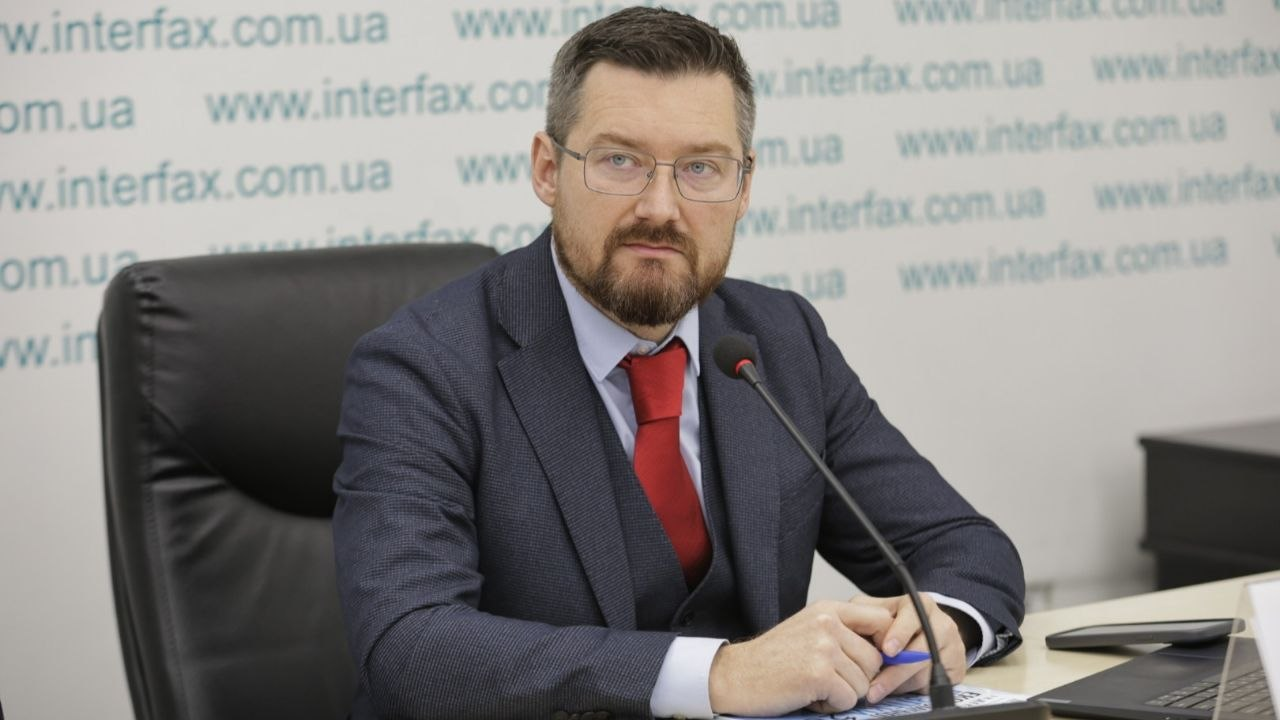
The moderator of the press conference, marketing director of the Interfax-Ukraine news agency and founder of the Experts Club information and analytical center, Maksym Urakin, in turn, noted that this year’s study covers 26 economic insecurity factors and 64 parameters grouped into eight thematic categories.
“Today we are discussing one of the key tasks that are important for our country. Namely, whether the Ukrainian economy is capable of withstanding a prolonged war at all and what resources are needed to ensure its further development,” Urakin added.
According to the results of the study, Germany and Finland topped the 2026 Economic Security Index, scoring 72.8 and 72.1 points, respectively. The United States ranked third with 67.8 points, followed by the Czech Republic in fourth place (67.5 points) and Israel in fifth place (64.3 points). They were followed by Poland (57.8 points), Romania (53.8 points), Russia (47.8 points), Argentina (46.9 points) and Türkiye (46.5 points).
Romanchuk emphasized that the improvement in Ukraine’s composite score does not indicate a fundamental strengthening of the country’s economic security. The country remains in the so-called orange risk zone, while certain components of the index place it in the red zone, which characterizes the most dangerous condition of economic institutions.
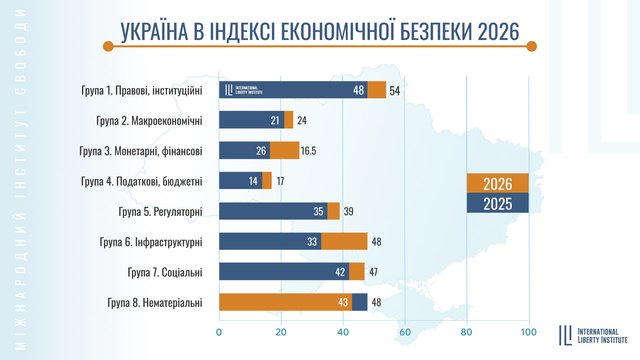
Ukraine demonstrated the greatest progress in infrastructure factors, whose score increased from 33 to 48 points. The score for legal and institutional factors improved from 48 to 54 points, social factors from 42 to 47 points, and regulatory factors from 35 to 39 points. At the same time, the score for monetary and financial factors decreased from 26 to 16.5 points, while that for intangible factors fell from 48 to 43 points.
The macroeconomic component of the index stood at 24 points compared with 21 points a year earlier, while the fiscal component stood at 17 points compared with 14 points, respectively.
“We lack an understanding of the relationship between military security and economic security. When monetary, fiscal and macroeconomic policies are at such a level, it is very difficult to be attractive to investors and to modernize the economy,” Yaroslav Romanchuk emphasized.
In his opinion, economic security must be assessed primarily through people’s opportunities to work, receive education and medical services, save, invest, protect their property and provide for themselves after the end of their working lives.
The economist noted that the average Ukrainian spends about 40% of their expenditure on food, whereas in high-income countries this figure stands at approximately 14%. Such a consumption structure limits the population’s ability to accumulate capital, generate domestic investment resources and finance the development of the national economy.
“Amid competition for human capital, it is important that Ukrainians feel confident that in Ukraine they will have not only the opportunity to work, but also to save for retirement, accumulate savings and make investments. This is also an element of an individual’s economic security,” the ILI president explained.
The study pays particular attention to comparing the economic resilience of Ukraine and Russia. According to Romanchuk, despite international sanctions, substantial military expenditure and restrictions on access to Western technologies, the Russian economy retains the resources to finance a prolonged war.
In particular, Russia scored 40 points for macroeconomic factors compared with Ukraine’s 24 points, and 49 points for monetary and financial factors compared with 16.5 points, respectively. At the same time, Russia lags behind Ukraine in legal and institutional factors, scoring 43 points compared with Ukraine’s 54 points.
“Yes, this means that the Russian economy is more resilient. As for the country’s budgetary balance, it does not have the same level of debt as we do. They have trade and balance of payments surpluses,” Yaroslav Romanchuk said in response to a question about Russia’s results in the ranking.
According to his estimates, Russian exports of goods and services could amount to $505-510 billion in 2026, providing the aggressor country with substantial foreign currency revenues. At the same time, Romanchuk urged against overestimating the potential of sanctions pressure as a standalone instrument for ending the war and called for a focus on increasing Ukraine’s economic and defense-industrial potential.
At the same time, according to the ILI study, the weaknesses of the Russian economy remain excessive centralization of public administration, corruption, wealth and material inequality, dependence on commodity revenues and the low quality of legal institutions.
Romanchuk identified a reassessment of the scale of government intervention in the economy, a reduction in the regulatory burden and the concentration of state resources on ensuring the country’s defense capabilities as one of the key areas for strengthening Ukraine’s economic security.
“Significantly more resources and powers are needed for businesses and society. When we work with our partners, we need to prove that we are doing our homework and demonstrate the results of how we are reducing unnecessary regulatory costs and the regulatory burden, which only hinder economic growth and are a source of corruption,” he emphasized.
Among the priority economic reforms, the ILI president identified the introduction of a multicurrency system, liberalization of capital movements, radical tax reform involving a transition to a three-tax system, large-scale deregulation and privatization of state-owned assets.
In his view, Ukraine’s military-industrial complex (MIC) should become one of the most promising sources of economic growth, foreign currency revenues and foreign investment. According to the expert, Ukraine has the potential to become one of the world’s ten largest exporters of weapons and defense technologies and, in the longer term, to claim 5-7% of the global arms market.
According to him, Ukrainian defense enterprises’ entry into international markets should be coordinated with meeting the needs of the Armed Forces of Ukraine. Expanding the scale of production and international technological cooperation will enable enterprises to increase investment in development, reduce production costs and improve competitiveness.
Romanchuk considers cooperation between Ukrainian defense businesses and industrial and technology companies in Germany, Poland and the United States a promising direction, particularly in the context of diversifying global supply chains and reducing their dependence on China. As an example of successfully combining defense capabilities with the development of technological entrepreneurship, he cited Israel, which, despite persistent security threats, maintains high investment potential and ensures the presence of national companies in international markets.
Responding to a question about Ukraine’s risk of default, the economist noted that high public debt and the budget’s dependence on external financing create significant threats, but that support from international partners should also be considered in the context of Ukraine’s contribution to ensuring European security.
“I am confident that after victory we will have a restructuring of external debt, and I think that up to 70% of the debt will be written off, because this was Europe’s contribution to resilience and to our victory. Then we will need to create a radically different tax system and structure of public expenditure,” Romanchuk added.
At the same time, he advocated maximum decentralization of post-war recovery processes, expanding the powers of communities and regions, and attracting private capital to the implementation of investment projects.
Romanchuk also emphasized the need to assess the effectiveness of Ukraine’s European integration not only by the number of legislative acts adopted and regulatory provisions implemented, but also by actual changes in business conditions, labor productivity, access to financing and the country’s investment attractiveness.
In his opinion, systematic improvement in economic security indicators is a necessary prerequisite for achieving economic growth rates of more than 7% annually, the return of Ukrainians from abroad and the formation of a competitive model of post-war development.
The 2026 Economic Security Index is the third annual study by the International Liberty Institute, developed on the basis of Ukraine’s 2023 economic security concept. The methodology involves using publicly available statistical data, international rankings and expert assessments to determine the ability of countries to withstand internal and external economic threats.
ECONOMIC SECURITY, EXPERTS CLUB, UKRAINE, YAROSLAV ROMANCHUK