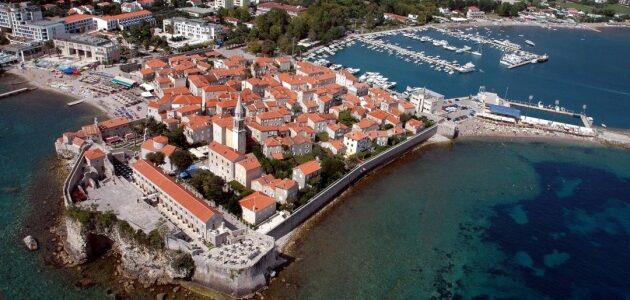
According to Serbian Economist, ancient Roman baths located beneath Church Square next to the Holy Trinity Church in Budva’s Old Town will be opened to visitors for the first time. The archaeological site will be preserved, equipped to receive visitors, and incorporated into the city’s cultural and tourism offerings as part of the international ROMANICA project.
The remains of the baths were discovered after the devastating 1979 earthquake during the restoration of the Old Town. During archaeological excavations in the 1980s, experts led by Professor Mirko Kovačević uncovered bathing pools, the furnace area, and preserved elements of the ancient underfloor heating system.
Despite the research and initial conservation efforts, the site remained closed for decades and was not included in Budva’s tourist itineraries. A stone plaza was later built over the thermal baths, so the ancient part of the city has effectively been hidden from visitors until now.
The project involves further conservation of the authentic remains, creating conditions for tourist access, and implementing digital resources. These resources will be used to show visitors the complex’s original appearance and explain its connection to the Roman maritime and underwater heritage of the Adriatic.
ROMANICA brings together sites of Roman coastal and underwater heritage in Montenegro, Croatia, and Bosnia and Herzegovina. The University of Zadar serves as the lead partner. Other participants in the project include the city of Biograd na Moru, the International Center for Underwater Archaeology in Zadar, the Franciscan Museum of Tomislavgrad, the University of Montenegro, and the municipality of Budva.
The project began on June 15, 2026, and is scheduled to last 24 months. Its total budget is 1.837 million euros.
The project is being implemented as part of the Interreg VI-A IPA cross-border cooperation program “Croatia—Bosnia and Herzegovina—Montenegro” in the area of sustainable and inclusive tourism and culture.
The exact date when the thermal baths will open to visitors has not yet been announced.
Budva is considered one of the oldest urban centers on the eastern coast of the Adriatic. During the Roman period, its port was part of maritime trade routes, and the public thermal baths were used not only for bathing but also as a place of relaxation, meetings, and socializing for residents and travelers.
https://t.me/relocationrs/3337