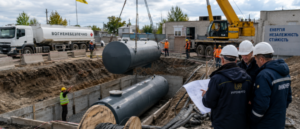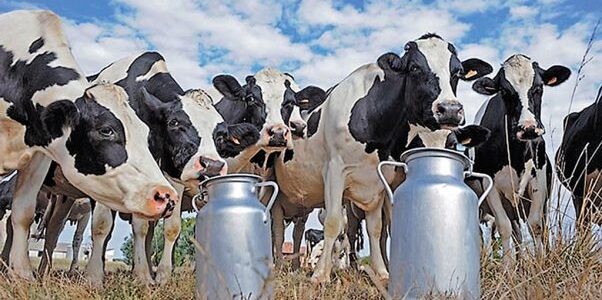
The agro-industrial holding “Astarta” has modernized one of the largest livestock complexes in the Khmelnytskyi region by installing a state-of-the-art 40-head milking carousel, the company’s press service reported on Facebook.
“Dairy farming remains one of Astarta’s strategic areas of development… In the last 2.5 years alone, investments in the dairy segment have exceeded 1 billion hryvnia,” the press service quoted Viktor Ivanchik, CEO of the agribusiness holding, as saying.
According to the press service, investments are being made in farm modernization, technology, and production quality, resulting in market leadership in industrial milk production and 99% of milk being of extra-class quality.
According to the company, the complex is designed to house 2,000 head of cattle.
The modernization project involved upgrading production facilities with a focus on improving animal welfare, production efficiency, and the potential for further expansion.
The company noted that the modernization is part of the holding’s infrastructure program, which also includes the implementation of digital technologies in livestock farming, improving the energy efficiency of farms, and enhancing the genetics of the herd.
“Astarta” is a vertically integrated agro-industrial holding operating in seven regions of Ukraine and is the country’s largest sugar producer. The company’s portfolio includes five sugar refineries, agricultural enterprises with a land bank of 214,000 hectares (including 129,000 hectares in Poltava Oblast, 42,000 hectares in Khmelnytskyi Oblast, and 16,000 hectares in Vinnytsia Oblast), and 26 dairy farms with 29,000 head of cattle across three regions. The holding company also operates a soybean processing plant and a bioenergy complex in Poltava Oblast, as well as a network of six grain elevators.
Astarta’s net profit for 2025 fell 4.2-fold to $19.94 million, while consolidated revenue decreased by 23% to $472 million.
Revenue from the livestock segment last year amounted to EUR56 million, and the average annual livestock headcount increased by 5% to 29,000.
Milk sales volumes rose by 6% year-over-year to 122,000 metric tons. At the same time, 99% of the raw milk was classified as extra-quality milk, compared to 97% in 2024.