Bosnia and Herzegovina Foreign Minister Elmedin Konaković announced the withdrawal of most of the BiH embassy staff from Belgrade following the funeral of former Army of Republika Srpska commander Ratko Mladić, reports the Serbian Economist Telegram channel. He said he intends to reduce relations with Serbia to the “lowest possible level.”
The BiH ambassador and consul, however, remain in Belgrade: their appointment and recall fall under the authority of the collective Presidency of Bosnia and Herzegovina, not the Foreign Ministry. Under the Constitution, it is the Presidency that conducts the country’s foreign policy, so the minister cannot legally sever relations with Serbia on his own.
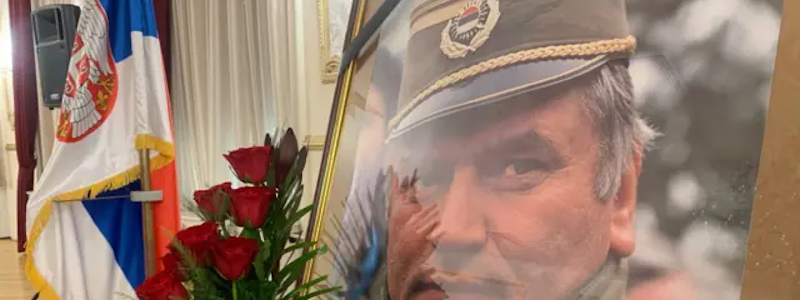
The reason was not only the funeral ceremony itself on September 7, but also the scale of participation by Serbian state institutions. As the coffin was returned, it was accompanied by representatives of the state and the military, while Defense Minister Bratislav Gašić and Justice Minister Nenad Vujić attended the funeral. President Aleksandar Vučić did not attend the ceremony, but his son Danilo was present. The funeral drew thousands of people.
Serbian Foreign Minister Marko Đurić responded extremely harshly, calling Konaković’s statements “hypocrisy.” He recalled that former BiH army commander Rasim Delić had also been convicted by the Hague Tribunal for crimes committed by the “El Mujahid” unit, and accused the Bosnian side of taking a selective approach to war crimes. Đurić also recalled the attack on Vučić in Potočari in 2015, when the then Serbian prime minister was pelted with stones after laying flowers at the Srebrenica memorial.
Why does the figure of Mladić still provoke such a harsh reaction in the Balkans?
Ratko Mladić commanded the Army of Republika Srpska from May 1992. The International Criminal Tribunal for the former Yugoslavia, and later the UN appeals chamber, ultimately found him guilty and sentenced him to life imprisonment for the Srebrenica genocide, crimes against humanity and war crimes during the war in Bosnia. In Srebrenica, after the enclave was captured in July 1995, around 8,000 Bosnian Muslims — men and boys — were killed.
Therefore, for a significant part of the Bosniaks in Bosnia, Mladić is above all a symbol of Srebrenica, the siege of Sarajevo and ethnic cleansing. His public honoring in Belgrade is perceived there not as a private funeral, but as a denial or justification of the crimes.
Croatia also views Mladić extremely negatively. Before the formation of the Army of Republika Srpska, he served in the Yugoslav People’s Army in the Knin area during the war in Croatia. After the final verdict in 2021, the Croatian government even officially expressed regret that the Hague proceedings had not covered crimes committed by him on Croatian territory.
In Serbia and Republika Srpska, attitudes are different. For many, Mladić remains the man who defended Bosnian Serbs during the breakup of Yugoslavia. That is why thousands of people attended the funeral, chants of “hero” were heard, and his portraits remain widespread. At the same time, Serbia itself has politicians, public organizations and media outlets that accept the findings of international courts and oppose the glorification of Mladić.
Belgrade also constantly emphasizes the issue of Serbian victims of the war and believes that crimes against Serbs receive less attention in regional and international discourse.
The scandal is already moving beyond Bosnian-Serbian relations. EU Commissioner for Enlargement Marta Kos canceled a planned visit to Serbia, explaining the decision by the unacceptability of glorifying convicted war criminals.
The story surrounding Mladić’s funeral is no longer merely a dispute over a single historical figure. It has once again exposed the central political contradiction of the Western Balkans: more than 30 years after the Bosnian war, Belgrade, Banja Luka, Sarajevo and Zagreb still differ substantially in their assessments of the war, responsibility, and of who should be regarded as a criminal and who as a hero.
BALKANS, Bosnia and Herzegovina, DIPLOMACY, RATKO MLADIĆ, SERBIA

Related: