
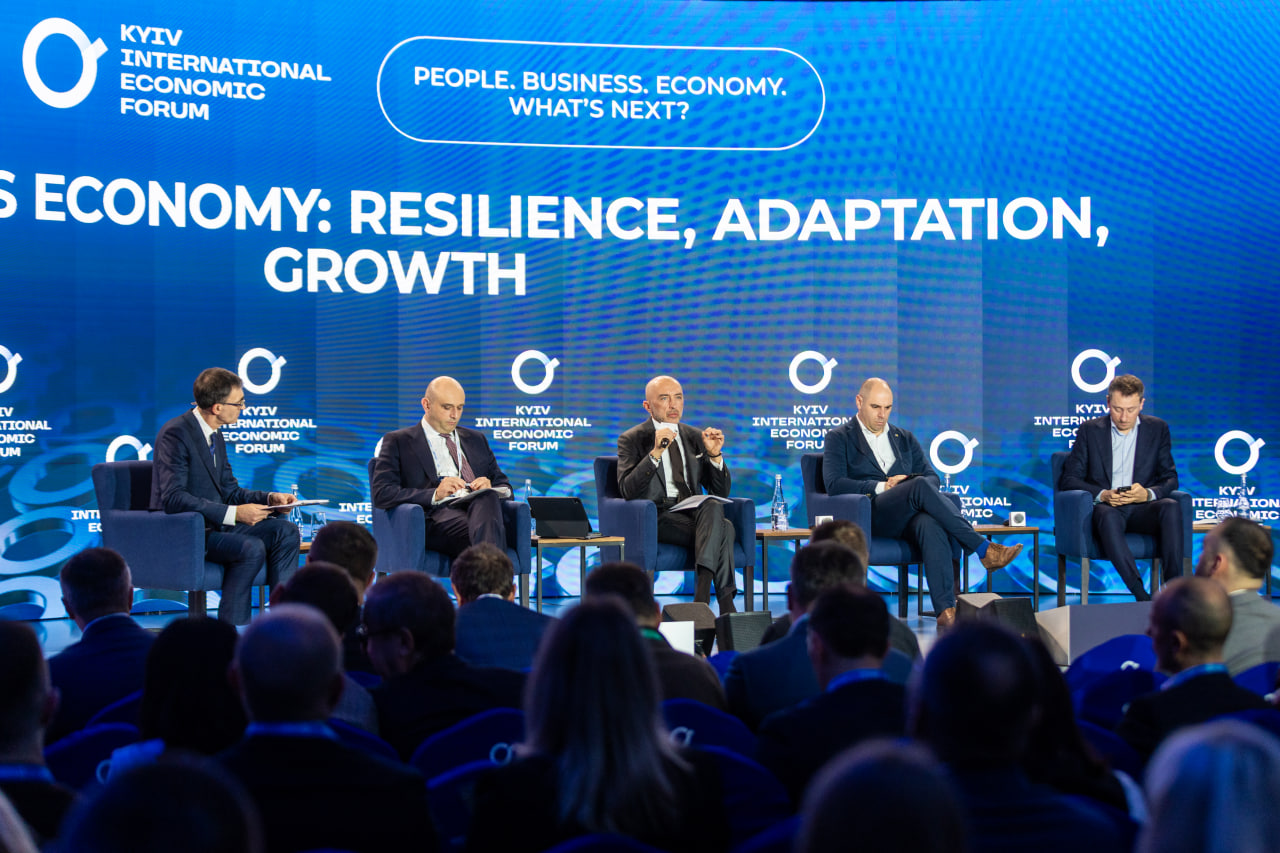
Kyiv hosted the 12th Kyiv International Economic Forum (KIEF), dedicated to the performance of the Ukrainian economy amid escalating war risks. Discussions centered on how businesses can adapt to new threats, maintain production, and find resources for recovery and development.
Opening the forum, Ukrainian Prime Minister Serhiy Koretskyi stated that Russia has intensified its attacks on the Ukrainian economy. According to his estimates, direct losses exceeded $7.7 billion, and more than 1 million square meters of real estate have been damaged or destroyed. By the end of the year, the prime minister said, the budget will fall short of planned revenues by about $1.5 billion.
At the same time, he emphasized that despite the consequences of the war, the economy continues to function thanks to the resilience of entrepreneurs and their teams, and support for business remains one of the government’s priorities.
“We realize how important it is right now to support Ukrainian businesses in return for this resilience, in return for this dedicated work,” noted Serhiy Koretskyi.
Despite limited budgetary resources, the government is continuing its lending programs and developing mechanisms to insure against war risks. Under the “5–7–9%” program, 580 billion hryvnia in loans have already been issued since the program’s inception. 457 companies have already insured their property under the loss compensation program administered by the Export-Credit Agency, with a potential payout of over 9 billion hryvnia. The next step is a broader system of war risk insurance, to which the state plans to allocate $1 billion and attract an additional $3 billion from international partners.
Among the external challenges are the tightening of EU trade restrictions on Ukrainian exporters, particularly producers of metallurgical and agricultural products. Business representatives spoke of reduced access to the European market, while Ukraine’s representative to the EU, Taras Kachka, discussed accelerating integration into the EU’s internal market and expanding the industrial visa-free regime.
The labor shortage also remains acute. Experts estimate migration losses at approximately 5 million people, while businesses are facing a shortage of skilled workers. Among possible solutions, participants discussed dual education and creating conditions to encourage Ukrainians to return by offering jobs and affordable housing.
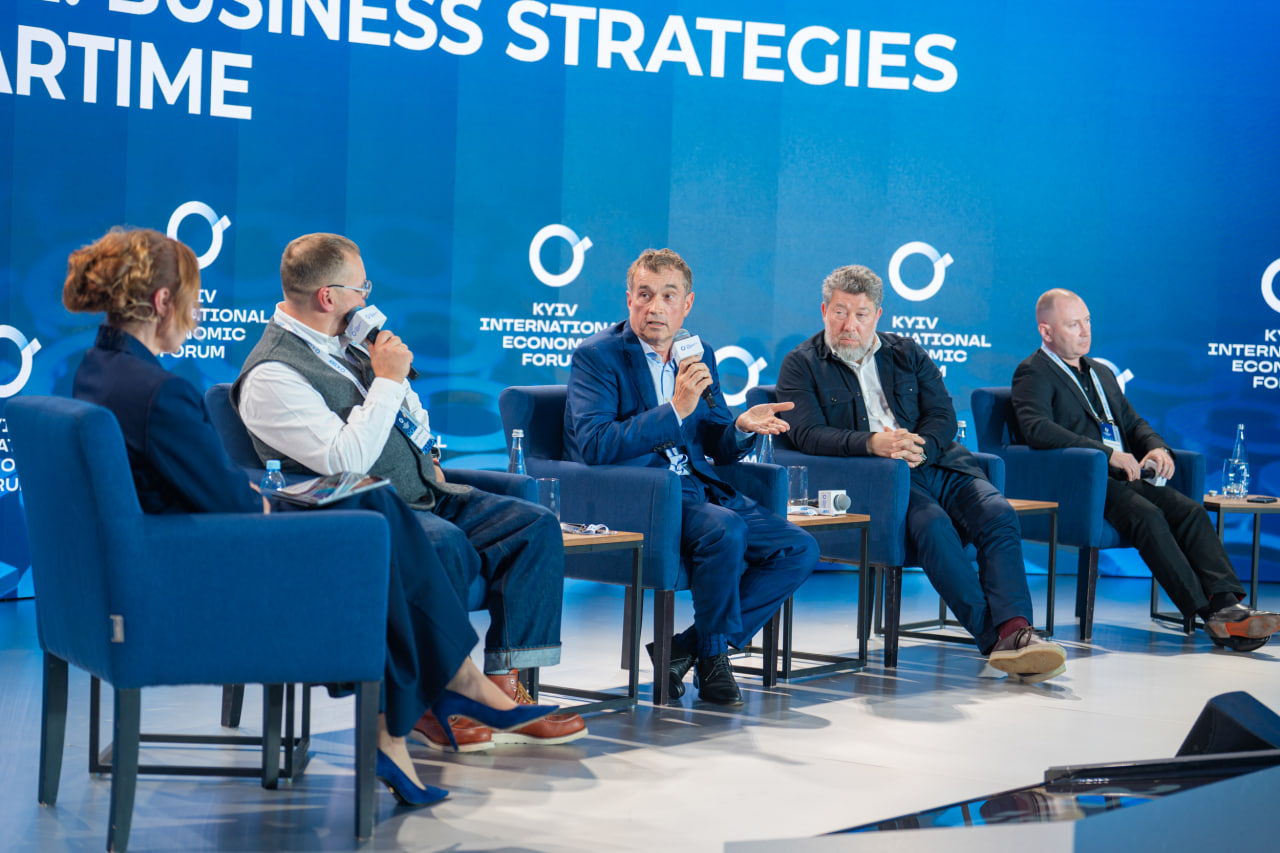
The overall business sentiment at KIEF is cautious but pragmatic. The impact of the attacks varies by industry, but companies agree on the need to hope for the best while remaining prepared for various scenarios. Companies are reviewing safety protocols, setting up shelters, and developing their own response systems. In particular, Vyacheslav Klimov, co-owner of the NOVA Group, said that “Nova Poshta” has implemented its own air defense project, which has already shot down Russian drones. Companies are also developing their own fire departments.
“The top priority for Ukrainian businesses is how to adapt to the new challenges of the war and get through this winter. It’s not easy for anyone, so it’s especially important to support one another. If I need services or partners, I turn first and foremost
to Ukrainian companies. This is a matter of principle: by buying goods and services from one another, we support businesses, preserve jobs, and help our economy survive,” emphasized Vasyl Khmelnytsky, initiator of the Kyiv International Economic Forum (KIEF) and founder of the UFuture holding company.
The business community’s main requests to the government are predictable regulations, insurance against war risks, and solutions to the labor shortage. Businesses have learned to operate amid constant threats, but the costs of security and recovery are limiting opportunities for new investments.
“We have held the KIEF both under pandemic restrictions and after the start of the full-scale invasion. This year, the question of how not only to keep businesses running during the war but also to avoid losing opportunities for development has become particularly acute. There are no ready-made solutions to all problems, so it is important to combine business expertise with the capabilities of the government and international partners,” said KMEF CEO Yuriy Pivovarov.
Title partners of the forum: UFuture, Mastercard, AEQUO, PrivatBank, Kyivstar
Forum partners: Sense Bank, NEQSOL Holding, PUMB, DTEK, Ajax Systems, Uklon, General Chereshnya, Biopharma, Eclectic Talents Group, TERWIN, CEO Club Ukraine, BALEX, Naftogaz Group.
Open4Business is the forum’s media partner.