

Astarta Agro Holding plans to pay dividends for 2023 in the amount of EUR0.5 per share for a total of EUR12.5 million, which is in line with the previous year.
As stated in the company’s announcement on the Warsaw Stock Exchange, the relevant draft decision has been included in the agenda of the shareholders’ meeting to be held in Nicosia (Cyprus) on June 4 this year.
Other issues include: adoption of a new remuneration policy; confirmation of PriceWaterhouseCoopers as auditor for 2023; and instructing the board of directors to elect an auditor for 2024.
As reported, Astarta first paid EUR12.155 million in dividends in June 2021 based on the results of 2020 in the same amount as proposed now – EUR0.5 per share. In the military year of 2022, the company refused to pay them, and then paid them in 2023.
In 2023, Astarta, the largest sugar producer in Ukraine, reduced its net profit by 5.0% to EUR61.9 million, and its EBITDA decreased by 6.1% to EUR145.77 million, while revenue increased by 21.3% to EUR618.93 million.
Astarta CEO Viktor Ivanchik’s family currently owns about 40.66% of the company. Fairfax Financial Holdings is also a major shareholder with 29.91%, and another 2.62% of shares belong to the company itself and were previously bought back as part of a buyback.
Astarta’s shares are currently quoted at PLN26.6 per share (about EUR6.23 per share), while about a year ago, when the dividend decision was approved, the rate was PLN32.80 per share (about EUR7.28 per share).
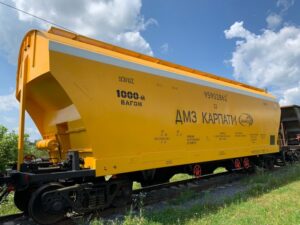
In 2024, the Karpaty Research and Mechanical Plant (Lviv region) will produce 300 grain carriers at the request of the USAID Economic Support for Ukraine project, which will account for 45% of the company’s annual workload, the donor organization’s press service reported on Facebook.
The USAID reminded that in 2023, at their request, the plant manufactured 50 such cars for one of the largest grain market operators in Ukraine, JV Nibulon LLC (Mykolaiv). In 2024, the Project ordered 300 railcars for other companies involved in the export of agricultural products.
According to the report, OMZ Karpaty produces three railcars per day weighing 23.5 tons. The main component of the car body is rolled metal of European origin purchased from Ukrainian suppliers. The rest of the components, such as the railcar axle, solid-rolled wheel, side frame, beam, shock and traction device, brake equipment and other parts, are made in Ukraine.
“During a full-scale war, orders for grain cars account for 75% of what we do. Thanks to the USAID project, we received an order last year and fulfilled it on time: we manufactured 50 railcars. This means that 650 of our employees had jobs, received salaries, and we, as a business, paid taxes to the budgets of various levels on time. This is one example of how international assistance works for the Ukrainian economy,” said Oleksandra Bodor, Marketing Director of OMZ Karpaty.
According to him, the plant currently has a portfolio of orders through August 2024. In addition to grain carriers, another promising area is the production of cement carriers needed to restore Ukraine’s critical infrastructure and housing stock.
“In 2023, all (three) railcar manufacturing plants in Ukraine produced 1967 railcars. OMZ Karpaty became the leader: the company produced 567 railcars for the Ukrainian market, which is 5% more than in 2022. Today, the company employs more than 650 people,” the donor organization said.
As reported, the USAID project is implementing the Agricultural Resilience and Livelihoods Program (AGRI-Ukraine), with a budget of $350 million. Within the framework of the AGRI-Ukraine initiative, the USAID project cooperates with public and private enterprises to attract investment in grain transportation and transshipment.

Short-term rains, sometimes thunderstorms are expected in the southeastern part of Ukraine on Wednesday, May 15, while the rest of the country will be without precipitation, the Ukrainian Weather Center reports.
The wind is mostly northeast, 5-10 m/s. The temperature at night will be 4-9°, in the western and northern regions 1-6° Celsius, on the soil surface frosts of 0-5°; during the day 11-16° Celsius, in Transcarpathia 17-21°.
In Kyiv on Wednesday, May 15, no precipitation. Northeast wind, 5-10 m / s. The temperature at night will be 4-6° Celsius, during the day about 15°.
According to the Borys Sreznevsky Central Geophysical Observatory, since the beginning of meteorological observations on May 15, the highest daytime temperature in Kyiv was 30.2° Celsius in 1925, and the lowest nighttime temperature was 0.1° below zero in 1927.
On Thursday, May 16, there will be no precipitation at night, only in the southeastern part, and light short-term rains are expected throughout Ukraine, except for most western regions.
Northeast wind with a shift to southeast, 5-10 m/s. The temperature at night will be 1-6° Celsius, on the soil surface frosts of 0-5°, in the south and Transcarpathia 3-8° Celsius; during the day 12-17° Celsius. In the highlands of the Carpathians, at night 0-5° below zero, during the day 8-13° above zero.
In Kyiv on Thursday, May 16, no precipitation at night, light short-term rain during the day. Northeast wind with a shift to southeast, 5-10 m/s. The temperature at night will be 4-6° C, during the day 15-17°.
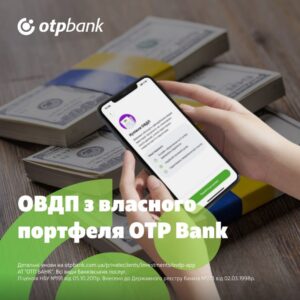
In May, JSC OTP BANK introduces a new service – the sale of domestic government bonds in the OTP Bank UA application from the Bank’s own portfolio. Thus, the purchase of domestic government bonds will be available at any time, regardless of the date of the Ministry of Finance of Ukraine’s auctions.
According to Valeria Ovcharuk, OTP Bank product owner, the new service will give customers more opportunities to choose the optimal bond rate and maturity. “Last fall, OTP Bank provided its customers with the opportunity to buy domestic government bonds directly at auctions of the Ministry of Finance through the OTP Bank UA application. To offer even more opportunities for investing in government securities, we have developed a functionality that will allow individuals to buy government bonds from the Bank’s portfolio online. We conducted an internal study within the Bank, analyzed requests from our customers regarding the desired maturity and currency for investments, and based on this, we formed a portfolio of securities for sale. This way, customers will be able to combine the optimal rate and investment period. The service is at the testing stage and will be available to users in May,” said Ms. Ovcharuk.
She emphasized that buying government bonds in OTP Bank is convenient and fast. “Just a few clicks in the application and government securities are in your bond portfolio. At the same time, you are making a profitable and reliable investment in the future, as the repayment of government bonds is 100% guaranteed by the state. At the same time, it is an opportunity to help the Ukrainian economy,” emphasized Ms. Ovcharuk.
The service will be available online to all customers who have opened a securities account at any branch of OTP Bank.
As a reminder, according to the Ministry of Finance of Ukraine, OTP Bank was ranked fourth among Ukrainian banks in the overall rating of primary dealers in 2023.
The status of a primary dealer provides the exclusive right to participate in the placement of domestic government bonds conducted by the Ministry of Finance, both on its own behalf and for clients of individuals and legal entities, as well as banks and financial companies that do not have such a status.
To learn more about investing in domestic government bonds through the OTP Bank UA app, please follow the link.
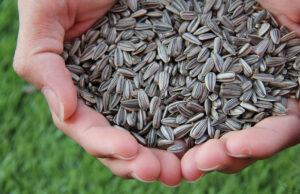
USAID’s Agricultural and Rural Development Program will provide farmers with free sunflower seeds provided by Lidea Ukraine as part of the AGRI-Ukraine initiative, the donor organization’s press service reported on Facebook.
According to the report, the assistance will be offered to farmers who have previously applied through the State Agrarian Register (SAR) for corn seeds, but did not have enough sowing units of this crop.
The program is open to farmers in Dnipropetrovska, Kyivska, Sumska, Kharkivska and Chernihivska oblasts who cultivate between 5 and 500 hectares. Each farmer will be able to receive up to 40 sowing units of sunflower.
There is no need to submit a new application to the State Register, the organizers will contact those who have applied with the offer, USAID AGRO said.
It is expected that Lidea Ukraine will deliver 2858 sowing units of sunflower seeds to farmers from the regions most affected by the war. The delivery of the seeds will be organized by the All-Ukrainian Association of Communities as part of the United Communities project.
“Thanks to this initiative, farmers in the frontline and de-occupied regions will be able to grow and supply at least 24 thousand tons of sunflower to the market. According to preliminary forecasts, the harvest harvested from the donated seeds will bring farmers about UAH 360 million in revenue, which will help restore agricultural production in war-affected communities,” USAID AGRO said.
As reported, recently, as part of the USAID AGRI-Ukraine initiative, Lidea Ukraine has transferred 3362 sowing units of corn seeds to farmers in frontline communities. The application process was completed ahead of schedule due to high demand.
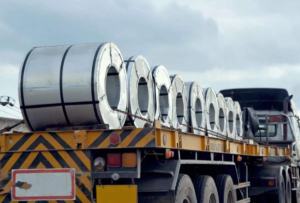
In January-April this year, Ukrainian enterprises reduced consumption of rolled metal products by 13.89% year-on-year to 1 million 6.6 thousand tons.
According to a press release from Ukrmetallurgprom, 351.6 thousand tons, or 34.93% of the domestic rolled metal consumption market, were imported during this period.
According to Ukrmetallurgprom, in January-April 2024, steel companies produced 1.973 million tonnes of rolled metal products (130.5% compared to the same period in 2023), of which, according to the State Customs Service of Ukraine, about 1.318 million tonnes, or 66.8%, were exported. In January-April 2023, the share of exports amounted to 42.9% (634 thousand tons with a total production of 1.512 million tons of rolled steel).
The share of semi-finished products in export deliveries in January-April 2024 was 45.45%, which is significantly lower than in January-April 2023 (49.37%). The share of flat products in export deliveries in the first four months of 2024 is significantly higher than in January-April 2023 (40.36% and 28.86%, respectively). The share of long products is significantly lower than in January-April 2023 (14.19% in 2024 vs. 21.77% in 2023).
“In the first four months of 2024, the domestic market capacity amounted to 1 million 6.6 thousand tons of rolled steel, of which 351.6 thousand tons, or 34.93%, were imported. In January-April 2023, the domestic market capacity amounted to 1.169 million tons, of which 291 thousand tons, or 24.89%, were imported. Thus, in the first four months of 2024, there was a decrease in the domestic market capacity by 13.89% compared to the first four months of 2023, with a simultaneous increase in the share of the import component by 10.04%,” the press release states.
The structure of imports for the first four months of 2024 is still characterized by a significant dominance of flat products over long products (82.88% and 15.27%, respectively); in January-April 2023, the dominance of flat products over long products was also significant (79.86% and 18.97%, respectively).
According to the State Customs Service, the main export markets for Ukrainian rolled steel products in January-April were the European Union (81.6%), the rest of Europe (5.6%) and South America (4.5%).
Other European countries ranked first among metallurgical importers in the period under review (44.5%), followed by the EU-27 (37.9%) and Asia (16.7%).
As reported, Ukraine’s rolled metal market grew 2.19 times in 2023 compared to 2022, to 3 million 505.6 thousand tons. The company imported 1 million 118.6 thousand tons, or 31.91% of the domestic rolled steel consumption market.
In 2023, Ukrainian steelmakers produced 5.37 million tons of rolled metal products (100.4% compared to 2022), of which, according to the UAVtormet Expert and Scientific Council, about 2.99 million tons, or 55.6%, were exported.
In 2022, the share of exports amounted to 81.7% (4.37 million tons with a total production of 5.35 million tons of rolled metal products).
The share of semi-finished products in export deliveries in 2023 was 40.30%, which is significantly lower than in the same period in 2022 (43.45%). The share of flat products in exports for the year is also significantly higher than a year earlier (40.41% and 36.34%, respectively). At the same time, the share of long products is comparable to the figure for the previous similar reporting period (19.53% in 2023 vs. 20.21% in 2022).
In 2023, the domestic market capacity amounted to 3,505.6 thousand tons of rolled steel, of which 1,118.6 thousand tons, or 31.91%, were imported. In 2022, the domestic market capacity amounted to 1598.6 thousand tons, of which 621.6 thousand tons, or 38.88%, were imported. Thus, in 2023, there was an increase in the domestic market capacity by 119.29% compared to 2022, while the share of the import component decreased by 6.98%.
The structure of imports last year was still characterized by a significant dominance of flat products over long products (76.08% and 23.87%, respectively); in 2022, the dominance of flat products over long products was also significant (68.69% and 30.41%, respectively).
According to UAVtormet, the main export markets for Ukrainian steel products in 2023 were the EU (82%) and the rest of Europe (7.5%).
Among metallurgical importers in 2023, the first place was occupied by other European countries (42.4%), the second by the EU-27 (37.3%), and the third by Asian countries (18.2%).



