
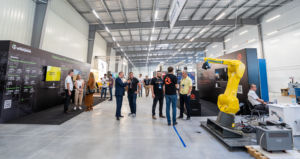
Ukrainian industry has withstood what seemed impossible. Despite large-scale destruction, energy crises and the constant military threat, production in Ukraine has not stopped. In 2025, the processing industry paid UAH 367.5 billion in taxes — 18% of all revenues to the state budget. This is the largest increase among all sectors of the economy.
Behind these figures are entrepreneurs who continue to take risks, invest and build. And also state policy, which in recent years has begun to focus more on supporting production: financing programs, tax incentives and the development of industrial parks.
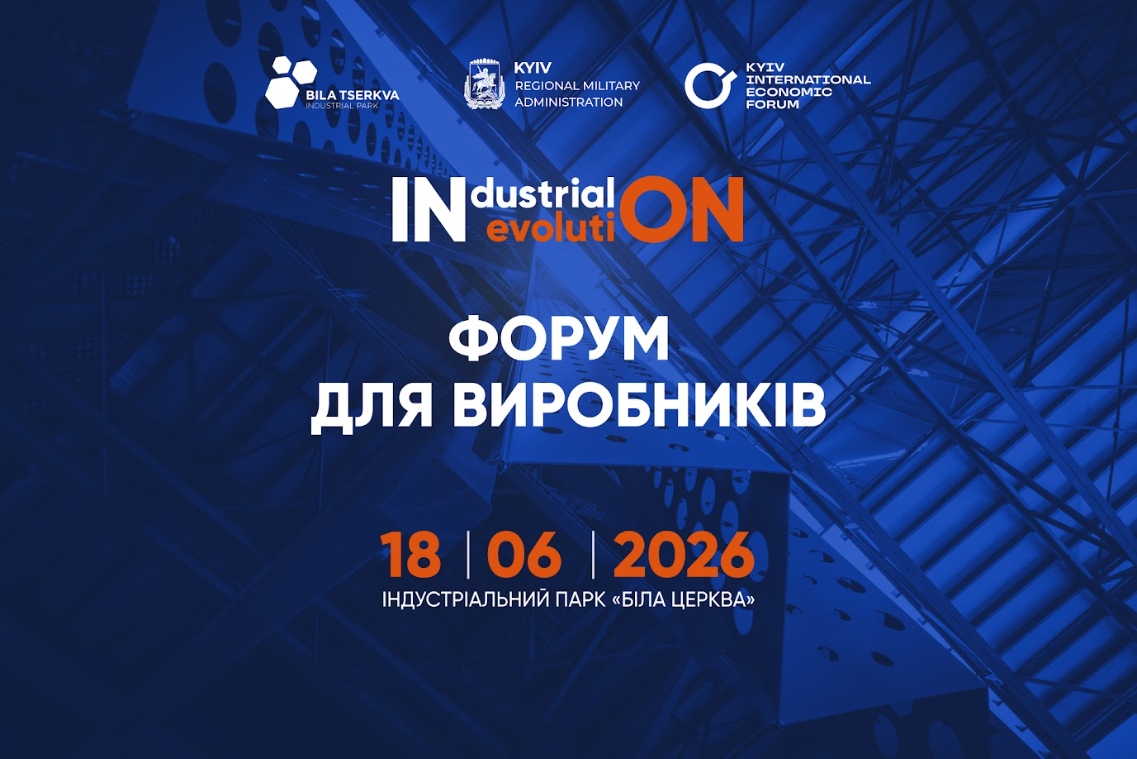
A network of 116 industrial parks has already been formed in Ukraine. On their territories, 37 industrial enterprises have already been built or are being built: 22 plants have been put into operation, another 15 are in the process of construction.
Now the main thing is to scale this process and turn industrial parks into real points of production, investment and new jobs.
“Production is the driver of the country’s economy. These are jobs, taxes, development and resilience, which can already be seen in the example of the Bila Tserkva Industrial Park. It is important that there should be more such projects. That production facilities develop, investors invest funds, and people acquire the necessary skills to work in the new economy,” notes Vasyl Khmelnytsky, founder of the UNIT.City innovation park and the Bila Tserkva Industrial Park, initiator of the forum.
These very issues will become the main topic of the forum “Industrial Evolution: Production Switches on the Economy” which will take place on June 18, 2026, at the Bila Tserkva Industrial Park for the fifth time already.
The forum will bring together more than 1,500 participants — owners and managers of production companies, investors, representatives of the authorities, the financial sector and experts. International delegations from the business, industrial, investment and diplomatic environment will also take part in the forum.
The program includes panel discussions, an exhibition zone of technologies and equipment for manufacturers, practical cases of companies that are already scaling production in Ukraine, and networking.
At the center of the discussions are energy challenges, the shortage of personnel, access to financing and insurance, state support, industrial parks, exports and new markets.
Among the speakers of the forum:
Manufacturers will share practical experience of working during the war, and representatives of the state will tell which support tools are already working and what is planned next.
The organizers of the forum are the Bila Tserkva Industrial Park, the Kyiv Regional Military Administration, Astrobuild LLC (management company and developer of the Bila Tserkva Industrial Park) and the Kyiv International Economic Forum.
Participation is free of charge with prior registration: industry.forumkyiv.org
Industrial Evolution, INDUSTRIAL PARKS, UKRAINIAN MANUFACTURING
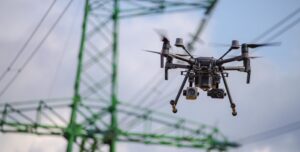
Repair crews from Zaporizhzhyaoblenergo JSC working in frontline areas have begun using UAVs to ensure the safety of power workers during emergency repair operations, the company announced on Friday.
“To minimize the danger to our employees, we have incorporated the ‘reconnaissance’ experience gained by our military using UAVs into our energy operations. For several months now, specialists have been training our ‘repair crews’ to operate drones so they can remotely identify equipment damage while remaining in a safer location,” said Andriy Stasevsky, head of Zaporizhzhiaoblenergo.
According to him, the company’s employees have to work daily in extreme proximity to the front line, and the longer the crews remain there, the higher the risks. At the same time, to repair, for example, an overhead power line, one must first inspect several kilometers of the line to locate the damage, a process that can take hours in conditions where there is nowhere to take cover outside populated areas. Therefore, while inspecting equipment, power workers are highly vulnerable to enemy shelling.
Currently, thanks to Deputy CEO Stanislav Zhadan, the company has managed to bring in leading experts in the field of UAVs for training, synthesize their accumulated experience, and begin applying it to its operations.
“We already have our first ‘graduates’—several repair crews have successfully completed drone pilot training and are already using them during emergency restoration work,” stated the head of Zaporizhzhiaoblenergo.
The process is ongoing in coordination with the military, facilitated by the Zaporizhzhia Regional State Administration. At the same time, the issue of providing the necessary equipment is being addressed.
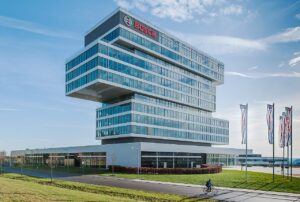
Bosch, a leading global supplier of technology and services, ended the 2025 fiscal year in Ukraine with consolidated sales to third parties of nearly EUR162 million (UAH 7.6 billion), a 3.5% increase compared to the previous year, according to Serhiy Baranovsky, CEO of Bosch in Ukraine.
“Despite challenging macroeconomic and security conditions, the company maintained positive momentum thanks to stable demand, the expansion of its partner network, and active participation in Ukraine’s recovery projects. For us, it is important not only to grow our business but also to be a reliable partner that helps rebuild infrastructure and provides high-quality solutions for people and communities,” Baranovsky said at a press conference on Thursday.
In 2025, all of Bosch’s business sectors in Ukraine demonstrated growth, although growth rates varied across individual segments.
Growth in the Mobility segment, represented by the Mobility Aftermarket division (automotive parts and equipment), was driven by the development of service infrastructure, expanded distribution, and stable demand for automotive services. Four new “Bosch Auto Service” stations were opened in 2025; the network now comprises over 100 stations. According to Baranovsky, an additional driver of growth in 2025 was the rising demand for servicing used cars, as well as electric vehicles and hybrids.
In the Energy and Building Technology business sector, which includes the Bosch Home Comfort and Building Technologies divisions, Bosch demonstrated positive growth in 2025 thanks to rising demand for energy-efficient, autonomous, and infrastructure solutions. Bosch Home Comfort implemented over 70 projects in the commercial and industrial sectors during the year.
The highest demand was observed for gas equipment, air conditioning systems, industrial boilers, and hot water supply solutions, particularly in the context of infrastructure reconstruction and modernization. The company also expanded its portfolio by introducing a new generation of electric and gas water heaters and modern split-system air conditioners, while strengthening its commercial segment with Buderus solutions. In addition, the integration of climate solutions from Johnson Controls and Hitachi further expanded Bosch’s capabilities in the market.
The Building Technologies division continued to grow its business in the field of modern fire safety systems and security solutions. Growth was driven by the modernization and expansion of existing Bosch systems, particularly in healthcare facilities.
Growth in Power Tools, part of the Consumer Goods business sector, was driven by participation in infrastructure reconstruction and industrial projects, despite a decline in consumer spending. Throughout the year, the company strengthened its product portfolio by launching new professional power tools on the 18V platform, expanding its range of cordless garden equipment, and introducing a specialized line of measuring instruments for electricians and installers.
In the Industrial Technology business sector, the Bosch Rexroth division responded to the growing demand for production modernization following the relocation of enterprises.
Given the scale of Ukraine’s reconstruction needs, Bosch is focusing on solutions for energy independence and infrastructure modernization. Since 2022, the company has implemented over 50 reconstruction projects in the municipal and private sectors. Bosch supports the modernization of heating systems, supplies equipment for industrial enterprises, and implements projects aimed at improving energy efficiency. Among the key initiatives is a partnership with GIZ, which continues through 2026 and involves the installation of 13 modular boiler plants in frontline communities. The company also remains a key supplier of industrial steam boilers for new production facilities.
Over the past year, the workforce has grown by 3%, to approximately 370 employees.
In the current fiscal year, Bosch is focusing on strengthening its market positions, developing innovative solutions, and supporting key sectors of Ukraine’s economy, particularly regarding infrastructure reconstruction, energy efficiency, industrial modernization, mobility, and municipal services. At the same time, the company continues to explore the potential of new technologies in the local market, such as solutions based on artificial intelligence and energy-efficient technologies, and to develop its partner network and educational initiatives.
“We see growing demand for modern technological solutions and are actively responding to these changes by expanding our presence in new market segments. For us, 2026 will be a year of growth with a special focus on energy efficiency and modernization,” added Serhiy Baranovsky.
The Bosch Group has been operating in Ukraine since 1993 and is the largest supplier of solutions for the automotive industry and the aftermarket, as well as for industrial and household appliances.
The Bosch Group includes Robert Bosch GmbH, founded in 1886, and nearly 500 subsidiaries and regional companies in over 60 countries worldwide. Together with its sales and service partners, Bosch’s global manufacturing, engineering, and sales network covers nearly every country in the world.

Schneider Electric, a global leader in energy technologies, is urging the EU to urgently accelerate the development of energy efficiency and electrification in Europe as a unified, scalable, domestic, and sustainable response to the prolonged volatility of energy prices.
Global energy prices are expected to rise by 24% this year—the largest jump since 2022. Europe is particularly vulnerable to such changes, as energy costs here are typically two to four times higher than in other major regions of the world. Against this backdrop, Schneider Electric is calling on policymakers to stop viewing energy efficiency and electrification as an “add-on” to climate policy and to recognize them as Europe’s only scalable and domestic energy resources. Their accelerated implementation has the potential to generate at least €250 billion annually by 2040, reduce energy demand, decrease dependence on fossil fuels, and boost competitiveness.
Europe remains structurally vulnerable: the EU still relies on imports for nearly 60% of its energy resources, which cost €336.7 billion in 2025. This makes households, industry, and public services vulnerable to instability in global fossil fuel markets and geopolitical upheavals. Schneider Electric emphasizes that measures to improve energy efficiency and electrify end-use consumption can be implemented quickly and with a short payback period, delivering immediate benefits while accelerating the transition to a stronger and more energy-independent system.
Schneider Electric calls on the European Commission and EU member states to focus on five key policy steps:
Calls for support and incentives to help businesses scale proven, fast-return energy efficiency solutions that reduce demand within months.
Industry: Targeted support, particularly for small and medium-sized enterprises, to scale up energy management systems and implement low- or no-cost measures that can deliver savings of up to 30% over time and lay the groundwork for digitalized production.
2) Rapidly and consistently implement existing EU legislation on energy efficiency and buildings
Fully implement the Energy Efficiency Directive (EED) and the Energy Performance of Buildings Directive (EPBD) to ensure a rapid anti-crisis effect. Specifically:
• Rapidly deploy building automation and control systems (BACS) under the EPBD, which can deliver annual savings of 450 TWh in final energy consumption, reduce CO₂ emissions by 64 million tons, and lower energy bills by €36 billion.
• Strengthen energy audit requirements under the EED by making the implementation of their recommendations mandatory—starting with small and medium-sized businesses—using leasing mechanisms and the “energy-as-a-service” financing model.
3) Accelerate electrification through targeted incentives
Despite the growth in electricity production from renewable sources, a significant portion of energy consumption—that is, the demand side—has not yet switched to electricity. As long as people drive gasoline-powered cars and heat their homes with gas, Europe will remain dependent on imported energy sources and price fluctuations.
Faster electrification will enable more effective integration of renewable energy and reduce dependence on price fluctuations for fossil fuels. It also has the potential to break a decade-long period of stagnation in Europe, which currently stands at 21% (10% behind China), where rapid electrification is taking place. Schneider Electric calls for:
• A significant scaling up of heat pump adoption (which are 3–5 times more efficient than gas boilers) with the goal of reaching one million installations annually by 2030. This requires supportive mechanisms that lower initial barriers for consumers, including tools such as social leasing.
• Faster electrification of transportation through targeted measures, including incentives to accelerate the electrification of corporate fleets, which will also foster the development of the used electric vehicle market.
4) Use taxation and funding to shift demand from fossil fuels to clean electricity
Schneider Electric calls on policymakers to make electrification economically attractive by:
• Reducing electricity taxes (including lowering VAT and excise taxes where possible) to narrow the gap between retail prices for electricity and gas.
• Redirecting and simplifying access to public funding to scale up energy efficiency and electrification—specifically funds from the Recovery and Resilience Facility and revenues from the Emissions Trading System (ETS).
• Keep any temporary mechanisms for capping or subsidizing gas prices to a minimum and short-term, as this discourages investment in clean energy resources.
5) Unleash self-generation, flexibility, and smart grids to lower bills
Remove barriers and create incentives for the development of flexibility, energy storage systems, and digitalization, which help reduce peak loads and system costs. Priorities include:
• Ensuring flexibility in buildings and industry through rooftop solar power plants (PV), energy storage systems, and digital control systems, as well as supporting demand response mechanisms.
• Faster and higher-quality deployment of “smart” meters with a focus on functionality, real-time data access, and system interoperability—primarily for large commercial buildings, industry, and EV charging infrastructure.
• More digitized power grids and smarter grid infrastructure planning, including support for grid efficiency technologies, results-oriented KPIs, and tariff models that incentivize peak load reduction and grid-friendly energy consumption.
Laurent Bataille, Executive Vice President of Operations for Europe at Schneider Electric, stated:
“The call for policymakers to prioritize energy efficiency and electrification is just as relevant today as it was four years ago. The solutions haven’t changed. However, during this time, Europe has weathered one energy crisis after another—without making the progress needed to protect itself from price shocks and sky-high costs that leave businesses, households, and industry so vulnerable.
“Complacency is Europe’s greatest energy risk. Plans to subsidize energy costs are merely a temporary solution that does not work in the long term. Europe needs structural changes—ones that will incentivize the adoption of clean technologies so that businesses and households permanently change their approach to energy consumption. We need policies that will foster the creation of an energy system built in Europe and for Europe—one that reduces dependence on volatility, ensures a clean and reliable energy supply, and allows Europe to remain competitive.”
About Schneider Electric
Schneider Electric is a global leader in energy technologies, driving efficiency and sustainability through the electrification, automation, and digitalization of industry, business, and residential spaces. The company’s technologies enable buildings, data centers, factories, infrastructure, and power grids to function as open, interconnected ecosystems, enhancing productivity, resilience, and sustainability.
The company’s portfolio includes smart devices, software-defined architectures, AI-based systems, digital services, and professional consulting services. With 160,000 employees and 1 million partners in over 100 countries, Schneider Electric consistently ranks among the world’s most sustainable companies. Learn more at https://www.se.com/ua/uk/

Schneider Electric, a global leader in energy technologies, is deepening its collaboration with the World Economic Forum as part of a coalition of manufacturers, consultants, and technology partners working to accelerate the digital transformation of industry worldwide. Together, they are advancing the Lighthouse Operating System (Lighthouse OS), a framework built on proven and replicable methodologies designed to help manufacturers modernize their operations at scale.
Most manufacturers have already invested in digital transformation. However, only a few have managed to scale these changes. Pilot projects demonstrate success but eventually stall. The results achieved remain localized. The gap between the world’s most advanced factories and the rest of the industry continues to grow. The new framework presented today aims to bridge that gap.
Lighthouse Operating System (Lighthouse OS) is an open, practical model that transforms the proven practices of the world’s most efficient industrial sites into a structured path that any manufacturer can follow. Drawing on eight years of experience from the Global Lighthouse Network, Lighthouse OS was developed by the World Economic Forum’s Center for Advanced Manufacturing and Supply Chains in collaboration with leading OEMs, end-users, and consulting firms. It provides companies with a clear roadmap for self-driven transformation—from their current state to true operational excellence—without the need to start from scratch or engage large teams of specialists.
A model based on real-world practical experience
Lighthouse OS is built around six key operational principles: adaptive and resilient processes, connected and transparent flows, end-to-end synchronization, integrated sustainability, a learning organization, and accelerated development of digital and data competencies. These principles are structured across five levels of operational maturity. Companies can assess their current level, identify priority areas for development, and scale changes at their own pace.
Unlike individual digital tools, this system is designed as a comprehensive approach that integrates digital innovation, sustainability, workforce development, and operational excellence into a single, cohesive model that delivers measurable and repeatable results.
Schneider Electric: Experience Integrated into the System, Not Added Later
Schneider Electric brings its own practical transformation experience to this initiative. For over two decades, the company has been refining an operating system that today underpins its position in the Gartner #Supply Chain rankings and nine WEF Lighthouse factories awards. It is this foundation—built on cutting-edge digital systems, AI-driven automation, and sustainability-by-design practices—that forms the basis of the Lighthouse OS framework.
Federico Torti, Head of Technology and Innovation at the World Economic Forum, noted:
“Many manufacturers have ambitions for transformation but lack a holistic path for its consistent and large-scale implementation. Lighthouse OS directly addresses this challenge: the system transforms the knowledge gained by the world’s top factories through years of operational experience into a practical model that any manufacturer can apply. The goal is to make Lighthouse’s level of efficiency a realistic target for the entire industry, not just its most advanced players.”
Cécile Vercellino, Senior Vice President of Services for the Industrial Automation division at Schneider Electric, commented: “Schneider Electric has undergone this transformation firsthand—in over 120 ‘smart’ factories and distribution centers. We know what works, where companies face challenges, and what it takes to move from isolated pilot projects to true systemic changes across the entire enterprise. It is this practical experience that is embedded in Lighthouse OS. Our organization is already applying these principles across our broader ecosystem and seeing measurable results.”
An open initiative built for growth
Lighthouse OS is designed with future evolution in mind. As global pilot projects are implemented and community feedback is incorporated into future versions, the initiative actively invites manufacturers, technology providers, and public sector partners to join the collaboration.
To learn more or join the initiative, visit: https://initiatives.weforum.org/lighthouse-operating-system/home.
Additional information:
About Schneider Electric
Schneider Electric is a global leader in energy technologies, driving efficiency and promoting sustainable development through the electrification, automation, and digitalization of industry, business, and residential spaces. The company’s technologies enable buildings, data centers, factories, infrastructure, and power grids to function as open, interconnected ecosystems, enhancing productivity, resilience, and sustainability.
The company’s portfolio includes smart devices, software-defined architectures, AI-based systems, digital services, and professional consulting services. With 160,000 employees and 1 million partners in over 100 countries, Schneider Electric consistently ranks among the world’s most sustainable companies. Learn more at https://www.se.com/ua/uk/
About the Lighthouse Operating System
The Lighthouse Operating System is a World Economic Forum initiative, in alignment with the Global Lighthouse Network, that defines a next-generation operating system for industry by codifying proven best practices from leading lighthouse enterprises and value chains. Its goal is to ensure operational excellence and scalable impact in the areas of productivity, supply chain resilience, customer focus, sustainability, and talent development.
The initiative aims to create a responsible operational model for industry, jointly developed by industry leaders and based on the principles of lean manufacturing, digitalization, and sustainable development. At the same time, it forms a capability-building framework that will help governments accelerate the adoption of industrial technologies, enable scaling for small and medium-sized enterprises, and strengthen national competitiveness.
At its core, the Lighthouse Operating System serves as a transformation engine built on a systematic approach to capability development. It integrates strategy, operations, and people into a cohesive, scalable model, transforming the best practices of lighthouse enterprises into practical framework solutions that can be implemented across various manufacturing sites and value chains.
The initiative is being developed by leading co-creators from industry, consulting, and the public sector, who are working together to shape the future of global manufacturing and operations.

According to Fixygen, the cryptocurrency market is ending the week on a downtrend: Bitcoin is hovering around $73,500, Ethereum around $2,000, while investors are reducing risk amid geopolitical tensions, outflows from crypto ETFs, and cautious expectations regarding U.S. interest rates.
As of May 29, Bitcoin was trading around $73,550, Ethereum around $2,000. During the day, BTC fell to $72,560, and ETH to $1,970, reflecting continued pressure on the largest crypto assets following a sharp deterioration in market sentiment.
The main external factor of the week was the escalation of geopolitical risks following U.S. strikes on Iran. Against this backdrop, investors shifted to safer assets, oil prices rose, and expectations for a Fed rate cut dimmed due to the potential for increased inflationary pressure. This was a negative combination for the crypto market, as digital assets remain sensitive to liquidity, interest rates, and risk appetite.
Over the week, Bitcoin shifted from cautious consolidation around $76,000 to a decline toward the $73,000 range. As recently as May 24, the market remained in a wait-and-see mode: BTC was trading near $76,000, Ethereum near $2,100, and market participants were assessing outflows from ETFs and the prospects for digital asset regulation in the U.S. By the end of the week, pressure intensified, and the recovery in demand from institutional investors proved insufficient to reverse the market trend.
Flows into exchange-traded funds became a significant factor. According to Farside Investors, on May 26, U.S. spot Bitcoin ETFs recorded a combined net outflow of approximately $648.6 million. The previous week also saw negative trends for these funds: on May 19, outflows totaled approximately $331.1 million; on May 20, $70.5 million; on May 21, $100.9 million; and on May 22, $105.2 million.
According to market estimates, the total outflow from cryptocurrency ETFs over the past two weeks exceeded $2.5 billion. This has become one of the key signals that institutional investors are temporarily reducing their exposure to digital assets amid high volatility and uncertainty in global markets.
Large holders exerted additional pressure on Bitcoin. According to the Economic Times, BTC consolidated around $73,600 amid increased activity from so-called “whales,” and outflows from large addresses reached their highest level since February. The market typically interprets this signal as a possible indication that major players are preparing to sell or reallocate their positions.
Ethereum also remained under pressure. The largest altcoin fell to around $2,000, and spot Ethereum ETFs, according to SoSoValue, recorded several consecutive days of net outflows in mid-May. ETH’s weakness heightened caution in the altcoin market, where investors typically reduce positions more quickly amid declining liquidity.
Among the largest cryptocurrencies, XRP and Solana were also under pressure. According to Barron’s, amid a deteriorating external environment, Ethereum fell more sharply than Bitcoin, while XRP and Solana also lost several percentage points. This confirms that the sell-off was broad-based rather than isolated and affected both core assets and riskier market segments.
A notable event of the week was Tether’s announcement of plans to launch a digital token pegged to the Georgian lari, with the support of the Georgian government. The project could become one of the rare examples of cooperation between a private stablecoin issuer and a government; however, details regarding the token’s structure and the role of regulators remain unclear.
Thus, the crypto market ends the week in a weak position. Short-term dynamics depend on three factors: whether outflows from ETFs continue or stop, investor reactions to geopolitical risks, and expectations regarding Fed interest rates. Until these factors provide the market with a sustainable impetus for recovery, Bitcoin remains in a zone of heightened volatility, while altcoins face even stronger pressure.
The cryptocurrency market remains one of the most volatile segments of global finance. Bitcoin and Ethereum hold the largest market capitalization shares among digital assets, and the launch of spot ETFs in the U.S. has strengthened the crypto market’s link to traditional financial markets, institutional capital flows, and monetary policy expectations.



