

Ukrainian companies, which after the start of the full-scale war have been more actively entering new foreign markets, are increasingly facing the need to check foreign partners even before the start of negotiations or the signing of a contract. One of the tools for such checks is the international business data of Dun & Bradstreet, access to which in Ukraine is provided by D&B and Interfax-Ukraine.
Counterparty verification is especially important for exporters, importers, logistics companies, manufacturers, distributors and suppliers working with companies from the EU, the United States, the Middle East, Turkey and Asia. For business, this is not only about a formal check of registration data, but also about assessing financial stability, ownership structure, business activity, possible non-payment risks and reputational factors.
“For Ukrainian business, entering foreign markets today often takes place faster than the formation of its own international history. That is why checking a partner through global business data is becoming not a bureaucratic procedure, but an element of company protection. In conditions of war and complicated logistics, a mistake in choosing a counterparty may cost not only money, but also time, a market and customer trust,” said Maksym Urakin, Development and Marketing Director of Interfax-Ukraine, head of the D&B-Interfax-Ukraine business unit, Candidate of Economic Sciences.
According to him, Ukrainian companies often check a foreign partner only after a problem arises with payment, supply or fulfillment of contract terms. Instead, international practice provides for a preliminary assessment of a counterparty even before the start of active cooperation.
Assistance from D&B and Interfax-Ukraine may be useful for companies that want to understand whom they are working with abroad, whether the partner is actually carrying out the declared activity, how stable it is and what risks may arise in long-term cooperation.
For Ukrainian exporters, this is also a way to improve the quality of their own risk management. If a company sells products with deferred payment, works through distributors or enters a new region, a preliminary check of the partner makes it possible to reduce the likelihood of financial losses.
Dun & Bradstreet is an American company in the field of business data, analytics, commercial information and risk management, founded in 1841. The company provides international tools for business identification, counterparty verification, assessment of credit and commercial risks, compliance and work with global supply chains. D&B maintains a global business data database and works with companies, financial institutions, government agencies and international organizations.
Interfax-Ukraine is an independent Ukrainian news agency that has been operating in the Ukrainian market of political and economic information since 1992 and has a reputation as an authoritative and competent provider of timely and objective information. The agency’s editorial office and headquarters are located in Kyiv.

Issue No. 2 – May 2026
Analysis of the Current Situation in Ukraine’s Foreign Exchange Market
Throughout May, the hryvnia exchange rate slowly followed a path of depreciation; however, the hryvnia lost value so gradually that a relatively stable equilibrium effectively formed in the market. Demand did not increase significantly, and in the interbank market, the NBU continues to act as the key market maker, supplying currency through interventions.
Despite the absence of panic and frenzied demand for foreign currency, the hryvnia is reaching new levels—the exchange rate has crossed the 44.2 UAH/USD threshold. There are signs that a reversal should not be expected in the near future. To meet the state budget’s needs, the government must convert financial aid and loan tranches received from partners and donors—denominated in euros and dollars—into hryvnia, which automatically contributes to the hryvnia’s weakening. The strengthening of the dollar on the global market has also worked against the hryvnia: investors are seeking opportunities to invest specifically in dollar-denominated assets, particularly U.S. Treasury bonds, which bolsters confidence in the U.S. currency, whose exchange rate is strengthening despite negative foreign policy developments related to the absence of a peace agreement between Washington and Tehran. The hryvnia’s future exchange rate trajectory depends on domestic demand for foreign currency, the state of the NBU’s international reserves, the Ministry of Finance’s need for new volumes of domestic government bond issues, fluctuations in the dollar’s exchange rate against the euro on the global market, and global oil price dynamics.
Global Context
The Federal Reserve, which decided at its April meeting not to change the key interest rate, now faces a dilemma regarding how to curb the surge in inflation. According to Minneapolis Fed President Neel Kashkari, reducing inflation in the U.S. remains the top priority, as inflation continues to exceed the Federal Reserve’s 2% target. However, he emphasized that the U.S. central bank will continue to take a “balanced approach” to its dual mandate of price stability and full employment. In effect, this implies a possible decision by the Fed to raise rates as early as the June Federal Open Market Committee meeting.
The war in Iran remains the main factor affecting the U.S. economy. The parties have yet to reach any substantive negotiations. In late May, the U.S. launched new strikes in Iran. In response, Iran attacked a U.S. airbase in Kuwait. U.S. President Donald Trump stated that the country could strike Oman due to its attempts to establish control over the Strait of Hormuz alongside Iran. Trump demands complete freedom of navigation through the strait and threatens a large-scale attack on Oman.
Geopolitical tensions in the Middle East are reflected in fluctuations in oil prices. At the end of May, the price of Brent crude rose by more than 2% to approximately $95 per barrel, while the price of WTI crude also rose by more than 2% to $91 per barrel. The price increase occurred after the U.S. carried out new attacks on Iran, targeting a military facility in Bandar Abbas, a strategically important port city.
Meanwhile, the U.S. dollar has been steadily strengthening against the euro in May. While the dollar traded at 1.1779 USD/EUR at the beginning of the month, it stood at 1.1636 USD/EUR by the end of May. As of the end of May, the DXY index shows a 0.72% increase in the U.S. dollar’s exchange rate over the past month. The dollar is being supported by interest rates on U.S. Treasury bonds, which remain quite high, as well as investors’ hopes for a resolution to the conflict in the Middle East.
Domestic Ukrainian Context
In May, the Ukrainian foreign exchange market saw a moderate decline in demand for foreign currency. Average weekly currency sales on the interbank market in April amounted to $817 million, while the average weekly figure for the first three weeks of May was $745 million. During April, the NBU sold $4.08 billion through interventions, and $2.23 billion over the first three weeks of May. The hryvnia exchange rate has been gradually moving toward devaluation since early May; however, while it stabilized at 43.96 UAH per dollar in the first half of May, it began to fall more rapidly in the last ten days of the month, and as of May 29, the NBU’s official exchange rate stood at 44.26 UAH/USD. The cash market in Ukraine was also affected by weakening demand in May; official data on sales and purchase volumes and the cash market balance are expected to be released in early June, but preliminarily there should be no surprises—it likely indicates a trend toward increased currency sales rather than purchases.
Throughout May, the hryvnia was supported by positive sentiment regarding future inflows of funds from partners, as well as by the decline in oil prices on the international market. The European Commission recently announced that in June, the EU plans to transfer €9.1 billion in financial aid to Ukraine.
Thus, €5.9 billion will be allocated for Ukraine’s defense needs, and €3.2 billion for budget support. This is the first tranche under the European Union’s loan program totaling €90 billion. Another inflow of funds is planned for June—€2.8 billion under the Ukraine Facility mechanism. However, there are still doubts regarding the IMF loan program and the June disbursement from the fund.
On May 27, an International Monetary Fund mission began its work in Kyiv. It is tasked with assessing Ukraine’s compliance with the requirements for the release of the next tranche. Earlier reports indicated that the key issue in agreeing on the program’s milestones is tax policy, particularly the taxation of electronic platforms. Tax Bill No. 12360 was submitted to parliament and even reached a vote. However, on May 26, the Verkhovna Rada did not support key amendments to the bill, which provided for the abolition of tax exemptions on international parcels up to 150 euros. Failure to meet the program’s key tax milestone calls into question Ukraine’s ability to quickly receive tranches from the IMF.
U.S. Dollar Exchange Rate: Trends and Analysis
Controlled devaluation in the domestic currency market in May proceeded smoothly and without surprises. The official exchange rate at the beginning of the month stood at 43.96 UAH/USD, and on May 29—44.26 UAH/USD. On the interbank market, the rate stood at 43.9–43.95 UAH per dollar in early May, and by the end of the month, the interbank rate had shifted to 44.28–44.31 UAH/USD. The National Bank remains the primary seller of currency, which it sells through foreign exchange interventions; no panic demand was observed in May.
The cash market was also calm in May; citizens are calmly buying and selling dollars and euros at exchange offices and banks, and there is no currency shortage. As of early May, the buying rate for cash dollars was 43.55–43.8 UAH/USD, and the selling rate was 44.10–44.25 UAH/USD. By the end of the month, the buying rate was 43.95–44.15 UAH/USD, and the selling rate was 44.35–44.6 UAH/USD. Spreads at the end of May rose to 0.5–0.7 UAH/USD.
Key influencing factors:
· Slow exchange rate fluctuations and subdued demand for foreign currency in May. The hryvnia is depreciating, but there is no panic buying; the NBU is meeting importers’ requests.
· Cash market – no currency shortage. Exchange offices and banks have sufficient amounts of dollars, and the public is showing subdued demand for foreign currency.
· International factors: The latest escalation in the Middle East is affecting investment plans; however, recent trends point to growing confidence in the dollar and dollar-denominated assets, and the dollar is steadily strengthening on the international market.
· Market behavioral expectations: while the international market is focused on the new Fed chair and the June FOMC meeting, where key interest rates will be discussed, in Ukraine, the greatest hopes rest on the absence of significant infrastructure damage in the near future, which would reduce the need for foreign currency to import equipment. The exchange rate is also influenced by the situation regarding the receipt of financial aid and the state of international reserves.
Forecast
Euro exchange rate: dynamics and analysis
Throughout May, the euro moved within a weakening trend against the dollar, and this trend was fully reflected in the Ukrainian currency market. While May began at 51.46 UAH/EUR, by the end of May the rate reached 51.43 UAH/EUR.
The cash market did not change significantly despite the hryvnia’s gradual strengthening against the euro. While the buying rate stood at 50.95–51.4 UAH/EUR in early May, and the selling rate was within the range of 51.75–52.10 UAH/EUR, by the end of May the buying rate was 50.85–51.3 UAH/EUR, and the selling rate was 51.75–51.90 UAH/EUR. As for spreads, they range from 0.4–0.6 UAH/EUR for most participants, with only a few seeing spreads rise to 0.9–1 UAH/EUR.
Key influencing factors:
· On the international market, the trend of a strong euro has given way to a strengthening dollar. In May, the dollar strengthened its position thanks to investor optimism and attractive yields on U.S. government bonds, though the war in Iran still influences the exchange rate trajectories of major currencies.
· Inflation in the EU is rising, but the ECB is taking a wait-and-see approach and not changing rates. It is expected that the ECB may raise interest rates in June, even if the war in the Middle East ends. Experts are convinced that the EU central bank will increase borrowing costs by 0.25 percentage points due to rising energy prices, which are significantly driving up inflation in Europe.
· Demand for the euro in Ukraine has stabilized. The cash market is influenced by currency supply from the public; there is no shortage of cash euros.
Forecast:
· Short term (2–4 weeks): on the Ukrainian market, the euro may remain within the range of 51.45–51.85 UAH/€.
· Medium term (2–4 months): if the ECB raises interest rates, the euro exchange rate on the international market is likely to strengthen; in Ukraine, fluctuations within the range of 51.80–52.50 UAH/€ are possible.
· Long term (6+ months): the euro exchange rate may remain within the range of 52.20–53.80 UAH/€. The main influencing factors are the war in the Middle East, oil market prices, the inflation rate in the Eurozone, and the ECB’s decisions on key interest rates.
Recommendations for Businesses and Investors
The dollar is steadily strengthening on the international market. Confidence in the U.S. currency is growing despite the ongoing escalation in the Middle East. The dollar’s strengthening implies a possible acceleration of the hryvnia’s depreciation trend.
War in Iran is one of the factors influencing the exchange rate, but it is no longer the key one. Negotiations between the U.S. and Iran have not yet reached the home stretch, but investors are once again actively buying U.S. Treasury bonds. This signals continued investment in dollar-denominated assets, and in Ukraine, it signals the purchase of dollars as a reliable currency for building savings.
The Fed is preparing to change key interest rates. Possible rate changes as early as June could briefly disrupt the strong dollar trend in the global market; however, if a portfolio includes several liquid currencies, this helps minimize risks.
The U.S. dollar’s dominant position in the global market leaves no doubt: investing in the dollar is a reliable source of profit. Despite accelerating inflation, the U.S. economy is growing, and the dollar remains a liquid currency, so investors should keep at least 50% of their assets in dollars.
Safe investments – a guarantee of capital preservation. In all financial scenarios, investors should identify stable sources of profit and ensure the reliability of their asset allocations.
Geopolitical tensions as a factor influencing investment plans. A successful resumption of negotiations between Washington and Tehran would signal further positive prospects for the dollar’s exchange rate trajectory.
Oil prices – an important indicator of changes in the currency market. Rising oil prices could increase the EU’s dependence on high energy costs, which would weaken the euro’s position while strengthening the dollar’s.
Focus on liquid currencies. Despite geopolitical risks and inflationary spikes in both the EU and the US, the dollar and the euro remain the core currencies for investors and should be included in both short-term and long-term currency strategies.
Diversification is the key to safe investments. Investors should build currency portfolios across various currencies, and while the dollar and euro remain the core assets, it is advisable to periodically allocate funds to other reliable European currencies—such as the British pound and the Swiss franc.
The hryvnia is for short-term trading. The national currency is on a devaluation trajectory; therefore, long-term savings are best held in foreign currencies, while the hryvnia should be kept only in the amount needed for quick investments in the national currency.
What’s important in the news. You need to keep track of everything related to the war in Iran, as well as the trajectory of oil prices. In June, news from the U.S. regarding the Fed’s key rate, as well as the ECB’s decision on the base rate, will be essential to monitor. In Ukraine, the main indicators of the situation in the foreign exchange market will be developments on the front lines, information regarding the state of the energy sector, news from the IMF, and updates on the receipt of new loan tranches and international financial aid.
This material was prepared by analysts at KYT Group, an international multi-service product FinTech platform, and reflects their expert, analytical, and professional judgment. The information presented in this review is for informational purposes only and should not be construed as a recommendation for action.
The company and its analysts make no representations and assume no liability for any consequences arising from the use of this information. All information is provided “as is,” without any additional warranties of completeness, obligations regarding timeliness, or updates or supplements.
Users of this material should independently assess risks and make informed decisions based on their own evaluation and analysis of the situation using various available sources that they themselves deem sufficiently qualified. Before making any investment decisions, we recommend consulting with an independent financial advisor.
REFERENCE
KYT Group is an international multi-service product-based FinTech marketplace platform that provides financial companies with access to services for promoting their offerings, as well as advertising and consulting services.

Global stainless steel production in January–March of this year increased by 2.5% compared to the same period last year—rising to 15.774 million tons from 15.387 million tons. Production increased in the U.S., Asia, and China specifically, while it declined in Europe.
These figures are cited in a press release from The World Stainless Association (formerly the International Stainless Steel Forum, ISSF).
According to the information, stainless steel production in Europe decreased by 4.6% in the first quarter of 2026, to 1.468 million tons. In the U.S., production increased by 2.3%, to 566,000 tons.
In Asia, stainless steel production rose by 3.3% to 13.435 million tons, while in China it increased by 4.3% to 9.842 million tons.
In other regions (Brazil, Russia, South Africa, Ukraine, and the UK), production increased by 6.7% to 305,000 tons.
As reported, global stainless steel production in 2025 increased by 2.1% compared to the previous year—to 64.157 million tons from 62.821 million tons. At the same time, stainless steel production in Europe in 2025 decreased by 1.9% to 5.659 million tons. In the U.S., production increased by 7.6% to 2.099 million tons. In Asia (excluding China and South Korea), stainless steel production last year rose by 2.7% to 55.313 million tons, while in China it increased by 3.6% to 40.868 million tons. In other regions (Brazil, Russia, South Africa, the UK, and Ukraine), production fell by 11.3% to 1.086 million tons.
Global stainless steel production in 2024 increased by 7% compared to 2023—to 62.621 million tons from 58.539 million tons, with production rising in all major regions. In 2023, production of this type of steel increased by 4.6% compared to 2022—to 58.444 million tons; in 2022, it decreased by 5.2% compared to 2021—to 55.255 million tons.
Earlier, the information and analytical center Experts Club released a video dedicated to global steel production and leading producing countries – https://www.youtube.com/shorts/VgUU9MEMosE

According to the Interfax-Ukraine Culture project, 45% of Ukrainians read more than three books last year, while 15% did not read a single one, according to the “Culture in Ukraine” study by Research.ua, which was presented by the Ministry of Culture of Ukraine on Thursday in Kyiv.
Specifically, when asked about the number of books read in 2025, 45% of respondents said they read more than three books, of which 20% read 3–4 books and 25% read 5 or more books; 35% read 1–2 books per year, and 15% did not read a single book that year.
Regarding sources of books, 30% of respondents cited bookstores, 21% cited bookstores and libraries, and 8% cited libraries only.
According to the survey, 75% of respondents read paper books, 55% read e-books, and 24% listen to audiobooks.
As for language, 90% of respondents read in Ukrainian, 38% in Russian, and 10% in English.
The survey was conducted December 22–30, 2025, via online interviews; the sample consisted of 2,000 respondents; the survey covered the adult urban population of Ukraine in all regions, excluding temporarily occupied territories.
https://interfax.com.ua/news/culture/1171704.html
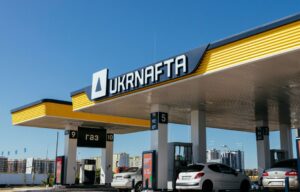
The Polish group Orlen is interested in expanding its presence in Ukraine and is considering the possibility of acquiring a stake in JSC “Ukrnafta,” the Polish online portal bankier.pl reported on Thursday, citing Orlen CEO Ireneusz Fafar.
“We have begun discussions regarding the possibility of our participation in Ukrnafta. We are one of the partners in this process. Whether this participation will take place and what form it will take is a matter for negotiations with the Ukrainian side,” he stated at a press conference.
According to him, the Ukrainian market is of paramount importance to the group, especially for the oil refinery in Mažeikiai (Lithuania), which sells nearly 18% of its products there.
“We believe that the war will end and Ukraine will emerge victorious. We would like to participate more actively in this market than we do now. We are one of the main partners supplying fuel to Ukraine and would like to strengthen this position,” Fafara emphasized.
He added that Orlen sells about 1.5 million tons of petroleum products in Ukraine annually.
JSC “Ukrnafta” is Ukraine’s largest oil production company, carrying out a full cycle of activities in the field of production: exploration, oil and gas production, provision of oilfield services, as well as management of the largest network of gas stations in Ukraine, UKRNAFTA.
The company has over 1,106 oil wells and 131 gas wells on its balance sheet.
The shareholders of JSC “Ukrnafta” are NJSC “Naftogaz of Ukraine” and the Ministry of Defense of Ukraine. Since 2022, the company has been under state management and is implementing a large-scale business transformation.
The UKRNAFTA gas station network is the largest network of gas stations in Ukraine, comprising nearly 700 stations and ranking among the top three in terms of fuel sales volume. The UKRNAFTA brand consolidates networks that previously operated under the Glusco, Shell, and U.Go brands.

Ukrainian industry has withstood what seemed impossible. Despite large-scale destruction, energy crises and the constant military threat, production in Ukraine has not stopped. In 2025, the processing industry paid UAH 367.5 billion in taxes — 18% of all revenues to the state budget. This is the largest increase among all sectors of the economy.
Behind these figures are entrepreneurs who continue to take risks, invest and build. And also state policy, which in recent years has begun to focus more on supporting production: financing programs, tax incentives and the development of industrial parks.
A network of 116 industrial parks has already been formed in Ukraine. On their territories, 37 industrial enterprises have already been built or are being built: 22 plants have been put into operation, another 15 are in the process of construction.
Now the main thing is to scale this process and turn industrial parks into real points of production, investment and new jobs.
“Production is the driver of the country’s economy. These are jobs, taxes, development and resilience, which can already be seen in the example of the Bila Tserkva Industrial Park. It is important that there should be more such projects. That production facilities develop, investors invest funds, and people acquire the necessary skills to work in the new economy,” notes Vasyl Khmelnytsky, founder of the UNIT.City innovation park and the Bila Tserkva Industrial Park, initiator of the forum.
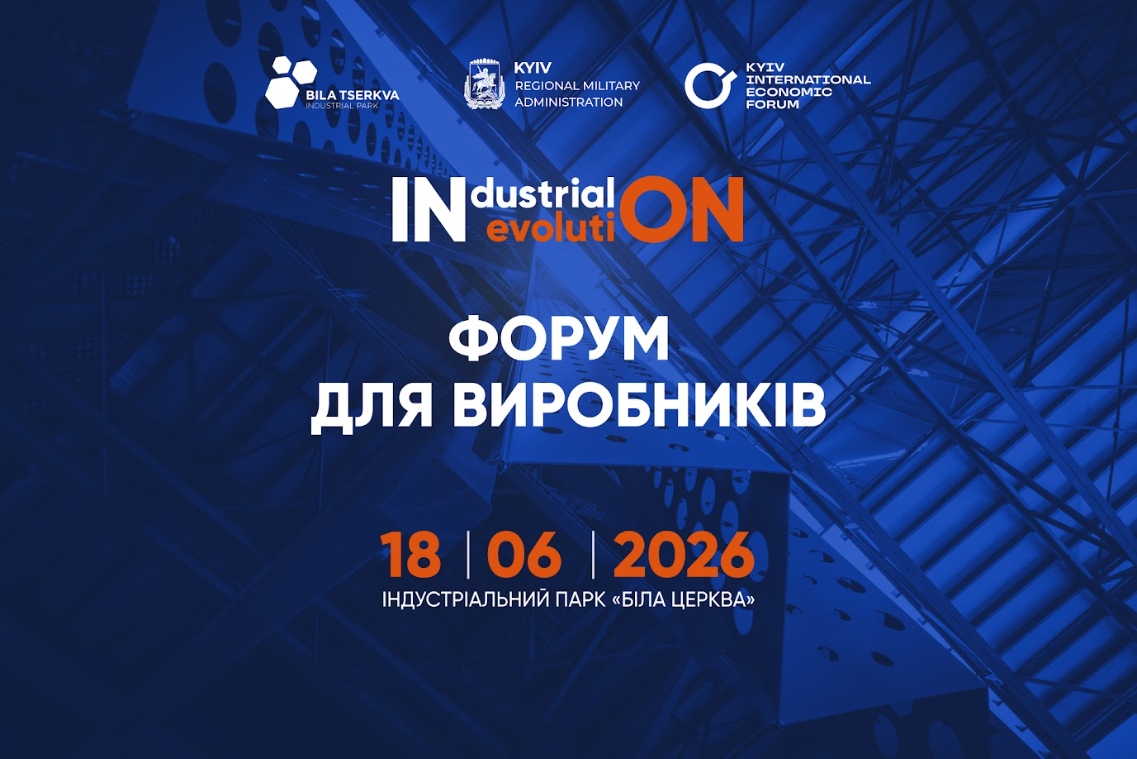
These very issues will become the main topic of the forum “Industrial Evolution: Production Switches on the Economy” which will take place on June 18, 2026, at the Bila Tserkva Industrial Park for the fifth time already.
The forum will bring together more than 1,500 participants — owners and managers of production companies, investors, representatives of the authorities, the financial sector and experts. International delegations from the business, industrial, investment and diplomatic environment will also take part in the forum.
The program includes panel discussions, an exhibition zone of technologies and equipment for manufacturers, practical cases of companies that are already scaling production in Ukraine, and networking.
At the center of the discussions are energy challenges, the shortage of personnel, access to financing and insurance, state support, industrial parks, exports and new markets.
Among the speakers of the forum:
Manufacturers will share practical experience of working during the war, and representatives of the state will tell which support tools are already working and what is planned next.
The organizers of the forum are the Bila Tserkva Industrial Park, the Kyiv Regional Military Administration, Astrobuild LLC (management company and developer of the Bila Tserkva Industrial Park) and the Kyiv International Economic Forum.
Participation is free of charge with prior registration: industry.forumkyiv.org
Industrial Evolution, INDUSTRIAL PARKS, UKRAINIAN MANUFACTURING



