

The Ministry of Healthcare of Ukraine approved a roadmap for the introduction of health insurance by order of August 25, the ministry’s website reported on Monday.
According to the report, it is proposed to add a system of additional health insurance to the current system of financing healthcare in Ukraine at the expense of the state budget as a potential source of financial resources for the healthcare sector. This is because, due to the negative economic consequences of Russia’s large-scale armed aggression against Ukraine, the available financial resources are insufficient to meet the needs of citizens for sufficient quantity and quality of medical services.
The main advantages of additional health insurance, according to the Ministry of Health, include expanded access to additional services, improved quality of treatment not covered by the medical guarantees program, faster access to specialist doctors, coverage of expensive medicines and treatments, or access to additional medical services.
The additional health insurance is expected to help reduce the burden on the state budget in the healthcare sector, increase the choice of healthcare providers, insurers and insurance packages, which promotes competition in the insurance market and improves the quality of services provided by insurers, and attract private capital that can support the development and modernization of healthcare facilities and infrastructure.
According to the order, important steps to increase the role of additional health insurance should include: a clear definition of medical services not covered by the medical guarantees program, as well as other cases in which medical services can be provided to patients at the expense of individuals and legal entities. To this end, the Ministry of Health, together with the expert community, will develop the necessary regulations to determine the cases in which additional health insurance can complement rather than duplicate the medical guarantees program.
In addition, the development of pharmaceutical insurance, which provides for reimbursement of expenses for the purchase of medicines and/or medical devices, is also envisaged. This type of insurance is intended to protect patients from high costs of medicines, especially in cases where expensive or long-term treatment outside the state guarantee program is required.
To address these challenges, the Ministry of Healthcare, together with associations of insurers, banking institutions and other interested organizations, will establish cooperation in the field of additional medical insurance of the population’s expenses related to the provision of medicines and medical devices. In particular, joint activities are planned to enhance communication and find ways to resolve problematic issues, including simplifying the mechanisms for introducing additional health insurance and raising public awareness through information campaigns.
The Interdepartmental Commission for the distribution of the first tranche of the European Investment Bank (EIB) funds recommends to allocate UAH 1.5 billion for the implementation of 140 reconstruction projects in the regions of Ukraine, the press service of the Ministry of Development of Communities, Territories and Infrastructure (Ministry of Restoration) reported.
According to the report, it is about the balance of funds received in 2022 from the EIB in the state budget and which will be directed to new budgetary programs by the decision of the government.
At a meeting on August 28, the commission considered proposals to finance 165 projects for UAH 1.9 billion and agreed on the allocation of funds for 140 eligible projects.
Thus, 49 projects for the development of project documentation were selected, 27 – rehabilitation of health care facilities, 19 – educational institutions, 16 – civil defense facilities, eight – water supply and drainage facilities, two – heat supply.
The leaders in the number of agreed projects were Chernihiv (40 projects), Kherson (14), Donetsk (16), Zaporizhzhya and Mykolayiv regions (9 each).
As reported, in June 2023, the Cabinet of Ministers of Ukraine adopted a resolution on the Procedure and Conditions for Distribution of EIB funds in the amount of UAH 4.4 billion. According to this decision, the Ministry of Rehabilitation is determined as the main administrator of funds and responsible executor of subventions from the state budget to local budgets. Priority is given to those regions that suffered the most as a result of the armed aggression or experienced the greatest burden due to a significant influx of internally displaced persons.
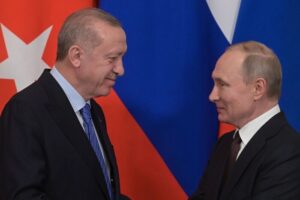
Turkish President Recep Tayyip Erdogan intends to visit Russian Federation next week and meet with Russian President Vladimir Putin to discuss the renewal of the Black Sea grain agreement, Bloomberg wrote Monday, citing information from two Turkish officials familiar with the matter.
“Erdogan may travel to Russia on Sept. 8 before heading to India to attend the G-20 summit in New Delhi, the interlocutors said. The Turkish presidential administration declined to comment to Bloomberg,” the report said.
State-owned Oschadbank has canceled the 1% conversion fee on transactions with its cards abroad, the bank’s CEO Sergey Naumov said.
“It has become even more favorable to use our payment means in other countries,” he wrote in Telegram.
Naumov added that the bank also automatically extended until December 31 the validity of cards that were to expire after February 2022, including cards for internally displaced persons.
“These cards are fully functional: you can pay with them in the trade and service network, withdraw cash from them at ATMs and the like,” – specified the head of the Board.
The previous time Oschadbank extended the validity of cards for three months at the end of May.
As indicated by the National Bank in the report for 2022, the leaders in Ukraine in the issuance of payment cards are state-owned PrivatBank and Oschadbank – respectively 43.8% and 15.4%, as well as Universal Bank (mono) – 13.2%.
In general, according to the NBU data, in 2022 the total number of issued payment cards in Ukraine increased by 23.2% – from 89.1 million pcs to 109.8 million pcs, while a year earlier – by 21.3%.
At the same time, the total number of active bank cards, after reaching a historic high of 47.2m units at the end of March this year, decreased by 0.6m units, or 1.3%, to 46.6m units in April-June, according to the National Bank.
Benchmark oil prices are slightly rising on Monday morning. Last Friday, quotes rose, but ended in the red for the second week in a row.
The price of October futures for Brent on the London ICE Futures exchange at 8:19 a.m. is $84.53 per barrel, which is 5 cents (0.06%) higher than at the close of the previous session. Last Friday, these contracts rose by $1.12 (1.3%) to $84.48 per barrel.
Quotes for WTI futures for October in electronic trading on the New York Mercantile Exchange (NYMEX) by this time increased by 11 cents (0.14%) to $79.94 per barrel. At the end of the previous session, they rose by $0.78 (1%) to $79.83 per barrel.
Last week, Brent fell by 0.4% and WTI by 1%.
Oil market participants are evaluating the speech of Federal Reserve Chairman Jerome Powell at the Jackson Hole Economic Symposium. According to him, the Fed is not done fighting high inflation and may raise interest rates again if necessary.
“We stand ready to raise rates even higher if necessary, and we intend to maintain a restrictive monetary policy until we have confidence that inflation is moving steadily downward toward our target,” he said.
Meanwhile, the Chinese authorities have announced new measures to support the economy, which relate to the housing market and the stock market.
“The news of further stimulus in China has provided additional support,” said Warren Patterson of ING Groep NV. – “However, prices are likely to remain in a certain range in the short term, given the continuing concerns about shrinking demand and rising supply.
Meanwhile, data from the oilfield services company Baker Hughes showed that over the past week, the number of operating oil rigs in the United States decreased by 8 units to 512, which is the lowest since February 2022.
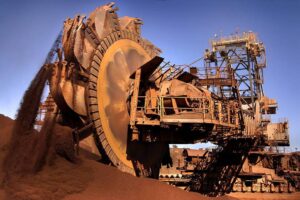
Krivoy Rog Iron Ore Mining Company (KZHRK) in January-July of this year decreased production of commercial iron ore from underground mining by 29.7% compared to the same period last year – to 1,430 thousand tons.
According to the company, in July the mine “Pokrovska” produced 70 thousand tons of ore, “Krivoy Rog” – 75 thousand tons, “Kozatska” – 40 thousand tons and “Ternivska” 40 thousand tons, as a whole for the combine in July – 225 thousand tons.
As reported, KZHRK in 2022 reduced production of commercial iron ore from underground mining by 32.8% year-on-year to 2.888 million tons.
KZhRK specializes in underground iron ore mining. KZHRK has four mines: “Pokrovskaya” (formerly “Oktyabrskaya”), “Krivorozhskaya” mine (“Rodina”), “Kozatska” (formerly “Gvardeyskaya”) and “Ternovskaya” (formerly Ordzhonikidze ore mine, then named after Lenin).
Starmill Limited owns 99.88% of shares of the combine.
Earlier it was reported that SCM Group owns a certain stake in KZhRK, while Metinvest Group has nothing to do with KZhRK. At the same time, SCM Group is only an investor, while Privat Group has operational control over the plant.



