Prices for Ukrainian sunflower rose by 11.5% during the week against the background of the growth of exchange prices for vegetable oils and amounted to 14000-14500 UAH/tonne and will grow further, according to experts of analytical center of the cooperative “PUSK”, created within the framework of the All-Ukrainian Agrarian Rada (AAR).
“Last week, the price of soybean oil on world exchanges jumped up a lot, which caused the physical market, prices for raw materials for production of vegetable oils, including prices for sunflower oil,” the analysts explained.
This led to the fact that the current week began with a price range for sunflower around 14000-14500 UAH/ton, while last week began with prices at 12000-12500 UAH/ton.
“Uniformly, the market is moving from falling to rising. The other day India bought 80 thousand tons of sunflower oil from Ukraine, which increased the prices for vegetable oil on FOB terms by $ 60-70/ton, on CPT terms the oil went up by $100-110/ton. The market has become more active, the sunflower has most likely passed the “price bottom” of this season”, – stressed the analytical department of the cooperative “PUSK”.
Experts reminded that in July plants will begin to process rape, which could lead to a sunflower price subsidence in the second half of July.
Further rise in sunflower prices will be moderate, they will not exceed 15 500 hryvnias/ton, “PUSK” forecasts.
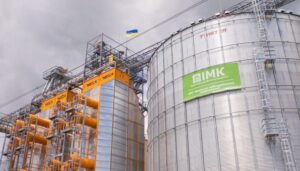
IMK Agro Holding plans to invest about $233 million between 2023 and 2033 in the implementation of the Smart Green Strategy.
The group said Tuesday at the Warsaw Stock Exchange that the strategy aims, among other things, to improve operational efficiency, reduce fossil fuel consumption, reduce greenhouse gas emissions and invest in buying agricultural land in Ukraine.
According to the agroholding, sustainable agriculture projects have been developed for each strategic direction.
It is noted that the funds to implement the strategy will come from our own sources and borrowed funds. They will be used to improve operational efficiency through the introduction of new technologies and sustainable environmental development.
It is indicated that the agricultural holding intends to completely replace the equipment for spraying crops to reduce the use of pesticides by 50%. It is also planned to replace the grain dryers on more productive and transfer part of them to biofuel to reduce natural gas consumption. In addition, the company plans to modernize seeders to ensure faster and higher-quality sowing.
In addition, in 2023 the agricultural holding plans to buy 75 new grain carriers. It estimates that this will reduce consumption of diesel fuel and exhaust emissions, as well as enable the company to transport crops for subsequent export.
By 2033, IMC intends to convert 80% of its acreage to simplified tillage (switching from plowing to deep loosening), which will reduce CO2 emissions and improve soil conditions.
According to the press release, IMC will use part of the funds to buy land, taking advantage of changes in legislation that allow agricultural companies to acquire land ownership. For the time being, the land cultivated by the agricultural holding is on lease.
The program also provides for the development and support of local communities in regions where IMC farms operate.
“Our strategy takes into account Ukraine’s integration with the EU and the consequent need to reduce gas emissions and fossil fuel consumption. Our program is a long-term one, but some of its elements we are going to implement this year”, – Alex Lissitsa, president of IMC Holding, said.
IMK specializes in the cultivation of grain and oilseeds and milk production in Ukraine. It cultivates about 123.3 thousand hectares of land in Poltava, Chernigov and Sumy regions. It has a storage capacity of 554 thsd. tons of grains and oilseeds.
In January-March 2023, IMC Agro Holding incurred a net loss of $4.10 million, which is 2.6 times less than in the same period last year, largely due to higher logistics and distribution costs. The revenues of the holding increased by 11% – to $41.96 million, of which $35.03 million were exports. Due to the decrease of production costs the gross profit of IMC grew 3.9 times – to $8.60 million. Because of the increase in logistics and distribution costs by half (to $9.40 million) the operating loss was $2.85 million, which is twice as much as in the first quarter of 2022.

Ukrainian President Volodymyr Zelensky signed law No. 8250, which will allow the State Property Fund (SPF) to resume big privatization and make state property management more efficient by improving the SPF structure.
“The law on the updated structure of the State Property Fund has been signed by the president. The document will improve the organizational structure of the fund: 12 regional branches of separate legal entities will become structural divisions of the SPF. This will create a mechanism for the establishment of market salaries and CRI in all regions and will increase the efficiency of state property management, “- wrote the head of the SPF Rustem Umerov in Facebook on Tuesday.
He recalled that the document also contains provisions for the resumption of large-scale privatization, improving the procedure for managing the sanctioned property, increasing the lease term of state property up to five years.
According to the norms of the law, by the decision of the VAKS, the sub-sanctioned property will be transferred directly to the SPF and the proceeds from the sale will be sent to the Fund for Liquidation of Consequences of Armed Aggression.
Umerov thanked the president, the government and MPs for supporting this important initiative.
Earlier, it was reported that after the mentioned law enters into force, the SPF will independently make managerial decisions on the unsanctioned property: privatization, sale, lease or management.
The law bans unsanctioned individuals and citizens of aggressor countries from holding positions as heads of state-owned companies and members of supervisory boards, and cancels the procedure for obtaining approval from local authorities for directors of state-owned companies that are managed by the SPF.
After the enactment of the law the department expects the increase of income from renting state property by 20-25%, or 100 million UAH per year, as well as the improvement of leased property.
On 30 May, the Rada supported the bill #8250 by 231 votes of people’s deputies with the required minimum of 226 votes.
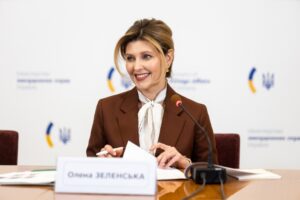
First Lady of Ukraine Elena Zelenskaya, during her visit to Israel, asked for help from local epidemiologists to overcome the consequences of the Kakhovka reservoir explosion, the press service of the President of Ukraine reported on Tuesday evening.
“Asked for help from Israeli epidemiologists in overcoming the consequences of the explosion of the Kakhovka hydroelectric power plant, which threatens the entire country ecological disaster,” the agency quotes Zelenskaya.
In addition, the first lady met with the wife of the Prime Minister of the State of Israel, Sarah Netanyahu, they discussed the experience of Israel in creating and using the system of early warning of the air threat, which allows more accurate information to citizens about the danger.
The parties did not ignore the topic of children affected by the war: both psychologically and physically. It is noted that Zelenskaya and Netanyahu discussed ways to rehabilitate them.

Ukraine after the war will be very interesting for private investors to develop renewable energy sources, said Harry Boyd Carpenter, managing director for climate strategy and implementation of the European Bank for Reconstruction and Development.
“There’s also going to be a huge wave of investment in renewable energy. Ukraine does have a success story because before the war there was an extraordinary boom in RE – 5 GW of privately financed renewable energy. And that’s the template for Ukraine in the future,” Carpenter said during a discussion on Ukraine’s transition from coal to clean energy ahead of the London Recovery Conference (URC2023), scheduled for June 21-22.
At the same time, according to him, Ukraine will also receive public sector money, but it should be spent primarily on the development of nuclear energy, as well as on construction and reconstruction of networks, to ensure, among other things, the work of decentralized system of renewable energy.
At the same time, the top manager of the EBRD called the commitment of Ukraine to abandon coal in power generation extremely important, noting that this course determines the further development of not only energy, but also the economy and the whole country.
He noted that the contours of the energy sector of Ukraine in the future are quite clear – it will be built on nuclear and renewable energy, and the country has huge resources in all these areas.
At the same time, Carpenter noted that RES used to develop under conditions of “imperfect market and tariffs”, calling it a difficult transition period, but expressed his belief that in the future their development will be based on three fundamental pillars that will remove these problems.
“The first will be a commitment to a green future (…). The second is market reforms. We need a well-functioning, transparent, clearly delineated market. And the third will be integration with the European energy system, which is already in full swing,” the EBRD top manager pointed out.
Besides, Carpenter assured that EBRD intends to continue to support Ukraine financially.
“We will provide Ukraine with EUR3 billion of support. And we are already halfway there. Much of this has come in the form of liquidity support for the energy sector – Naftogaz and Ukrenergo,” the banker emphasized.
Announcing URC2023 on June, 19 First vice-premier Yulia Sviridenko announced the goals in 10 years to show the new Ukraine and to reach over 100 GW of new green power generation capacity, to produce 40 million tons of “green” steel and to bring GDP to $1 trillion per year from $161 billion in 2022.
As reported, at the end of December 2022, NEC Ukrenergo, inter alia, attracted EUR300 million of credit funds from the EBRD to purchase equipment to restore substations subjected to massive Russian missile strikes, as well as to replenish working capital.
NJSC Naftogaz attracted a EUR300 million loan from the EBRD at the end of last year, and later, in early 2023, it received a grant of nearly EUR200 million for the purchase of gas.
According to the president of the bank, Odile Renaud-Basso, the EBRD in 2022 increased the amount of investment in projects in Ukraine to EUR1.7 billion compared to approximately EUR1 billion that it invested annually before. It plans to invest EUR3bn in Ukraine during 2022-2023.