

PJSC “Zaporozhkoks”, one of the largest Ukrainian producers of coke products and being a part of “Metinvest” group, in January-May this year increased the production of blast-furnace coke by 37.9% in comparison with the same period last year – up to 355.7 thousand tons from 258 thousand tons.
According to the company data, in May-2023 it produced 73.1 thousand tons of blast-furnace coke, compared to 68 thousand tons in May-2022 (7.5% increase).
As it was reported Zaporizhkoks in January-April 2023 increased blast furnace coke output by 48.7% y-o-y, to 282.6 thousand tons from 190 thousand tons. In April-2023 71.3 thousand tons of blast-furnace coke was produced, compared to 52.7 thousand tons in April-2022 (35.4% increase).
“Zaporizhkoks” in 2022 reduced the production of blast-furnace coke by 11.9% compared to 2021 – to 737.4 thousand tons, including 70.8 coke produced in December.
“Zaporizhkoks” produces about 10% of coke produced in Ukraine, owns a full technological cycle of processing of coke products. It also produces coke gas and pitch coke.
“Metinvest is a vertically integrated mining group of companies. Its major shareholders are SCM Group (71.24%) and Smart Holding (23.76%) that jointly manage the company.
Metinvest Holding LLC is the managing company of Metinvest group.

Agroholding KSG Agro because of the full-scale war launched by Russia ended 2022 with a net loss of $1.68 million compared to $17.71 million net profit in 2021, its EBITDA decreased 5.5 times to $1.79 million, the company said in its annual report on the Warsaw Stock Exchange.
“Disruption of traditional logistics, limitation of exports by the grain corridor, growth of personnel costs, security and energy autonomy – to list the negative factors of the new realities can be long. So, of course, the results of 2022 can not be compared with the previous year, which was a record result in terms of harvest, “- commented Sergey Kasyanov, the head of the Board of Directors and the majority shareholder of the agricultural holding.
According to the report, its revenue last year decreased 47.3% – to $16.2 million, gross profit – 3.3 times, to $3.18 million and operating profit – 18.8 times, to $0.44 million.
It is also specified that exchange losses increased 4.6 times to $2.63 million, net debt increased only 1.9% to $47.46 million and free cash at the end of the year was $0.27 million.
Last December, the inactive subsidiary Hlebna League LLC was also disposed of, and the loss on its disposal was $10.27 million.
“Despite the formal losses, our 2022 agroholding provided stable operations. Due to the vertical integration of building the business we did not increase the credit load, expanded the share of pork sales, providing 80% in the native Dnepropetrovsk region and entering the markets of Zaporozhye and Kharkov, where pork producers as a result of Russian aggression curtailed their activities,” – said Kasyanov.
“The Board of Directors is currently working on a new development strategy to expand the group’s operations in the European Union with the clear goal of having most of the group’s assets and revenues in the EU within the next 3-5 years,” the report said again.
It is pointed out that this can be achieved through a series of mergers and acquisitions, as well as equity and debt financing, including additional share issues.
“The board of directors has no plans to sell the group’s existing assets in Ukraine. On the contrary, the focus of the new strategy is on expansion and investment, thereby reducing the potential risks of investing in Ukraine alone and mitigating the negative impact on the group’s business of the current macroeconomic situation in Ukraine,” the document states.
According to it, the total number of pigs and piglets of agrarian group reduced only by 3.3% last year – to 42.26 thousand, while during the year it came to 106.04 thousand against 108.16 thousand a year earlier.
The report indicates that crop revenue fell more than fourfold to $4.5 million from $8.3 million.
According to the document, in December 2022, KSG Agro agreed with its main bank lender TAScombank on new loan terms from the first quarter of 2023, which better reflect the group’s wartime financing needs. According to them, the established total credit limit on TAScombank loans remains at 450 million UAH, the interest rates on tranches in UAH are 25% per annum and provide for partial compensation of the rate on state programs, and the interest rates on tranches in USD and euro are set at 9% per annum.
Under the new terms, the main part of the principal must be paid in December 2025, while under the previous conditions by the end of 2023 should already have been paid $ 9.57 million.
It is specified that in the first quarter of 2023, the company repaid a total of $7.08 million of the existing TAScombank loans and received new tranches under the new terms totaling $6.03 million.
In addition, the $15.5 million loan to Kasyanov’s OLBIS Investments S.A., which owns 57.96 percent of KSG Agro, has been extended through 2036, the report said.
“Based on management’s five-year financial projections, the group is expected to generate sufficient profits in the future to ensure that total capital will increase to a positive value in the long term. In addition, when Russia’s war in Ukraine eventually ends and the economy begins to recover, the fair value of the group’s assets is also expected to increase naturally. Until then, the group is dependent on continued external financing,” the paper said.
KSG Agro, a vertically integrated holding company, is engaged in pig breeding as well as the production, storage, processing and sale of grain and oilseeds. Its land bank is about 21 thousand hectares in Dnipropetrovsk and Kherson regions.
According to Agroholding, it is one of the top-5 pork producers in Ukraine.

International Atomic Energy Agency (IAEA) Director General Rafael Grossi is planning a third visit to the Russian-occupied Zaporizhzhia NPP in the near future after the full-scale invasion.
“With the establishment of the five principles and my intention to report any violations, it is important that I go to the plant again to assess developments since my last visit in late March,” said Grossi, quoted in a statement on the IAEA website Friday evening.
He expressed concern about several developments at ZNPP. First of all, this is the absence of reserve power lines to supply the plant for its own needs, although there were four of them before the war.
At the same time, the head of the IAEA noted that ZNPP had been relying on the only functioning 750 kV power line for three months already, after its failure, as it happened last time on May 22, the largest nuclear power plant in Europe was forced to switch to emergency diesel generators.
He added that Ukraine cannot repair the 330 kV transmission line located in its controlled territory that was damaged on March 1 because of military operations, and the Russian Federation also has not repaired the open 330 kV switchyard at the Russian-controlled Zaporizhzhya TPP adjacent to ZNPP in order to restore the other three 330 kV lines.
“The IAEA team of experts who are at ZNPP have not yet been granted access to ZNPP to assess the situation, despite Rosatom’s assurance that they would be able to go there. Consultations are continuing to ensure access. Our experts need to see with their own eyes what the current situation looks like and whether it is possible to restore the backup power supply there,” stressed Grossi.
According to Grossi, the tense situation at the ZNPP is underscored in particular by the mine explosions near its site, which were reported by the IAEA team last week, as well as the May 17 disruption of automatic data transmission from eight radiation monitoring stations located near the plant.
He explained that Ukraine provides data to the IAEA’s International Radiation Monitoring Information System (IRMIS), which collects near real-time radiation monitoring data from more than 6,000 stations worldwide. In the absence of automatic communication, daily radiation monitoring data from eight stations are provided to the IAEA team at ZNPP and subsequently made public on IRMIS.
According to Grossi, he told the Ukrainian authorities that the IAEA was dealing with the issue with the plant management and the relevant officials.
He also noted that the planned rotation of the current IAEA expert team – the eighth since the mission was established last September – had been postponed due to local weather conditions. At the same time, new teams of IAEA experts arrived at all Ukrainian-controlled nuclear power plants, including the Chernobyl plant.
In general, describing the situation at Ukrainian nuclear power plants, the Head of the IAEA pointed out that the reactor of the Pivdenno-Ukrainian Nuclear Power Plant, which was stopped on May 22, had returned to its full capacity. In addition, he noted that the transportation of spent nuclear fuel to the centralized storage facility in the Chernobyl zone had been resumed. At the same time, he noted that on May 29, an unmanned aerial vehicle was detected near the Khmelnytskyi nuclear power plant.
Grosi also confirmed that within the framework of the comprehensive medical assistance program implemented by the agency, including psychological support, the IAEA experts would deliver necessary medical equipment to several nuclear power plants.
In addition, he said, the IAEA has arranged two more deliveries of equipment for nuclear power plants in recent days, this time of satellite communication systems, antennas and spectrometers, made possible by contributions from Britain and the United States.
“With 18 deliveries since the beginning of military operations, the IAEA has facilitated a package of international assistance to Ukraine totaling EUR5 million in support of nuclear safety,” Grossi concluded.
As reported, at the end of May the head of the IAEA proposed 5 safety principles for the Zaporizhzhia NPP
First, the ZNPP should not be used as a storage facility or a base for storing heavy weapons (i.e., MLRS, artillery systems and ammunition, tanks) or military personnel that could be used for an attack from the plant.
Second, there should be no attacks from or against the plant, in particular on reactors, spent fuel storage facilities, other critical infrastructure or personnel.
The third principle is to eliminate the risk of loss of external power supply, for which it must be made available and safe.
Fourth – all structures, systems, and elements necessary for safe and reliable operation of ZNPP must be protected against encroachments or acts of sabotage.
As a fifth principle, he pointed out that no actions should be taken that undermine the above principles.
He said he formed this set as a result of intensive consultations with Ukrainian leadership as well as Russia.
On June 2, the Ukrainian State Nuclear Regulatory Inspectorate (SNRIU) reported that Russian hijackers had blocked the transmission of information from the Automated Radiation Situation Monitoring System (ARMS) of the Zaporizhzhia NPP that they occupied.
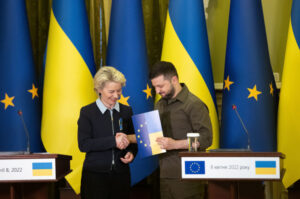
The volume of financing actually allocated to Ukraine by international partners in January-May 2023 to cover the deficit was $17.97 billion, compared to $32.14 billion in the previous year, the Ministry of Finance has reported.
According to the data published on its website, the grants accounted for $6.16 billion or 31.1%, including $6 billion provided by the United States, $52 million by Germany, $50 million by Spain and $21 million each by Finland and Ireland.
The biggest creditor of Ukraine this year is the EU – $8.12 billion, which has already exceeded the figure of the whole of last year, which amounted to $7.96 billion.
The IMF is the third largest lender this year with $2.706 billion compared with $2.693 billion last year.
They are followed by Canada with $1.76 billion, as well as the World Bank and the UK with $0.55 billion and $0.50 billion, respectively.
The Ministry of Finance specifies that the internal financing of the state budget through placement of government bonds amounted to $6.74 billion during this period.
As earlier reported, in 2023, Ukraine expects to receive about $42-42.5 bln in external financing of the state budget.

The Internet Association of Ukraine has proposed to the National Bank a transparent and legal mechanism for blocking phishing domains. This is stated in a letter from the IAU to the NBU.
Currently, in accordance with the regulations of the NCU, which was implemented by the Order of January 30, 2023 No. 67/850, the mechanism for blocking domains is as follows:
– The NBU creates and provides the National Coordination Center for Cybersecurity under the National Security and Defense Council (hereinafter referred to as the NCCC) with a list of phishing domains;
– The NCCC places this list on its “transit” server, from which providers are obliged to receive it;
– Internet service providers are obliged to configure their DNS servers in such a way that Internet users are redirected to the NCCC landing page without their knowledge and consent in case of requests for domains from the list;
Thus, if an Internet user intends to visit a domain included in the list, he or she will be redirected to the NCCC server.
Section 9 of the Regulation provides that the NCCC server collects and stores detailed information about Internet users who have been redirected to this server, namely:
When a user navigates to a landing page, the System stores technical information, including the date and time, IP address (subnet) from which the transition is made, domain name or URL of the phishing page to which the transition is made, user-agent, etc., and unspecified government agencies are granted access to the above information.
Thus, the NCCC unlawfully collects, stores, uses and disseminates confidential information about a person, such as information that discloses details of the person’s actions on the network (which domain was intended to be visited, the date and time of the visit attempt, the IP address from which the domain was visited).
What the EBA suggests
In a letter to the National Bank regarding the phishing domain filtering system, the EBA proposes that the NBU introduce a legal and transparent mechanism for blocking phishing domains.
It is as follows:
– The NBU compiles and constantly updates the list of phishing domains (as it is currently doing);
– The NBU provides Internet providers with access to this list from its server (without using a third-party “transit” server);
– Internet service providers voluntarily download this list, having the opportunity to send to the NBU a reasoned refusal to block a particular domain, which will reduce the likelihood of erroneous blocking of domains that are not phishing;
– if an Internet user tries to visit one of the domains on the list, he or she is redirected to a landing page hosted by his or her provider, which solves the problem of unlawful violation of the confidentiality of user information.
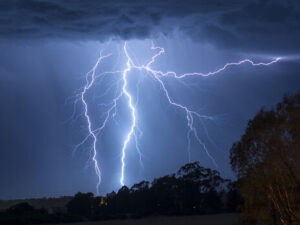
A thunderstorm has started in Kiev, according to the website of the Hydrometeocenter.
In connection with this, I (yellow) level of danger is declared in the capital.
Also thunderstorm is expected in Kiev, Zhitomir, Vinnitsa, Rivne, Ternopol, Chernivtsi, Volyn, Lviv, Zakarpattia and Ivano-Frankivsk regions. In the Carpathian highlands on Friday – thunderstorm with squalls.



