

CE “Municipal Guard” (Kiev) on May 15 again announced a tender for the purchase of voluntary vehicle insurance (hull insurance).
According to a message in the system of electronic public procurement Prozorro, the total expected cost of purchasing services is 1.563 million UAH.
The deadline for submitting bids is May 23.
As reported, a similar tender with an expected value of UAH 1.028 million was announced on April 21, 2023.
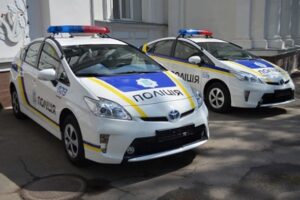
On May 15 the Main Department of the National Police in Odesa region announced its intention to conclude a motor insurance contract with IC “VUSO” (Kyiv) – 908 vehicles.
According to a message in the system of electronic public procurement Prozorro, the expected value of the purchase of services was 1.883 million UAH, the company offered 1.451 million UAH.
IC “Euroins Ukraine” participated in the tender with the price offer of UAH 1,4 mln.
IC “VUSO” was founded in 2001. The company owns 50 licenses: 34 – for voluntary and 16 – for compulsory types of insurance, it is represented in all regions of Ukraine. It is a member of MTSBU and FSA, a member of the Agreement on direct settlement of losses and a member of the Nuclear Insurance Pool.

A five-year period of rebuilding Ukraine after the war will require additional investment of about $50 billion a year thanks to inflows of foreign capital, including private capital, the European Bank for Reconstruction and Development (EBRD) laid out this scenario in its Regional Economic Outlook report published on Tuesday.
“For a rapid recovery, foreign capital inflows need to reach $50 billion a year within five years,” the bank pointed out, citing lessons from history.
It noted that a quick recovery is not the norm: historically, most economies that emerge from armed conflict do not experience a long-term quiet period for 25 years afterward, nor do they recover to prewar per capita income levels even in the long run.
At the same time, the report says, 29 percent of economies do reach prewar per capita GDP levels within five years.
“For Ukraine to recover within five years, its economy would have to grow at a rate of 14% per year for the entire period. This would raise average GDP to $225 billion from about $150 billion in 2022 at constant prices,” the EBRD stressed.
In the meantime, the bank has kept Ukraine’s GDP growth forecast for 2023 and 2024 at 1% and 3%, respectively.
The bank added that the main common feature of the periods of stable extremely high economic growth is a high investment-to-GDP ratio. He reminded that before the war the moderate levels of investment in Ukraine were mainly financed by domestic savings: capital inflows were only 3% of GDP per year in 2010-21, while foreign direct investment tends to fall substantially after a war and takes a long time to recover.
This is why the report cites the example of Central and Southeast Europe in the 2000s, where domestic savings were low, but foreign financing helped sustain the investment boom.
In the case of Ukraine, doubling the level of investment (as part of GDP) would require a significant increase in the country’s absorptive capacity, as well as the governance structure needed to develop complex projects and contracts, the EBRD notes.
“In this scenario, the difference between the required level of investment and available domestic savings would probably need to be covered by external financing (net capital inflows) of 20 percent of GDP, or $50 billion per year,” the report summarizes.
The bank draws attention to the importance of private investment, as the private sector provides much-needed technological expertise, management know-how and a focus on economic efficiency.
“In addition to energy-efficient industrial capital and agricultural machinery, the private sector can make an important contribution to the rehabilitation of housing, as well as transport, energy and municipal infrastructure, provided that individual individuals and entities have adequate access to financing,” the report said.
The EBRD reminded that it had committed to invest EUR3 billion in Ukraine in 2022-2023, supporting the real economy, and is ready to play a key role in the recovery when circumstances permit.
As reported, Ukraine’s international financing to cover the state budget deficit is expected to rise to $42.5 billion in 2023, up from $32 billion in 2022.
According to the National Bank of Ukraine, direct investment in the country was $51.1 billion at the end of 2022, and peaked at $65.7 billion at the end of 2021.

The government on May 12 agreed with the proposal of the Ministry of Natural Resources and the Ministry of Forestry on a two-year experiment to issue a special permit for the use of forest resources (logging ticket) and a certificate of origin of timber and sawn timber made from it, starting June 1, 2023.
“This innovation is the next step in the implementation of a comprehensive reform of the timber industry of Ukraine. The purpose of the reform is to introduce transparent and effective management mechanisms in this sphere,” one of the developers of the project, the Office of Effective Regulation (BRDO), said in a statement on Monday.
It is specified that it will be possible to apply and receive relevant documents of permissive character online on the platform “Ecosystem”.
According to BRDO, conversion of these services into electronic format will reduce corruption risks, minimize “human factor”, save time and money for entrepreneurs, increase public control and transparency in felling. The project will also enable the introduction of a single electronic database logging tickets and certificates of origin of timber instead of the paper format.
The forestry reform in Ukraine, which started in 2016, is being worked on by BRDO experts together with the Ministry of Nature and the State Forestry Agency under the USAID/UKaid project “Transparency and Accountability in Public Administration and Services/TAPAS”, the release reminds.
As part of the reform of the forestry sector has already introduced the sale of untreated timber at electronic auctions. Since 2021 an interactive map of placement of timber processing facilities has been working in test mode in some regions. The industry has also implemented the project “Forest in smartphone”, which contains a list of logging tickets for timber harvesting and allows you to check the legality of logging on the online map of the department.
The next stage of the forest industry reform will be the separation of management, permitting and economic functions of the State Enterprise “Forests of Ukraine”, indicates BRDO.
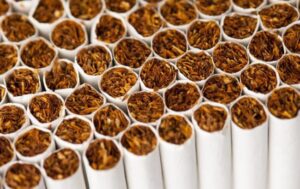
The volume of the illegal tobacco market in Ukraine reached 20.2% of the total market in February 2023, and more than half of it was products marked duty-free, said MP Yaroslav Zheleznyak in Telegram channel on Monday, referring to the report Kantar.
“Fresh data from the Kantar report on the illegal tobacco market: data for February 2022 – 20.2%… The main part of the “illegal” was products marked “duty-free” – 10.8%, “- he wrote.
According to the data presented by Zheleznyak, the share of illegal products was only 5% in June 2020 but by August 2022 it reached 21.9%. At the same time, contraband dropped from 3% to 1.8%, counterfeit products dropped from 1% to 8%, and duty-free labeled products dropped from 2% to 12.2%.
By November, the share of illegal products, as noted in the Kantar materials, was reduced to 17.8%: contraband decreased to 1.4%, counterfeit products – to 5.2% and duty-free – to 11.1%.
The increase by February was due to an increase in counterfeit products to 7.9%. The materials posted by the deputy indicates that 83% are counterfeit boren international tobacco companies without counterfeit excise stamps, while 17% are cigarettes of Ukrainian tobacco manufacturers with signs of counterfeit excise stamps: “Ukrainian Tobacco Production” – 9% and “United Tobacco” – 8%.
Among the brands labeled for Duty Free or for export, sold illegally, the main one is Compliment (62%), and another 8% from Lifa, while among the producers the main share of Vinniki tobacco factory – 75%, and another 5% from “United Tobacco”, noted in materials published by the deputy.
He pointed out with reference to the report that the loss of the state budget because of the uncollected taxes reached 22 billion UAH for the year. “This is 279 tanks, 560 armored personnel carriers or 136 bikers,” – explained the deputy
The materials specify that 35% of illegal tobacco products sold through kiosks, 33% – through stores, 19% – street vendors and 10% in open markets.
As reported, the head of the Parliamentary Finance Committee Danil Hetmantsev estimated the monthly loss of revenue from the three excisable products in the state budget at $ 1 billion.
According to the Ministry of Finance, excise tax revenues totaled 9.9 billion UAH in April, compared to 9.8 billion UAH in March, 7 billion UAH in February and 5.3 billion UAH in January.
Parliamentary Finance Committee at a meeting on the situation on the excisable goods market in May 2023 recommended the State Tax Service of Ukraine to inspect the manufacturers and importers of tobacco products on the production and circulation of raw tobacco. It also sent recommendations to the Bureau of Economic Security of Ukraine and the National Police of Ukraine to take measures to detect and suppress: the illegal activities of plants for the production of alcohol and producers of alcoholic beverages.
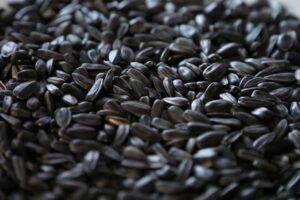
Ukraine benefits from the EU ban on the import of sunflower seeds to five neighboring countries, as domestic oil extraction plants are not sufficiently supplied with raw materials and are constantly experiencing a shortage, Stepan Kapshuk, director general of the Ukroliaprom association, told Interfax-Ukraine.
“Before the war there were 108 oil plants in Ukraine. Altogether they could produce 24 million tons of oil, of which 10 million tons were sunflower oil. However, these plants never managed to work at full capacity because of the lack of raw materials, which Ukraine exported. In the best seasons oil extraction plants managed to get 19 million tons of oil”, – explained the head of the industry association.
He said that previously the potential of Ukrainian oil extraction plants could produce 40-50 tons of oil per day. Because of the military actions in Ukraine stopped working about a dozen large operators, so daily plants produce 35 thousand tons of oil.
Kapshuk reminded that Ukroliaprom does not prevent the export of sunflower seeds, but proposes to introduce a mechanism of additional collection, in particular, export quotas.
“Now is the optimal moment for the government to take such a decision. Such a mechanism will bring about 3 billion UAH to the state budget, which can be used to pay salaries to the military,” – he stressed and said that the association has sent the relevant proposals to the Prime Minister.
Commenting on the agreement between the Ministry of Agrarian Policy of Ukraine and the Ministry of Agriculture of Bulgaria on signing a memorandum on sunflower oil, Kapshuk said that such a decision was caused by Bulgaria’s increase in its own production of sunflower oil.
According to his information, in recent years the number of oil extraction plants in Bulgaria has increased from 4 to 11. Last year the Bulgarian processors were able to buy Ukrainian sunflower seeds at affordable prices and increased the production of oil up to 250-300 thousand tons with the internal demand of about 150 thousand tons.
“They need to sell their own goods both on the domestic market and increase their exports,” explained the head of the industry association.
According to Kapshuk, Ukraine used to export butter to 124 countries. In recent years the geography of exports is narrowing and Ukrainian butter is sold to about 80 countries. Its main buyers are India, China, Europe and African countries.
The head of Ukroliaprom cited the experience of Ukroliaproduct ALC (Dikanka TM), which has established air shipments of organic sunflower oil to America, as a positive example of exporting to long distances.
At the same time, Kapshuk pointed out that Ukraine is actively pushed out of the Indian market by the Russian Federation, which has increased production of sunflower.
“It is not profitable for Ukraine to export oil over long distances because of high freight prices. It reaches $370 (probably per ton) on shipments to India alone. Therefore, exports to countries with a high number of Ukrainian diaspora is not profitable for our producers so far,” he said, stressing the importance of maintaining traditional markets for oil.



