
The European Bank for Reconstruction and Development (EBRD) and Multilateral Investment Guarantee Agency (MIGA) signed the first co-financing agreement in their history, under which MIGA provides guarantees for up to $200 million of trade finance risks to EBRD under its Trade Facilitation Program (TFP).
“The first country to benefit from this agreement will be Ukraine…The guarantee will cover EBRD trade finance in selected state banks, primarily in Ukraine,” the bank said in a press release Tuesday.
According to it, the MIGA guarantee was signed by the agency’s executive vice president, Hiroshi Matano, during a visit to EBRD President Odile Reno-Basso.
The EBRD recalled that it had sent EUR1.7 billion to Ukraine in 2022 and promised to increase this amount to at least EUR3 billion by the end of 2023, and had established an international partnership to help Ukraine and its financing with shareholders and donors.
“The MIGA and EBRD partnership will facilitate needed trade finance in Ukraine and other countries supported by MIGA and EBRD at a time of growing economic pressures and heightened geopolitical risks affecting trade, supply chains and critical imports,” Matano said in the release.
“This guarantee will be important in helping us expand our trade finance business in Ukraine, which is one of our strategic priorities in working in the country,” Reno-Basso said in turn.
The EBRD pointed out that since the outbreak of the war in Ukraine in February 2022, trade flows and supply chains in Ukraine have been seriously disrupted. In particular, the agricultural sector, which accounts for 11 percent of the country’s GDP, nearly 20 percent of the labor force, and nearly 40 percent of all exports, has been affected.
In addition to the physical disruption of transportation routes, financial intermediation has been a significant problem, as foreign commercial banks have stopped taking any direct risk on trade finance transactions in Ukraine. To address this problem, the EBRD’s TFP Program significantly increased the provision for Ukrainian banks to cover some of the increased demand.
Since February 2022, TFP has supported more than EUR400 million in trade transactions involving critical commodities for the Ukrainian economy. TFP also supports the entire supply chain to address food security issues: facilitating imports of seeds, fertilizers, fuel, tractors and combines into Ukraine, as well as exports of grain, oilseeds and vegetable oils to other EBRD countries of operations, including Egypt, Morocco, Turkey and Tunisia.
The EBRD has developed its Trade Facilitation Program to promote and facilitate international trade with and within Central and Eastern Europe, the CIS and Southern and Eastern Mediterranean countries (SEMED). TFP provides guarantees to international commercial banks to cover political and commercial payment risk on transactions made by issuing banks in the EBRD’s countries of operations.
More than 100 issuing banks in 26 countries participate in the program, working with more than 800 confirming banks and their subsidiaries worldwide.
Since the program’s launch in 1999, TFP has supported over 30,000 trade finance transactions totaling over EUR30 billion, including 3,000 foreign trade transactions of Ukraine totaling over EUR4 billion.
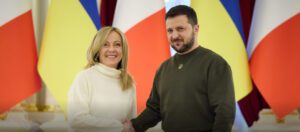
Italy will organize a conference involving its own business companies on Ukraine’s reconstruction in April this year, Italian Prime Minister Giorgi Meloni said.
“We talked today about the post-war reconstruction of Ukraine and about the Fast Recovery Plan, that is, the reconstruction now … In Italy a conference will be organized about the reconstruction in April of this year. We will work on its organization. Italian companies have the know-how and the competence to provide, because Italy wants to play a significant role in the reconstruction of Ukraine – starting now,” Meloni said at a press conference with the President of Ukraine in Kyiv.
She stressed that Italy can do a lot in this context because it has tremendous experience in many strategic areas like infrastructure, transportation, energy, agriculture, food, etc.
“Our know-how will be able to give an opportunity and the right signal: what was destroyed will be restored,” said the Italian prime minister.
In addition, she said, holding the international exhibition Expo 2030 in Odessa, where Ukraine has applied, would be a special signal to Europe, namely: “Belief that everything will be fine in Ukraine.”
Also, as Meloni noted, Italy already provides support and assistance to Ukraine in the field of protection of cultural heritage.

Ukraine in January this year increased the export of ferroalloys in kind by 33.6% compared to the same period last year, to 55,900 tonnes.
According to statistics released by the State Customs Service, in monetary terms, the export of ferroalloys dropped by 35.5% to $51.573 million.
At the same time, the major exports were to Poland (57.25% of supplies in monetary terms), China (10.39%) and Turkey (7.37%).
In addition, in January, Ukraine imported 402 tonnes of these products, which is 96.3% less compared to January 2022. In monetary terms, imports fell by 84.6% to $1.657 million.
Ferroalloys were mainly imported from China (27.68%), Armenia (18.03%) and Slovakia (14.54%).

Booster vaccinations against COVID-19 increase protection against severe forms of the disease, including infections from the latest mutations of the virus, but their effect wanes quickly, Le Figaro newspaper reported Tuesday, citing a study.
“Repeated doses increased protection against the risk of hospitalization, but this protection proved to be limited in time,” the publication quotes a report prepared under the auspices of the National Agency for Drug Safety and the insurance fund Assurance maladie.
The publication notes that this is the latest in a series of studies on the effectiveness of anticoviral vaccines since their introduction. Moderna and Pfizer/BioNTech vaccines are mainly used in France. They have been shown to be effective against severe forms of the disease, although they “marginally reduce the risk of subsequent infection in the medium or long term.”
However, even for cases requiring hospitalization, efficacy tends to decline over time, causing the country’s health authorities to organize booster vaccination campaigns with the third, fourth and already the fifth dose.
At the same time, writes Le Figaro, there is still insufficient data on the real benefit of these sequential booster vaccinations, especially after the emergence of the Omicron strain, which has several varieties and more easily eludes protective measures.
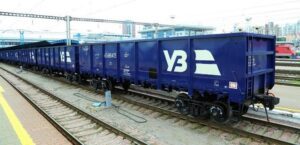
Ukrzaliznytsia JSC (UZ) may create a freight carrier company by the end of 2023 to operate in Europe, UZ board chairman Alexander Kamyshyn confirmed to Interfax-Ukraine news agency.
“It is true, we have to develop a European carrier both in passenger transportation and in cargo transportation. We have shown that we can be efficient, and those of our citizens who have used the services of European railroads have appreciated the difference in schedule, service, and many other things,” Kamyshyn said.
The necessity of creating one’s own company for cargo transportation outside of Ukraine is dictated by the fact that Ukrainian cargo carriers have difficulties working with European carriers. “Unfortunately, it is difficult for our cargo carriers to use European freight,” said Kamyshyn.
According to the head of UZ, such a company can be created by the end of the year. “There is hope, and we are doing everything to make it come true, but the speed of approvals in Europe, unfortunately, we would like it to be faster,” said Kamyshyn.
He also noticed that in order to establish a cargo carrier company one should not only buy the rolling stock, but also to get a license, to register and to hire a team.
Earlier it was reported that in the framework of the project UZ bought 40 tank cars European way, which will be supplied to the chain of diesel fuel in Ukraine, and plans to buy 100 fitting platforms.
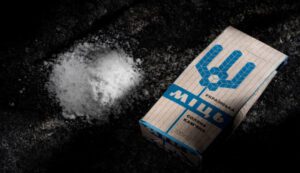
The SE “Artemsol” and the fundraising platform United24 to the anniversary of the full-scale Russian invasion into Ukraine launched a special batch of salt “Ìіць. Ukrainian stone” of 100 thousand packs in 200 gr, it will be sold in the “Silpo” network and through the online retailer Rozetka for UAH 500 per pack.
According to a press release from Artemsol on Tuesday, the profit of 465 hryvnia from each pack will be used to form a flotilla of kamikaze drones for the needs of the Main Department of Intelligence of Ukraine (GUR).
“Because of Russian shelling, the mines of Soledar stopped producing salt in April 2022. This happened for the first time since World War II. Artemsol workshops burned down, equipment was destroyed, buildings were destroyed, and more than 2,500 people whose lives were inextricably linked to the city of Donbass left their home. Some of the salt reserves were removed, but in the summer of 2022 a packet of Artemsol, which millions of Ukrainians know and love, finally disappeared from the shelves of major grocery chains,” stressed the state enterprise in a press release.
It is specified that UAH 465 of profit from each pack will be used to form a flotilla of kamikaze drones for GUR through the state fundraising platform United24, with one drone costing $700.
“The FPV (First Person View) kamikaze drone has become a revolutionary means of combat, as such drones are used literally as sniper weapons from up to 8 kilometers away. Installed cameras and modern communication means allow the operator to control the aircraft in real time, while remaining at a safe distance. “Thanks to a special batch of Artemsol, we will be able to staff a new FPV drone strike force, which in the near future will be in defense of our country along the entire front line,” Artemsol quotes the commander of the special UAV Wings of the Defense Ministry’s UAV, call sign “Volunteer”, as saying.
SE “Artemsol” – before the Russian occupation was one of the largest enterprises of extraction and sale of table salt in Central and Eastern Europe. Production facilities of “Artemsol” are located in Soledar, Donetsk region.
By the end of 2020, Artemsol reduced salt production by 41% compared to 2019 – to 1.18 million tons due to the impact of weather conditions, quarantine and increased competition in global markets.
The Silpo chain, which is part of the Fozzy Group, includes 325 supermarkets in 60 Ukrainian cities and four Le Silpo delicatessen stores – in Kiev, Dnipro, Kharkiv and Odessa.
Fozzy Group is one of the biggest Ukrainian retailers with more than 690 outlets all over the country. The company develops retail chains of different formats: Silpo supermarkets, Fozzy Cash & Carry wholesale hypermarkets, Fora convenience stores, Thrash! discounters, Bila Romashka pharmaceutical supermarkets, Ringoo personal electronics stores.
According to Opendatabot, the founder of Silpo-Food LLC is Closed Non-Diversified Venture Corporate Investment Fund Retail Capital PJSC (100%, Kiev), with Vladimir Kostelman as the ultimate beneficiary.



