

The L-70 anti-aircraft guns were sent from Lithuania to Ukraine on Friday, LRT reported.
“They will be able to destroy enemy planes, helicopters and UAVs at a distance of up to 5 kilometers in any weather conditions,” the report says.
It is noted that in addition to the anti-aircraft guns, ammunition and other equipment necessary for the operation of these units will also be transferred to Ukraine in the near future.
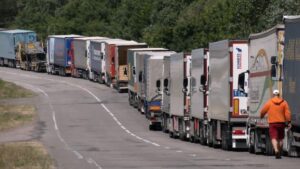
Exit and entry movement for vehicles weighing more than 7.5 tons without cargo will be opened from February 13 at the planned “Nijankovychi-Malhovice” checkpoint on the Ukrainian-Polish border, the Western Regional Department of the State Border Service reports on Facebook.
“From 8 a.m. on February 13 … will begin the implementation of the passage operations of cargo vehicles with a maximum weight of more than 7.5 tons, without cargo. The passage of trucks will be carried out around the clock in the direction of departure from Ukraine and on the entrance”, – said the officer of the press service of the Lviv border detachment Oleksandra Kuchkovskaya.
The new checkpoint is expected to unload the existing checkpoints on the border with Poland and speed up cargo and passenger logistics at the border. The point also provides for the movement of cars and the possibility of crossing for pedestrians.
As reported, the project of the mentioned crossing has been frozen since 2007. Work on its development intensified after a full-scale invasion by Russia, when the need to expand the capacity of existing border crossing points and the construction of new ones came to the fore. The construction of the Nijankovichi-Malhowice border crossing point was completed in cooperation with the Polish side under the Open Border project and became possible after the completion of the Nijankovich-Drohobych-Stryj road section, which leads to the border crossing point.
A total of 7 checkpoints for cars operate on the border with Poland: Dorohusk-Yagodin, Hrebenne-Rava-Russkaya, Korcheva-Krakivets, Kroszenko-Smilnytsia, Medyka-Sheginy. Points Zosin-Ustilug and Budomir-Hrushev are designed for crossing by vehicles weighing up to 3.5 tons.
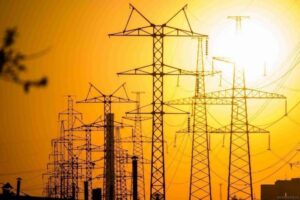
A combination of several factors: increased generation, reduced consumption due to the weekend and warm weather, as well as network repairs contributed to the absence of blackouts on Sunday, but Ukrainians still need to prepare for the application of power supply limitation schedules on weekdays, DTEK executive director Dmitry Sakharuk said.
“A combination of several factors allows today, on a particular day, not to limit consumption. But tomorrow, when it will be a working day and consumption will increase, schedules of cut-offs will be used,” Sakharuk said on the air of the National Telethon Unified News on Sunday.
At the same time, he explained that the increase of the generation and its supply was due to the return to the system of some thermal and nuclear units, the increase of the production of electricity by solar power plants due to the favorable weather conditions, as well as the networks repaired “thanks to the titanic work of energy specialists.
On the other hand, according to him, a positive role is played by warming, prolongation of the day and reduction of consumption due to the weekends.
At the same time Sakharuk specified that in addition to balance outages, that is, generation restrictions, there are also network restrictions, because of which in some areas there may still be outages.
“We still have a lot of places that were severely affected by the shelling and which have not been repaired completely, for example, Odessa, Kyiv region, Kharkiv region, Zaporizhia,” the DTEK top manager noted.
As it was reported, now all the nine nuclear power units available after the occupation of Zaporizhzhya NPP are in operation: over the last few days, the power system received additional 1220 MW of capacity after repair of one of the nuclear power units and 220 MW of additional capacity of another one due to the completion of repair of the turbine generator.

A Falcon 9 rocket on Sunday successfully injected another batch of 55 mini-satellites into orbit to replenish the orbital constellation of the Starlink global Internet coverage network, the developer SpaceX said.
“The launch of the 55 Starlink satellites has been confirmed,” the statement said.
The launch took place from the 40th launch pad of the U.S. Space Force Base at Cape Canaveral in Florida at 00:10 U.S. East Coast time (07:10 Kiev time).
About 1 hour and 4 minutes after the launch, the Starlink satellites separated from its second stage and entered a standard orbit.
This is the 73rd launch of a group of Internet satellites into orbit since May 2019 as part of the Starlink project and the fifth this year.
Including the current launch, SpaceX has already put more than 3,900 Starlink satellites into orbit. Some of them have malfunctioned or fallen out of orbit. Over 3.6 thousand devices remain in orbit in working condition.
Meanwhile, the first reusable stage rocket carrier rocket, which was used for the 12th time, about nine minutes after the launch made a vertical controlled landing on the sea platform drone A Shortfall of Gravitas, which was in the Atlantic at about 660 km from the launch pad.
In addition, a special rescue SpaceX vessel was to lift two fairing flaps of the rocket head part out of the water, which, after separation, descended by parachute. The re-use of the fairing saves SpaceX up to $6 million for its rocket launches.
The company is currently the largest satellite operator in the world. Internet from Starlink is available to users in 47 countries, including North America, Europe, the Far East and Australia. According to the Pentagon, the services of these satellites are also actively used by the U.S. military.
In the future SpaceX plans to deploy an orbital constellation of 12 thousand spacecraft (and in the future – from 30 thousand) to create a full-scale network, which will provide residents of the earth broadband Internet access anywhere in the world. The total amount of investments in implementation of the project is estimated at $10 billion.

Uzbekistan expects the inbound tourist flow into the country to grow by 34% in 2023, said Shukhrat Isakulov, advisor to the director of the UN World Tourism Organization (UNWTO) Silk Road office.
“If in 2016 2.2 million tourists visited Uzbekistan, in 2019 – 6.7 million. Of course, the pandemic has affected tourism, but since last year there is already a steady trend to increase the flow of tourists. Last year 5.2 million tourists visited Uzbekistan. This year, we plan to attract 7 million and exceed pre-pandemic indicators,” he told a press conference on Friday.

Authorities in Singapore have decided to abolish the requirement to present a certificate of vaccination against coronavirus or health insurance covering COVID 19 infection when entering the country, Asian media reported.
Such exemptions will take effect from February 13.
Mask wearing on public transport will be abolished but health care facilities will still require them.
Singapore’s Ministry of Health noted that about 80% of the population has received a minimum level of protection against the coronavirus through vaccination against COVID 19.
Last April, Singapore lifted much of the restrictions in place to combat the coronavirus.



