

Oil prices are declining in trading on Tuesday after a strong rise in the previous session.
The cost of March futures on London’s ICE Futures Exchange for Brent is $79.16 a barrel by 7:08 a.m. (EET) on Tuesday, down $0.49 (0.62%) from the close of the previous session. At the close of trading on Monday those contracts grew by $1.08 (1.37%) to $79.65 a barrel.
The price of WTI futures for February crude oil at electronic trades of NYMEX fell by that time by $0.40 (0.54%) to $74.23 per barrel. By closing of previous trades the cost of these contracts grew by $0.86 (1.17%) to $74.63 per barrel.
Brent has fallen by 8.5% and WTI by 8.1% at the end of the previous week.
Pressure on the oil market was put by “hawkish” statements by representatives of the U.S. Federal Reserve (Fed), Trading Economics wrote. Mary Daley, head of the Federal Reserve Bank (FRB) of San Francisco, said she thinks the U.S. central bank will have to raise the rate above 5% to fight inflation.
“I think a level above 5 percent is absolutely likely,” she told The Wall Street Journal.
Her counterpart at the Atlanta Fed, Rafael Bostic, also reiterated an earlier view that the rate would be raised to more than 5 percent. Currently, its range is 4.25-4.5%.
Investors are also cautious ahead of the Lunar New Year, fearing that increased travel by Chinese citizens could lead to an increase in the incidence of coronavirus worldwide, Trading Economics noted.
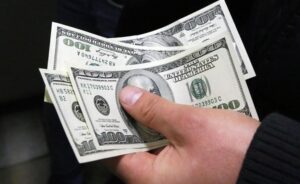
The U.S. dollar is declining against the euro and the Japanese yen and is rising against the pound sterling in trading on Tuesday.
The ICE-calculated index, which shows the dollar’s movement against six currencies (euro, Swiss franc, yen, Canadian dollar, pound sterling and Swedish krona), is up 0.17% in trading, while the broader WSJ Dollar Index is losing 0.05%.
The euro/dollar pair is trading at $1.0743 as of 7:34 a.m. Ksk on Tuesday, up from $1.0735 at the close of the previous session.
The U.S. currency pair with the yen dropped to 131.74 yen, compared to 131.89 yen in previous trading.
Pound to dollar exchange rate fell to $1.2173 against $1.2185 on Monday.
Investors are inclined to believe that the U.S. Federal Reserve (Fed) may be close to completing its tightening of monetary policy, despite hawkish statements from the regulator’s management.
Mary Daley, head of the Federal Reserve Bank (Fed) of San Francisco, said she believes the U.S. central bank will have to raise the rate above 5% to fight inflation.
Her colleague at the Atlanta Fed, Rafael Bostic, also confirmed his earlier opinion that the rate would be raised to more than 5%. Currently, its range is 4.25-4.5%.
Meanwhile, the easing of anti-coronaval restrictions in China is spurring demand for risky assets.
The Chinese yuan is up 0.1% at 6.7640 yuan/$1 from 6.7725 yuan/$1 the day before.
The ICE-calculated index showing the dollar’s dynamics against six currencies (euro, Swiss franc, yen, Canadian dollar, pound sterling and Swedish krona) is up 0.17% in trading, while the broader WSJ Dollar Index is losing 0.05%.
The euro/dollar pair is trading at $1.0743 as of 7:34 a.m. Ksk on Tuesday, up from $1.0735 at the close of the previous session.
The U.S. currency pair with the yen dropped to 131.74 yen, compared to 131.89 yen in previous trading.
Pound to dollar exchange rate fell to $1.2173 against $1.2185 on Monday.
Investors are inclined to believe that the U.S. Federal Reserve (Fed) may be close to completing its tightening of monetary policy, despite hawkish statements from the regulator’s management.
Mary Daley, head of the Federal Reserve Bank (Fed) of San Francisco, said she believes the U.S. central bank will have to raise the rate above 5% to fight inflation.
Her colleague at the Atlanta Fed, Rafael Bostic, also confirmed his earlier opinion that the rate would be raised to more than 5%. Currently, its range is 4.25-4.5%.
Meanwhile, the easing of anti-coronaval restrictions in China is spurring demand for risky assets.
The Chinese yuan is up 0.1% at 6.7640 yuan/$1 from 6.7725 yuan/$1 the day before.
EURO, pound, U.S. dollar, yen

The labor market in Ukraine recovered by 50% in 2023, this year employers predict a shortage of skilled employees and wage increases by 8-30%
These are the results of a December study presented on Monday by Work.ua.
“The Ukrainian labor market greeted the New Year under the blast of checkers, but with all the problems immediately got down to business. Job seekers activated already on January 2 and in the first week of the month showed more activity than in similar periods in all previous 10 years,” – said in the message.
Specialists Work.ua noted that in December 2022 the number of proposals amounted to 53.179 thousand job vacancies: despite the expected decline of business activity during the winter, shelling and blackouts, the labor market showed a better result than in December last year.
According to published information, at the end of 2022, employers placed 89% of vacancies in Ukrainian language and only 8% – in Russian. Lviv was and still is the most Ukrainianized city – 97% of vacancies in Ukrainian, closely followed by Kiev – 89%. At the same time the highest dynamics of growth of Ukrainian (twice) and decline of Russian is shown by Dnepr, Kharkiv and Odessa.
The company stressed that by the end of 2022 the greatest dynamics of recovery in December compared with November showed the front-line regions: Kherson region – 66%, Nikolaev region – 34%, Donetsk region – 30%, Kharkiv region – 10%. Noteworthy: after the de-occupation of Kherson, the number of vacancies in the region increased fourfold – from 37 in October to 164 in December.
It is noted that during the year 2022, fraudsters have become more active. Thus, the site Work.ua removed more than 600 fraudulent vacancies from “marriage agencies” and streaming platforms.
The average salary in Ukraine in 2022 kept at the level of 15 thousand UAH. At the same time the highest salary was offered in the Kiev region – 17.5 thousand UAH and remotely – 22.5 thousand UAH. But in 2023 employers predict an increase of salaries from 8% to 30% depending on field of business, military and economic situation in the country.
In 2022 the labor market about 2 million applicants have updated or have posted their resumes. In December-2022 there were 35% fewer new candidates than in December-2021.
Against the background of migration of Ukrainians abroad, joining the AFU, and power outages, the total number of people of working age in the labor market has decreased. Employers predict a shortage of qualified personnel in 2023, if Ukrainians do not start to return from abroad.
It is specified, that the highest salaries (not IT or managers) in December 2022 were offered to driver – international – 40 thousand UAH, car dealer – 35 thousand UAH, realtor – 30 thousand UAH, diesel mechanic – 29 thousand UAH. The increase of wages of the latter is connected with the increase of the use and the necessity of service of generators.
The smallest salary in December was offered to cleaners – 8 thousand UAH, veterinarian assistants – 9 thousand UAH and dishwashers – 9 thousand UAH.

The National Anti-Corruption Bureau of Ukraine has put MP of the IX convocation Margarita Shol (Servant of the People faction) on the wanted list.
“She did not indicate in the declaration for 2020 information about renting an apartment in Pechersk in Kyiv, the cost of which is about UAH 5 million,” the NABU press service said in a telegram channel.

State budget expenditures on Ukraine’s defense and national security in 2022 amounted to 32.5% of GDP, UAH 1.537 billion were allocated, Secretary of the National Security and Defense Council (NSDC) Oleksiy Danilov said.
“A few numbers. UAG 1.537 billion in 2022 were allocated to Ukraine’s national security and defense, which accounted for 32.5% of GDP. The needs of the frontline are of primary importance for President Zelensky and a definite priority!” Danilov said on Twitter.

The Motor (Transport) Insurance Bureau of Ukraine (MTIBU) has increased tariffs for Green Card policies for those traveling abroad by 3.1% from December 30, 2022, the Bureau’s website reports.
According to the MTIBU, the last change in tariffs took place on November 17, 2022 upward by 6.9%, on October 3, 2022 – downward by 5.5%, and before that (July 26) – upward by 26.3%.
Green Card policies have been sold since 2009 in two types: all of Europe and Moldova. Also, from January 1, 2016, Ukrainian policies “Green Card” began to operate in Azerbaijan.
According to the MTIBU, the cost of the “Green Card” in Ukraine for 15 days for traveling in Europe for passenger cars rises to UAH 952 (previously – UAH 923), for buses – up to UAH 3.578 thousand (UAH 3.469 thousand), for trucks – up to UAH 2.246 thousand (UAH 2.178 thousand).
The cost of “Green Card” for one month for cars is now UAH 1.516 thousand (against UAH 1.470 thousand before), buses – UAH 4.970 thousand (UAH 4.818 thousand), trucks – UAH 2.982 thousand (UAH 2.891 thousand).
Six-month and annual policies “Green Card” for cars will now cost UAH 6.731 thousand and UAH 8.333 thousand respectively, for buses – UAH 17.396 thousand and UAH 32.307 thousand, for trucks – UAH 14.116 thousand and UAH 26.641 thousand.
The cost of policies for trips to Azerbaijan and Moldova for passenger cars for 15 days will be UAH 694 (previously UAH 672), for one month – UAH 1,020 thousand (UAH 989), for six months – UAH 2,340 thousand (UAH 2,268 thousand), for a year – UAH 3,331 thousand (UAH 3,230 thousand).
The amounts of single insurance payments under the contracts of international compulsory insurance of civil liability of owners of land vehicles are established by the Resolution of the Cabinet of Ministers of January 6, 2005 and are determined in euros.
“Green Card” is a system of insurance protection for victims of road accidents regardless of their country of residence and country of vehicle registration. “Green Card” covers the territory of 44 countries in Europe, Asia and Africa.
According to the decision of the General Assembly of the Council of the Bureau of the international motor insurance system “Green Card”, adopted in Luxembourg in May 2004, Ukraine is a full member of this system since January 1, 2005.



