

Oil prices are falling on Monday amid a general decline in investor appetite for risk in connection with information about the ongoing protests in China against covid restrictions.
As Bloomberg reports, protests were held in cities across the country, including the capital Beijing, as well as Shanghai, Xinjiang and Wuhan, which was originally the epicenter of the spread of COVID-19.
That contributes to a stronger U.S. dollar, which reduces the attractiveness of investing in commodities and also raises the possibility of even more significant tightening of restrictions by Chinese authorities, the agency said.
The value of January futures on Brent crude oil on London’s ICE Futures Exchange by 7:10 a.m. KSC on Monday was $81.31 per barrel, down $2.32 (2.77%) from the previous session’s close. Those contracts fell by $1.71 (2%) to $83.63 per barrel at the close of trading on Friday.
The price of WTI futures for January crude oil fell by $2.31 (3.03%) to $73.97 per barrel at electronic trading on the New York Mercantile Exchange (NYMEX). By closing of previous trades the cost of these contracts fell by $1.66 (2.1%) to $76.28 per barrel.
Brent fell 4.6% and WTI fell 4.8% at the end of last week.
“The outlook for the oil market remains unfavorable and the events of this weekend in China do not add to the positive,” said Warren Patterson, who is in charge of commodity strategy at ING Groep NV in Singapore.
According to the forecast of analytical company Kpler, oil demand in China in the fourth quarter will decrease to 15.11 million barrels per day (bpd) from 15.82 million bpd a year earlier.

The U.S. dollar is strengthening against the euro and the pound sterling in trading on Monday, becoming cheaper in pair with the yen.
The yuan exchange rate is declining amid the ongoing protests in China against covid restrictions.
The situation in China led to a decrease in appetite for risk in world markets that supports the dollar and yen, which are considered as “safe haven” currencies.
According to Bloomberg, protests were held in cities across the country, including the capital Beijing, as well as Shanghai, Xinjiang and Wuhan, which was originally the epicenter of the spread of COVID-19.
The ICE-calculated index showing the dynamics of the dollar against six currencies (euro, Swiss franc, yen, Canadian dollar, pound sterling and Swedish krona) added 0.39% on Monday, while the broader WSJ Dollar Index gained 0.25%.
The euro/dollar pair is trading at $1.0354 as of 7:55 a.m. Ksk, up from $1.0400 at the close of the previous session. The pound fell to $1.2050, compared to $1.2094 at Friday’s close.
The dollar fell to 138.44 yen against 139.19 yen at the close of the previous session. The euro slid down to 143.28 yen from 144.75 yen.
The U.S. currency pair with the yuan rose to 7.2053 yuan against 7.1654 yuan on Friday. The value of the dollar against the offshore yuan (traded in Hong Kong) rose to 7.2249 yuan from 7.1920 yuan.

The government on November 25 allocated UAH 152.7 million to finance establishment or development of processing enterprises and agricultural producers within the framework of the program “eRabota”, the Ministry of Economy said.
“Due to the funds allocated today entrepreneurs have to create more than a thousand jobs”, – as the first Vice Prime Minister – Minister of Economy Yulia Sviridenko stated in the release.
The department specified that 119 million UAH out of this amount is provided for the creation or development of processing enterprises, which will receive 22 enterprises and due to which 405 jobs are planned to be created.
The Ministry of Economy specified that 11 grants will be given for food production, four – for the repair and installation of machinery and equipment, two grants each for furniture production and chemical products, one grant each for the production of rubber and plastic products, wood processing and manufacture, as well as for textile production.
According to the release, the remaining 33.7 million UAH will be received by 6 companies in the form of grants for the establishment or development of horticulture, viticulture and berry growing. In particular, it is planned to grow apples, hazelnuts, walnuts, blueberries and blueberries, which should create 635 jobs (28 – permanent and 607 – seasonal).

The number of refugees from Ukraine registered for temporary protection or similar national protection schemes in Europe reached 4 million 751.07 thousand as of November 22, 2022, the Office of the UN High Commissioner for Refugees (UNHCR) said on its website.
In the month since Oct. 25, the increase was 324,32,000, up from 242,900 and 214,300 in the previous two months, respectively, and about 1.8 million in total since the end of May.
The largest increase over the past month showed Germany – about 206.5 thousand, Poland – about 38.9 thousand, France – about 14 thousand, Romania – 11.7 thousand and the Czech Republic – about 9.5 thousand.
According to data of the UNHCR, collected from the national governments, the most refugees with the status of temporary protection in Poland – 1 million 507.89 thousand, given that the country from Ukraine, according to the Polish border service, since the war arrived 8.008 million people, and in the opposite direction went to Ukraine 6.196 million.
They are followed by Germany and the Czech Republic, where the number of registered for temporary protection of refugees from Ukraine was 1 million 21.67 thousand and 462.41 thousand, respectively.
Italy still occupies the fourth place – 164,17 thousand (3,5 thousand more), and Spain closes the third place – 154,46 thousand (5,2 thousand more).
Great Britain follows after that – 146.2 thousand (7.8 thousand increase), and Bulgaria with amount of 146.03 thousand (3.3 thousand growth) – the only country where the number of registered with temporary protection is much more than the number of registered refugees from Ukraine – 51.86 thousand.
There are more than 100 thousand Ukrainians registered for temporary protection in two countries – France and Slovakia: 118.99 thousand (data as of October, 21) and 101.24 thousand (increase by 2,7 thousand).
From 50 thousand to 100 thousand refugees from Ukraine with temporary protection status are also in Romania – 87.89 thousand, Austria – 86.90 thousand (an increase of 2.1 thousand), the Netherlands – 79.25 thousand (data of September 30), Lithuania – 70.67 thousand (an increase of less than 2 thousand, as for other countries below, where the dynamics are not specified)
Switzerland is also among them – 69.61 thousand (an increase of 2.8 thousand), Ireland – 64.28 thousand (an increase of 3.8 thousand), Belgium – 59.53 thousand and Portugal – 52.88 thousand (data of October 3).
Sweden comes next with indicators of 25 to 50 thousand – 48.36 thousand, Finland – 43.81 thousand, Latvia – 42.82 thousand (an increase of 2.1 thousand),
Estonia – 38.73 thousand, Denmark – 34.95 thousand, Hungary – 32.27 thousand, Norway – 32.10 thousand are also in this category.
From 10 to 25 thousand refugees from Ukraine with temporary protection status in Greece – 20.0 thousand, Croatia – 19.13 thousand and Cyprus – 18.29 thousand.
In addition, the UN statistics on refugees from Ukraine received temporary protection status in Slovenia – 8.07 thousand, Montenegro – 6.96 thousand, Luxembourg – 6.76 thousand, Iceland – 1.77 thousand, Malta – 1.54 thousand, Serbia and Kosovo – 1.09 thousand and Liechtenstein – 0.36 thousand.
The UN also indicates countries with registered refugees from Ukraine, but no data on their status: Turkey (data of May 19) – 145 thousand, Moldova – 96.65 thousand, Georgia – 25.20 thousand, North Macedonia – 6.39 thousand, Azerbaijan – 3.94 thousand, Albania – 2.51 thousand, Armenia – 0.36 thousand and Bosnia and Herzegovina – 0.13 thousand.
The UN separately indicates Russia and Belarus, where the Ukrainian border was crossed by 2 million 852.4 thousand and 16.71 thousand people, respectively, but since October 3, the data for Russia are no longer updated, while for Belarus they are even older. According to the UN, the Russian Federation recorded all who crossed the border, while 16.43 thousand – in Belarus. There are no data on their status, as well as data on the Ukrainian border crossing in the opposite direction.
According to the UNHCR data as of November 22, a total of 15.592 million people left Ukraine since the beginning of the war (not counting the flow of people into the country), of which 7.584 million left for Poland, 2.852 million for Russia (data of October 3), 1.782 million for Hungary, 1.557 million for Romania, 953.9 thousand for Slovakia, 697.9 thousand for Moldova and 16.7 thousand for Belarus.
At the same time, according to the UN, from February 28 to November 22, 7.939 million people entered Ukraine (excluding Hungary, Russia and Belarus).
“Since the beginning of the Russian invasion, almost a third of Ukrainians have been forced to leave their homes. To date, this is one of the largest displacement crises in the world. In Ukraine, some 6.5 million people were internally displaced as of Oct. 27 as a result of the war,” indicates UNHCR, which increased its estimate of internally displaced people by 0.3 million.
UNHCR indicates that by mid-2021, there were only 53,47,000 Ukrainian refugees worldwide seeking appropriate status, including 36,49,000 in Europe.
The Ukrainian diaspora in the world as of mid-2020 was estimated by UNHCR at 6.1 million, including 5 million in Europe.

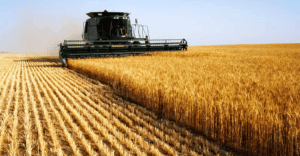
Ukrainian farmers by November 25 had harvested 63.81 million tonnes of main agricultural crops from a total area of 16.03 million hectares, while 1.5 million tonnes were harvested from 100,000 hectares for the period November 18-25, according to website of the Ministry of Agrarian Policy and Food.
The report clarifies that for the week the total area of farmland from which the harvest was collected increased by 1 percentage point (p.p.) – up to 82% of the previously planned area.
In terms of crops, the harvesting of wheat, barley, peas and rapeseed has been completed. During the week, the volumes of harvested millet (95% harvested), buckwheat (98%), sunflower (96%), soybeans (97%) did not change, but the volumes of harvested sugar beets increased to 93% (3 p.p.) and corn to 53% (3 p.p.)
According to the ministry, the final harvest of wheat this season amounted to 19.4 million tonnes from 4.7 million hectares, barley – 5.6 million tonnes from 1.6 million hectares, rapeseed – 3.2 million tonnes from 1.1 million hectares, peas – 261,000 tonnes from 111,000 hectares.
In addition, by November 25, a total of 13.5 million tonnes of corn (up 1.2 million tonnes per week) were harvested from 2.2 million hectares (up 100,000 hectares), 9.8 million tonnes of sunflower from 4.5 million ha (no change), 8.2 million tonnes of sugar beets (up 300,000 tonnes) from 166,000 hectares (up 4,000 hectares), 3.6 million tonnes of soybeans from 1.5 million hectares (no change), 156,000 tonnes of buckwheat from 115,000 hectares (unchanged), as well as 98,000 tonnes of millet from 42,600 ha (unchanged).
According to the ministry, the average yield for all crops in the current season was 43.7 centners per hectare, including corn – 60.1 centners per hectare, wheat – 41.2 centners per hectare, barley – 35.1 centners per hectare, rapeseed – 28.9 centners/ha, soybeans – 24 centners/ha, peas – 23.4 centners/ha, millet – 23.1 centners/ha, sunflower – 21.7 centners/ha, buckwheat – 13.7 centners/ha, sugar beets – 495 centners/ha.
Germany will support Ukraine’s agricultural sector by the end of this year providing EUR 9 million to buy generators and help restore war-affected farms, while the countries are coordinating a joint EUR 5 million project to develop Ukrainian horticulture.
According to the website of the Ministry of Agrarian Policy and Food on Friday, the German Minister of Agriculture Cem Ozdemir and the head of the Ukrainian Ministry of Agriculture Mykola Solskyi have agreed on the financial aid.
According to the department, Solskyy said that the project is very relevant to Ukraine on the background of the government program, which provides an opportunity to receive a grant for the development of their own horticulture, berry growing and viticulture, and which enjoys great popularity among farmers. Thus, during the five months since its launch grants for more than 240 million UAH have been agreed upon.
In addition, the ministers discussed enhancing cooperation on the Grain from Ukraine food initiative, within the framework of which the United States through its Agency for International Development (USAID) will provide up to $20 million. Solskyy also thanked Germany for being one of the first countries that joined this humanitarian program and funded the transportation of a shipload of grain from Ukraine to Ethiopia.
“Many countries have indicated that they are willing to participate in this program. This is important because of several aspects. First, it is right from the point of view of humanitarian relations in the world. Secondly, Africa needs to know who really cares about it, and because of the actions of which country they are suffering. We are working to make sure that the grain corridor continues to work as long as possible so that we can get our food to where it is needed all the time. And, of course, we will be grateful for the continued support of our partners,” the Ministry of Agrarian Policy quoted Solskyi as saying.



