

PJSC “Production and Technical Enterprise ”Ukrenergochormet” (Kharkiv) ended 2025 with a net loss of UAH 58.5 thousand, whereas in 2024 it reported a profit of UAH 69.6 thousand.
According to the company’s announcement in the disclosure system of the National Securities and Stock Market Commission (NSSMC) regarding the remote holding of the general meeting of shareholders on May 18, there are five items on the agenda.
In particular, the meeting is scheduled to review the reports of the supervisory board and the chairman of the management board—the CEO—for 2025 and approve relevant measures, approve the annual report and the results of financial and economic activities, and establish the procedure for covering losses.
In addition, it is tentatively planned to grant consent for the execution of significant legal transactions.
As reported, “Ukrenergochormet” recorded a net profit of UAH 69,600 in 2024, compared to UAH 321,700 in 2023.
PJSC “VTP ”Ukrenergochormet” was registered in January 1992. Its main activities include the manufacture of steam boilers, the construction of other structures, and the wholesale trade of metals and metal ores.
According to the State Registration Service data for the fourth quarter of 2025, Vasyl Zaitsev owns 53.2414% of the company’s shares, and Andriy Zaitsev owns 39.6204%.
The authorized capital of the private joint-stock company is UAH 648,772 thousand, and the par value of a share is UAH 0.25.
The insurance company “Knyazha Life Vienna Insurance Group” (Kyiv) collected UAH 57.9 million in insurance premiums in 2025, which is 4.98% less than in 2024.
This was reported by the rating agency “Standard-Rating” on its website in a statement confirming the company’s financial stability rating/credit rating at the “uaAA+” level based on the results of the reporting period.
It is noted that the volume of insurance payments and reimbursements made by the company during this period reached UAH 33.657 million, which exceeded the volume of payments for 2024 by 22.91%. Thus, the insurer’s payout ratio increased by 13.20 percentage points to 58.17%, which is a high figure for the life insurance market in Ukraine.
The insurer’s acquisition costs for 2025 amounted to UAH 0.661 million, which is 40.72% less than in 2024.
At the end of 2025, the company’s operations were unprofitable. The net loss amounted to UAH 14.8 million, whereas at the end of 2024, the company’s net profit was UAH 29.6 million.
The RA also notes that as of January 1, 2026, the company’s assets grew by 10.11% to UAH 1.001 billion, equity decreased by 3.14% to UAH 296.702 million, liabilities increased by 16.85% to UAH 704.238 million, cash and cash equivalents more than doubled to UAH 8.854 million, and government bonds and bank deposits as part of current financial investments increased by 9.35% to UAH 961.915 million.
Thus, as of the beginning of 2026, equity covered 42.13% of the insurer’s liabilities, and 1.26% of its liabilities were secured by cash and cash equivalents.
At the same time, as of the reporting date, the insurer had formed a portfolio of current financial investments totaling UAH 961.915 million, which included bank deposits and investments in government bonds.
RA notes that the company’s high level of external support is provided by its shareholder—the international insurance group headquartered in Austria, Vienna Insurance Group Wiener Städtische Versicherung AG, which is represented by 50 companies in 30 countries and is a leader in the insurance market of Central and Eastern Europe.
Imports of power generation units and rotating electrical converters to Ukraine in January–March 2026 fell by 31% compared to the same period in 2025—to $298.7 million, according to data from the State Customs Service.
According to statistical data, in March, imports of this equipment decreased by 11% compared to March 2025 and by 41.9% compared to February 2026—to $78.6 million.
In the first quarter of this year, electric generators and converters were most frequently imported from Romania—$62.7 million, accounting for 21% of total imports of these products—China—$55.4 million, or 18.5%—and the Czech Republic—$50.3 million, or 16.8%.
A year earlier, the largest suppliers were the Czech Republic with $85.7 million in shipments, the United States with $77.3 million, and Austria with $68.7 million.
Exports of electric generators from Ukraine in January–March 2026 were negligible, totaling $0.44 million.
As reported, in late July 2024, Ukraine exempted imports of electric generator equipment and batteries from customs duties and VAT. According to the State Customs Service, imports of electric generators and converters grew 2.3 times in 2025 compared to 2024, reaching $1.69 billion.
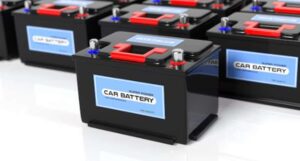
Imports of electric batteries and separators to Ukraine in January–March 2026 increased 3.8-fold compared to the same period in 2025—to $833.9 million, according to data from the State Customs Service.
The main supplier of these products in the first quarter was China, from which $736.8 million worth of batteries were imported, accounting for 88.4% of total imports. Products were also supplied from the Czech Republic ($19.7 million) and Taiwan ($11.9 million).
In January–March of last year, the largest suppliers were China with a 79.2% share, Bulgaria with 5.3%, and Taiwan with 3.8%.
In March 2026, battery imports increased 4.4-fold compared to March 2025, but decreased by 8.6% compared to February of this year—to $282 million.
At the same time, battery exports from Ukraine over the three-month period totaled $11.4 million, compared to $11 million a year earlier. The main export destinations were Poland — $3.3 million, France — $2 million, and Germany — $1.7 million.
As reported, at the end of July 2024, Ukraine exempted imports of electric generator equipment and batteries from customs duties and VAT. By the end of 2025, battery imports into Ukraine had grown by 55% compared to 2024—to $1.48 billion.
Source: https://expertsclub.eu

The Swiss Federal Council has approved the launch of a housing tax reform effective January 1, 2029—from that point on, homeowners who live in their own homes will no longer pay tax on the so-called imputed rental value (Eigenmietwert).
This is one of the most unique tax rules in Europe: until now, living in one’s own house or apartment in Switzerland was considered imputed income, on which income tax was levied. As part of the reform, this system will be abolished for both primary and secondary residences, while parliament simultaneously provided a constitutional option for cantons to introduce a special tax on second homes.
The reform became possible after Swiss voters supported changes to housing taxation in a referendum on September 28, 2025. According to Swissinfo, 57.7% of voters supported the reform. The Federal Council rejected requests from several Alpine cantons to postpone the launch of the new system until at least 2030, deciding to maintain the effective date of the changes as 2029.
For the housing market, this means not only the abolition of the imputed rental income tax but also a revision of related tax deductions. According to the official explanation, the current model was based on a balance between taxing imputed income and the ability to deduct mortgage interest and housing maintenance costs from the tax base. Following the reform, this mechanism will be significantly altered, and the cantons will have to adapt their own tax regimes over the coming years.
For foreign investors and real estate buyers, this news is important primarily as a signal of further adjustments to the rules governing home ownership in Switzerland. At the same time, the final impact of the reform on the tax burden will depend on the structure of real estate ownership, the presence of a mortgage, and how specific cantons exercise their right to impose a separate tax on second homes.
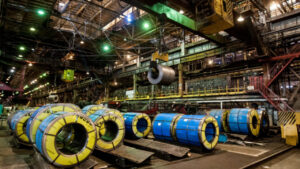
The Zaporizhzhia Metallurgical Plant “Zaporizhstal” has confirmed that its rolled steel products comply with European quality standards, having successfully passed a recertification audit to verify that its hot-rolled and cold-rolled steel meets the requirements of standards EN 10025 and EN 10130.
According to information from the company, on Thursday, February 23–24, 2026, auditors from Technical and Management Services LLC, a corporate partner of the German group TÜV SÜD Ukraine, inspected Zaporizhstal’s production technology for hot-rolled and cold-rolled steel products.
It is noted that the key areas of the audit were the main rolling mills: the hot rolling mill and the cold rolling mill. Particular attention was paid to examining the processes for organizing and conducting product testing for mechanical properties in the laboratories of the plant’s product testing and certification center. The auditors reviewed the plant’s regulatory, technical, and organizational documentation related to rolled steel production.
Based on the audit results, Zaporizhstal received a certificate of conformity for hot-rolled and cold-rolled steel products with the requirements of standard EN 10025-1:2004 (Annex ZA), Construction Regulation 305/2011/EU, and standard EN 10130, valid for three years.
It is noted that Zaporizhstal has been operating in accordance with the requirements of standards EN 10025-1:2004 and EN 10130:2006 since 2016. The plant has also been certified and has regularly confirmed its compliance with the requirements of the ISO 9001 quality management system since 2003, the ISO 14001 environmental management system, and the ISO 45001 occupational health and safety management system since 2008.
Zaporizhstal is one of Ukraine’s largest industrial enterprises, whose products are in high demand among consumers both in the domestic market and in many countries around the world.
Zaporizhstal is a joint venture of the Metinvest Group, whose main shareholders are PJSC System Capital Management (71.24%) and Smart Steel Limited (23.76%). Metinvest Holding LLC is the management company of the Metinvest Group.



