
Investment company S1 REIT supports the adoption and implementation of a draft law on the taxation of income received through digital platforms as a tool for combating the shadow economy in the real estate rental market, the company’s press service told Interfax-Ukraine.
S1 REIT CFO Vadym Pavlushyna noted that real estate investment trusts (REITs) operate with full tax transparency.
“We pay all taxes required by law on behalf of our investors. Specifically, dividend income is taxed at a rate of 9% (personal income tax) and 5% (military levy). For us, this is the standard, which we conscientiously and strictly adhere to. However, let’s be frank: most of the rental market remains in the ‘shadows.’ This creates an uneven playing field. It is quite difficult to convince people to ‘play by the rules’ when loopholes for tax evasion exist. Not least, these gaps are caused by weak regulation and a lack of oversight. “If the new bill creates conditions under which it becomes harder to avoid paying taxes, this will be a positive signal for the entire market,” he commented.
He emphasized that not only the state stands to gain from regulating the industry, but also investors and property owners who verify their income.
“They will be able to freely manage their funds and not fear audits, as they will have official confirmation of their income sources. This has become standard practice in EU countries, and Ukraine will finally not be an exception,” Pavlushyin noted.
As reported, on April 8, the Verkhovna Rada adopted in the first reading, as a basis subject to further refinement, draft law No. 15111-d on the automatic exchange of information regarding income on digital platforms, which is a structural milestone of the new financing program with the International Monetary Fund (IMF) that Ukraine was required to implement in March.
The initial version of the bill (No. 15111), submitted by the Cabinet of Ministers, covered income from the rental of real estate and vehicles; personal services and the sale of goods received by an individual through digital platforms in amounts up to 834 times the minimum wage (approximately UAH 7.2 million as of 2026), as well as the introduction of a tax threshold of EUR 2,000 per year. The obligations of a tax agent will fall on digital platform operators.
Draft Law No. 15111-d is a revised version of the initial government document prepared by the Verkhovna Rada Committee on Finance, Tax, and Customs Policy. Unlike the first draft, the final text omits a number of provisions that businesses and industry experts considered excessive.
A key change in Document No. 15111-d is the introduction of a preferential tax regime for self-employed individuals. It provides that instead of the general rate of 19.5% (18% personal income tax and 1.5% military levy) for income received through digital platforms, a rate of 5% will apply. For the duration of this special regime, such income is also exempt from the military levy. This model applies to individuals whose annual income does not exceed the limit set for the second group of single tax payers.
The revised draft document also clarified the registration procedure: users of online services will not need to register as sole proprietors—self-employed status will be granted automatically after registering on the platform and consenting to the transfer of information to the tax service.
S1 REIT is an investment company specializing in investments in professionally managed income-generating real estate. The company operates under the Real Estate Investment Trust (REIT) model, providing investors with the opportunity to participate in the ownership and receipt of income from profitable properties without directly managing the assets.
Currently, S1 REIT’s portfolio includes two funds—S1 VDNG and S1 Obolon. The funds’ assets consist of apartments in income-generating buildings developed by Standard One.
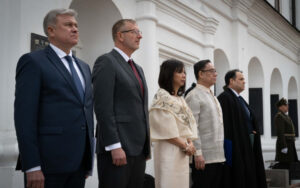
Ukrainian President Volodymyr Zelenskyy presided over a ceremony to receive the credentials of new diplomatic representatives from foreign countries and discussed issues of international security and support for Ukraine.
The newly appointed ambassadors who presented their credentials to Zelenskyy are Ahmed Ouail of Algeria, Alan Deniega of the Philippines, Jeff Bowan of Australia, and Victor Kirile of Moldova. The President congratulated them on the start of their diplomatic missions and thanked them for supporting Ukraine’s independence.
During the meeting, they discussed Russia’s war against Ukraine, the protection of citizens, as well as the situation in the Middle East and the Gulf region. According to Zelenskyy, partners emphasize the importance of Ukraine’s security mission and cooperation with countries currently under attack by the Iranian regime.
“Our goal is absolutely clear: we must enhance security everywhere and do everything possible to end the war and ensure reliable protection. We are counting heavily on coordination and mutual support. Ukraine is open to cooperation with everyone who truly values peace,” the president emphasized.
ALGERIA, AMBASSADOR, AUSTRALIA, MOLDOVA, PHILIPPINES, ZELENSKYY
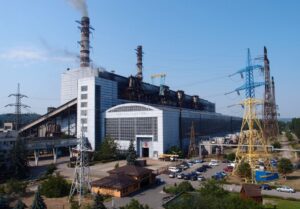
Centrenergo PJSC, 78.3% of whose shares are owned by the state, reported a net profit of UAH 4.6 billion for 2025, following years of losses, the company announced.
“23 billion UAH in revenue, 4.64 billion UAH in net profit, 22% profitability, 2.7 billion UAH in taxes and fees paid, 2 billion UAH in debts from previous periods repaid, 2 billion UAH of own funds spent on recovery after shelling,” the company stated in a Facebook post on Thursday.
The company also noted that its equity increased from a deficit of 6 billion UAH to a surplus of 2 billion UAH, calling this an exit from default.
“This is more than just a financial result. We have proven that a state-owned company can be effective and become a pillar of support for the country. Even under shelling, we bring benefit to the country and light to Ukrainians,” emphasized Centrenergo CEO Yevhen Harkavyi.
The company noted that over the course of the year, it sustained over 100 hits during shelling by the Russian Federation.
As reported, the State Property Fund, as the owner of 78.289% of the shares in PJSC “Centrenergo,” proposes to allocate between 1.2 billion UAH and 3 billion UAH for dividends based on the company’s 2025 performance, representing 30% and 75% of its net profit, respectively. The meeting is scheduled for April 24.
In December 2025, in an interview with Interfax-Ukraine, Andriy Hota, then-chairman of Centrenergo’s supervisory board, noted that the company was expected to end 2025 with a financial result that, in his words, had been achieved for the first time in decades—approximately 4.5 billion UAH in net profit. He added that starting in July 2024, when Yevhen Harkavyi was appointed CEO, Centrenergo had not posted a loss in a single month. In addition, the company has repaid nearly 2.5 billion UAH in debts from previous periods, including those owed to state-owned mines and Naftogaz, and has stopped accumulating new debt. At the same time, he noted that Ukrenergo owes the power company 2.2 billion UAH for work on the balancing market.
On April 2, at a meeting of Centrenergo shareholders, the State Property Fund proposed former Economy Minister Bohdan Danylyshyn and former Environment Minister Ruslan Strilets as candidates for members of its supervisory board—as its representatives. In addition, the State Property Fund proposed three independent members for the supervisory board: Farid Safarov, former deputy head of the Ministry of Energy from 2021 to 2024, who has also served as chairman of the supervisory board of JSC “UkrTatNafta” for the past four years and, since 2025, an advisor to the chairman of PJSC “Ukrnaftovoronburinnya,” Yelyzaveta Pushko-Tsybulyak, who served as head of the Finance Department from 2020 to 2023 and as a member of the Accounting Chamber of Ukraine from 2024 to 2025, as well as Benoît Plesca, who has headed the supervisory board of PJSC “Ukrainian Danube Shipping Company” from 2025 to the present, and served as chairman of the supervisory board of JSC “Ukrposhta” from 2018 to 2023.
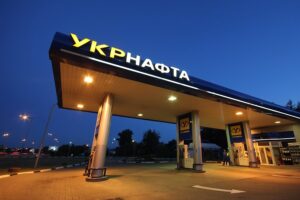
UKRNAFTA, Ukraine’s largest network of gas stations, doubled its fuel purchases in 2026 compared to last year to ensure stability for farmers during the planting season, the company’s CEO Bohdan Kukura told the Interfax-Ukraine news agency.
“We have received the first shipments of diesel from the United States. The government’s task was to ensure (the domestic market – IF-U) that there would be no shortage. We are fulfilling this: given the season and increased demand, we have purchased twice as much fuel as before. There will be no shortage. We are fully contracted, and we do not foresee any problems at all for April,” the company’s head emphasized.
According to him, in response to the government’s request, UKRNAFTA began using post-import financing instruments for the first time in its history. The first shipments of American fuel were purchased using credit lines from the state-owned Ukrgasbank and Oschadbank. The top manager noted that this mechanism has been in operation for only about a month but has already proven effective in ensuring energy security.
The CEO also explained that, given market volatility, UKRNAFTA has abandoned fixed-price contracts, as they are unprofitable for suppliers due to the inability to predict risks. Currently, work with clients is based exclusively on a “contract formula” tied to global Platts or Argus price indices.
Separately, Kukura commented on the sales structure: the share of retail customers (B2C) is about 50–70%, while the corporate segment (B2B cards and vouchers) accounts for 30–50%. He noted that farmers typically purchase fuel through small-scale wholesalers.
As the chairman of the UKRNAFTA board assured, thanks to strategic reserves and new logistics, there is no cause for panic. The company continues to actively work with banks, creating “effective solutions to supply the market,” so Ukrainian businesses can be confident in the availability of fuel at gas stations.
As reported, by the end of 2025, UKRNAFTA increased fuel sales in the B2B segment to 391.6 million liters, which is 61.7% more than the previous year’s figure and nearly eight times higher than the 2023 result. The number of active corporate clients during this period tripled—to 9,700 companies. Over three years, the company doubled the average daily fuel sales per gas station, and the average receipt at the network’s stores tripled—to 180 UAH.
UKRNAFTA is one of the largest gas station networks in Ukraine, comprising approximately 700 locations and ranking among the top three in terms of fuel sales volume. The network structure includes the assets of Glusko (85 gas stations) and Shell (118 gas stations). Additionally, 21 complexes of Ukrgazvydobuvannya (U.Go) operate under the UKRNAFTA brand on a franchise basis.
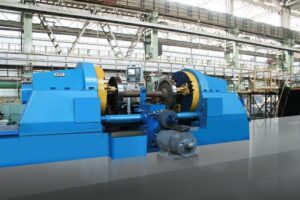
According to Fixygen, PJSC “Kramatorsk Heavy Machine Tool Plant” intends to hold its annual general meeting of shareholders on April 30, 2026, remotely via a written ballot. The record date for shareholders entitled to participate in the meeting is set for April 27, 2026.
According to the published notice, the agenda includes the supervisory board’s report for 2025, the CEO’s report on the results of financial and operational activities for 2025 and the main areas of focus for 2026, approval of the 2025 financial results, distribution of profits or coverage of losses, review of the audit report’s conclusions, and approval of the new version of the company’s articles of association. Separately, shareholders were invited to consider the approval of significant transactions concluded in 2022–2025.
Among the most notable items on the agenda is the issue of securing a syndicated loan of up to UAH 30 billion backed by state guarantees to implement programs related to enhancing the country’s defense capabilities and security. Shareholders are also being asked to approve the conclusion of a contract for the sale of goods for such programs, an agreement to repay debt to the state under guarantee obligations, and to grant the supervisory board and company management the necessary authority to determine the terms and sign the documents.
The draft resolution on profit distribution states that the company’s net confirmed retained earnings for 2025 amount to UAH 1.408 billion. Of this amount, UAH 1.127 billion is proposed to be allocated for the payment of dividends at a rate of UAH 7.89 per ordinary registered share, while UAH 282.0 million is to be retained as undistributed profits. According to the company, as of the date of compiling the list of persons to whom the notice of the meeting is sent, the total number of ordinary registered shares is 142.8 million, of which 141.85 million are voting shares.
PJSC “Kramatorsk Heavy Machine-Tool Plant” was registered on July 14, 1995; it is currently legally located in Perechyn, Zakarpattia Oblast. Its director is listed as Vitalii Zagudaev, and its primary activity is the manufacture of metalworking machine tools. The authorized capital amounts to 49.98 million UAH. According to the ownership structure disclosed on the corporate website, the ultimate beneficiary of the company is Maksym Yefimov with a 97.699% stake, while the remainder is distributed among legal entities and individuals, each holding no more than 0.5422%.
Insurers continue to offer coverage for war risks to an increasing number of businesses and individuals, although this line of business remains unprofitable with a combined ratio of 111.11%, according to the “2025 Insurance Market Review” prepared by the National Association of Insurers of Ukraine (NAIU).
In addition, the report notes that insurance against war risks, in particular, led to a 30% increase in insurance premiums in the property line of business, which is directly linked to public demand for real estate insurance against the consequences of war. At the same time, 75% of clients are legal entities. Ukrainian businesses are actively seeking protection and finding it by engaging foreign reinsurance capacity, particularly from global giants such as Lloyd’s of London.
According to the information, 304 insurance companies have left the domestic market since 2016.
“It was a painful but critically necessary cleansing process. The industry underwent a digital revolution, weathered stricter solvency requirements in 2019, survived a massive ‘Split’ in 2020, and implemented Ukraine’s new, progressive Law ‘On Insurance.’ And all of this took place against the backdrop of Russia’s full-scale invasion and unprecedented security uncertainty,” the report notes.
As of the end of 2025, 47 companies operate in the non-life insurance sector, while only 10 remain in life insurance.
“Today, this is a highly concentrated and fiercely competitive environment, where the top ten companies account for 74.3% of the entire non-life market. In the life insurance segment, the situation is even more telling, and the entire market consists of these 10 players, with a single insurer accounting for nearly 50% of the industry,” the report notes.
It is also emphasized that despite the war and extremely challenging operating conditions, companies have demonstrated impressive resilience. The net financial result for both segments totaled UAH 6.8 billion, and only nine insurers ended the year with losses. At the same time, the market as a whole remains well-capitalized, as eligible assets for meeting solvency requirements amounted to UAH 86.2 billion, which is 31% higher than the figures for 2024.
“The robust operational health of the risk sector is best evidenced by the figures, where the portfolio loss ratio stands at 49.1%, the combined loss ratio has fallen below the psychological threshold to 97%, and operational efficiency has remained at a high level of 88.6%.
We can only wholeheartedly congratulate our non-life market on these results,” the report emphasizes.



