
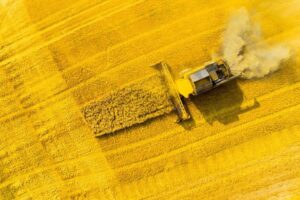
The “Agrain” Group of Companies has begun sowing winter rapeseed for the 2027 harvest, for which it has allocated over 18,000 hectares this season, the company’s press service reported.
The farms in the Chernihiv cluster were the first to begin planting—work there started in early August. In the Odesa and Kharkiv clusters, they are waiting for sufficient productive moisture to accumulate in the soil.
“We only plant when there is sufficient moisture in the topsoil. We constantly monitor weather conditions and adjust the pace of work depending on the situation in each region. Our goal is to complete sowing within the optimal timeframe, ensure uniform emergence, and create the right conditions for plant development before winter sets in,” the press service quotes Chief Agronomist Taras Korniyenko as saying.
“Agrain” is engaged in the cultivation and storage of grain and oilseed crops, as well as livestock farming. Prior to the full-scale Russian invasion, the agricultural holding comprised 11 agricultural enterprises; that number has now grown to 13. The group of companies cultivates approximately 110,000 hectares in the Zhytomyr, Kharkiv, Chernihiv, Odesa, and Cherkasy regions.
The group includes two large grain elevators and two mini-elevators, with a combined capacity of 320,000 metric tons. The agricultural division comprises nine enterprises. Four enterprises are engaged in livestock farming. The beef cattle herd numbers 5,500 head, and the dairy herd numbers 1,750 head, including over 800 milking cows.
The holding company is owned by SAS Investcompagnie (France).
AGRICULTURAL HOLDING, GRAIN, HARVEST, planting season, RAPESEED
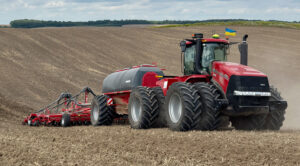
The agricultural holding “Continental Farmers Group” has begun its winter crop planting campaign for the 2027 harvest, with winter rapeseed as the first crop; the company plans to allocate 32,000 hectares for it, according to its press service.
In total, the company is allocating 95,200 hectares for winter crops in 2027. In addition to rapeseed, the crop mix includes 49,900 hectares of winter wheat and 13,300 hectares of winter barley.
“Sowing of grain crops will begin on schedule in early September, after the fields have been cleared of previous crops. We have traditionally developed our operational plans based on a proven balance in the crop mix,” the agricultural holding’s press service quoted Chief Operating Officer Kostyantyn Shytiuk as saying.
It is noted that the planting season began at the typical time seen in recent years and is proceeding under favorable agroclimatic conditions. Thanks to sufficient soil moisture, most divisions expect to see good emergence of winter rapeseed, and the main planting will take place during the first and second decades of August.
As previously reported, the agricultural holding “Continental Farmers Group” (CFG) has joined the global structure of the international agri-food company Olam Agri as a separate business unit.
“Continental Farmers Group” was established in November 2018 as a result of the merger between the ‘Mriya’ agricultural holding and CFG, following “Mriya’s” agreement with international investor Salic UK regarding the sale of its assets.
Continental Farmers Group operates in the Ternopil, Lviv, Ivano-Frankivsk, Khmelnytskyi, and Chernivtsi regions, grows grain and oilseed crops, engages in primary and secondary potato processing, and employs approximately 2,600 people.
AGRICULTURAL HOLDING, HARVEST, planting season, RAPESEED, WHEAT
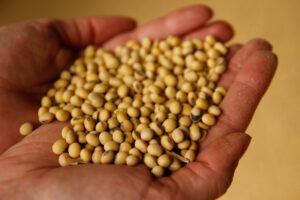
Soybean acreage in 2026 reached 2.1 million hectares, an increase of 5% compared to last year, Taras Vysotsky, Ukraine’s Deputy Minister of Economy, Environment, and Agriculture, told reporters on the sidelines of the Grain Ukraine 2026 international conference on Friday.
“This year, soybean acreage did not decrease; in fact, it increased by 5%. Several factors contributed to this simultaneously—the rising cost of fertilizers and fuel. Consequently, farmers have shifted their focus to crops that require fewer fertilizers, namely soybeans. It requires lower costs for cultivation, transportation, and export,” Vysotsky noted.
As reported, pursuant to Law No. 4536-IX of July 16, 2025, a 10% export duty on rapeseed and soybeans was introduced in Ukraine effective September 4, 2025. The document provides for a gradual reduction of the rate by 1% annually, starting January 1, 2030, to 5% by 2035. At the same time, the law includes a preferential regime for direct producers and cooperatives, who are exempt from paying the duty when exporting their own-grown products.
Experts from the American Chamber of Commerce (ACC) have argued that this could lead to a significant reduction in soybean acreage in 2026 due to this law.
According to the Ministry of Economy, as of June 2, 1.96 million hectares had been planted with soybeans, or 96% of the forecast, whereas last year, as of May 30, according to the Ministry of Agrarian Policy, soybean plantings totaled 2.23 million hectares.
agricultural sector, export duty, MINISTRY OF ECONOMY, planting season, SOYBEANS
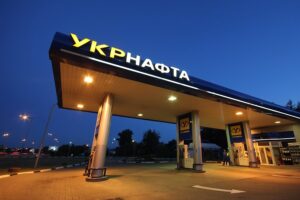
UKRNAFTA, Ukraine’s largest network of gas stations, doubled its fuel purchases in 2026 compared to last year to ensure stability for farmers during the planting season, the company’s CEO Bohdan Kukura told the Interfax-Ukraine news agency.
“We have received the first shipments of diesel from the United States. The government’s task was to ensure (the domestic market – IF-U) that there would be no shortage. We are fulfilling this: given the season and increased demand, we have purchased twice as much fuel as before. There will be no shortage. We are fully contracted, and we do not foresee any problems at all for April,” the company’s head emphasized.
According to him, in response to the government’s request, UKRNAFTA began using post-import financing instruments for the first time in its history. The first shipments of American fuel were purchased using credit lines from the state-owned Ukrgasbank and Oschadbank. The top manager noted that this mechanism has been in operation for only about a month but has already proven effective in ensuring energy security.
The CEO also explained that, given market volatility, UKRNAFTA has abandoned fixed-price contracts, as they are unprofitable for suppliers due to the inability to predict risks. Currently, work with clients is based exclusively on a “contract formula” tied to global Platts or Argus price indices.
Separately, Kukura commented on the sales structure: the share of retail customers (B2C) is about 50–70%, while the corporate segment (B2B cards and vouchers) accounts for 30–50%. He noted that farmers typically purchase fuel through small-scale wholesalers.
As the chairman of the UKRNAFTA board assured, thanks to strategic reserves and new logistics, there is no cause for panic. The company continues to actively work with banks, creating “effective solutions to supply the market,” so Ukrainian businesses can be confident in the availability of fuel at gas stations.
As reported, by the end of 2025, UKRNAFTA increased fuel sales in the B2B segment to 391.6 million liters, which is 61.7% more than the previous year’s figure and nearly eight times higher than the 2023 result. The number of active corporate clients during this period tripled—to 9,700 companies. Over three years, the company doubled the average daily fuel sales per gas station, and the average receipt at the network’s stores tripled—to 180 UAH.
UKRNAFTA is one of the largest gas station networks in Ukraine, comprising approximately 700 locations and ranking among the top three in terms of fuel sales volume. The network structure includes the assets of Glusko (85 gas stations) and Shell (118 gas stations). Additionally, 21 complexes of Ukrgazvydobuvannya (U.Go) operate under the UKRNAFTA brand on a franchise basis.
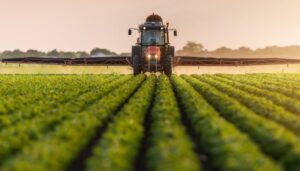
Farmers currently have sufficient fuel reserves for the planting season, enough to cover their needs for three to six weeks, said Oleksiy Sobolev, Ukraine’s Minister of Economy, Environment, and Agriculture.
“Regarding the planting season. We now know that both diesel and fuel are secured for the planting season. We have consulted with the market—fuel reserves are sufficient for three to six weeks,” he said during “Government Hour” in the Verkhovna Rada on Friday, according to a correspondent for the Interfax-Ukraine news agency.
“We will continue to monitor the situation,” the minister added.
As reported, some experts suggested that problems with oil and petroleum product supplies to the market caused by the war between Israel and the U.S. against Iran could lead not only to a significant increase in the price of petroleum products but also to shortages in certain segments, primarily diesel fuel.



