
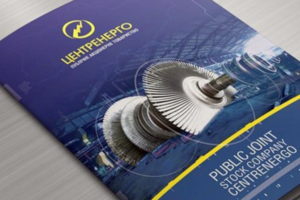
According to Fixygen, Centenergo (PJSC) will hold its annual general meeting of shareholders on April 2, 2026, in a remote format. Shareholders will consider issues related to the company’s performance and future management.
Centrenergo is one of Ukraine’s largest power generation companies, playing a significant role in thermal power generation.
The company has traditionally been in the market spotlight due to its importance to the country’s energy balance, as well as ongoing discussions regarding the management of state-owned assets in the energy sector.

The implementation of digitalization in the fisheries sector, specifically the “eFishing” system, has generated approximately 170 million UAH in additional revenue for Ukraine’s state budget, according to Oleksandr Haidu, Chairman of the Verkhovna Rada Committee on Agrarian and Land Policy.
“Starting in 2022, a systemic reform is being implemented in the sector aimed at creating a transparent and competitive fisheries market,” he emphasized during the industry forum “Fisheries of Ukraine: On the Path to European Integration,” organized by the State Agency for Fisheries.
According to the committee head, the reform involves the adoption of European standards, the digitization of resource management, and the introduction of electronic auctions for commercial fishing rights. These steps will help minimize corruption risks and increase the sector’s investment appeal.
Forum participants also discussed the implementation of the pilot project “eInspector.” This initiative aims to modernize the work of fisheries patrols and strengthen control over the use of aquatic biological resources. Special attention was given to legislative initiatives regarding the development of aquaculture and the adaptation of Ukrainian law to EU standards.
The “eFisheries” system is part of a broader digital transformation of Ukraine’s agro-industrial complex, aimed at transitioning all administrative services in the sector to an electronic format.

In 2025, China retained its position as the world’s leading shipbuilder across three key indicators — production (ships delivered), new orders and order backlog — according to the Ministry of Industry and Information Technology of the People’s Republic of China, as reported by the Experts Club information and analysis centre.
Below is the ranking of the largest shipbuilding nations for 2025 by each indicator (different sources use different units — deadweight tonnage (DWT or total cargo capacity of a vessel), compensated gross tonnage (CGT) and gross tonnage (GT), therefore the figures are compared primarily as shares and the ranking of countries) .

1) Output (ships delivered) in 2025, DWT — top by volume:
1. China — 53.69 million tonnes of deadweight, +11.4% y/y, 56.1% of global output.
2. South Korea – estimated based on market structure; according to Clarksons Research, South Korea’s share of production in 2025 is around 27%.
3. Japan – estimated; share around 14%.
For reference: based on China’s share, global output in 2025 can be estimated at approximately 95.7 million DWT (calculation based on a 56.1% share).
2) New orders in 2025 – top countries:
1. China – 35.37 million CGT, 63% of global new orders.
2. South Korea – 11.6 million CGT, around 21%.
3. Japan – 2.8 million CGT, around 5%.
4. Other countries – a total of around 6.7 million CGT (the remainder of the global volume of 56.43 million CGT).
3) Order book at the end of 2025, DWT – top countries:
1. China – 274.42 million DWT, +31.5% y/y, 66.8% of the global order book.
2. South Korea – 2nd place; industry reviews estimate Korea’s share of the orderbook at approximately 18%.
3. Japan – 3rd place; the Japanese orderbook is estimated at 40.7 million DWT.

The UAE insists that any political settlement of the conflict with Iran must include not only a ceasefire but also guarantees against new attacks, as well as a mechanism for reparations for strikes on civilian infrastructure and the populations of the Gulf states. This was stated by Anwar Gargash, diplomatic advisor to the UAE president.
Gargash’s statement generally aligns with the broader position of the Arab Gulf states, previously articulated at the UN Human Rights Council. According to Reuters, the region’s countries accused Iran of striking energy and civilian infrastructure and supported a resolution condemning these attacks, demanding reparations, and mandating UN monitoring of the situation.
The Gulf states are also insisting that any agreement with Iran not be limited to a formal cessation of hostilities, but include a long-term reduction of its missile and drone capabilities, as well as the protection of the region’s energy and transportation infrastructure.

Starting April 1, 2026, Japan will tighten the rules for obtaining citizenship through naturalization: the minimum residency requirement for foreigners will be increased from 5 to 10 years. This was announced on March 27 by Japanese Justice Minister Hiroshi Hiraguchi.
In addition to doubling the residency requirement, the government is also extending the period for verifying applicants’ compliance with civic obligations. According to Japanese media reports, the period for verifying tax payments will be increased to 5 years, and for social insurance contributions—to 2 years instead of the previous 1 year. The new requirements will also apply to applications already submitted.
Until now, the basic rule for naturalization in Japan has been continuous residence in the country for at least 5 years. The Japanese government explains the tightening of requirements by the need to better verify the integration of foreigners and their compatibility with Japanese society. This news is particularly notable given the high international status of the Japanese passport. In the latest edition of the Henley Passport Index, Japan ranks among the world leaders in passport power, sharing 2nd place with access to 190 destinations visa-free or with simplified entry.

April 2026 could be a crucial milestone for the crypto market in terms of the regulatory agenda, which is increasingly influencing price dynamics and investor behavior, according to Fixygen.
In the U.S., the market is awaiting new signals from the SEC regarding token classification and the regulation of crypto exchanges. Following a series of legal disputes and a partial softening of regulatory approaches toward the industry, investors will closely monitor any statements from the regulator that could affect crypto companies’ access to the U.S. market.
At the same time, the Federal Reserve retains key influence through monetary policy. Any signals regarding interest rates and liquidity remain critical for crypto assets, which have demonstrated high sensitivity to global financial conditions in recent years.
In Europe, the main focus will be on the practical implementation of MiCA regulations. New clarifications and implementation milestones are expected in April regarding the licensing of crypto companies, asset custody, and user protection. This could impact the operations of exchanges and crypto services in the EU and neighboring countries.
In Asia, the positions of regulators in Hong Kong and Singapore remain key, as the formation of regulated crypto hubs continues. New licenses and requirements for exchanges are possible in April, which could intensify competition for global crypto companies.
According to analysts at Fixygen, initiatives to regulate stablecoins, which are being discussed in several jurisdictions simultaneously, remain an additional factor. Tighter control over this segment could directly impact market liquidity and the role of digital dollars in the crypto economy.
Overall, April is shaping up to be a month in which regulatory decisions, rather than macroeconomic factors, may become the main driver for the crypto market. Under such conditions, any news from key authorities can quickly translate into price movements, increasing volatility and setting new rules of the game for market participants.



