

In 2026, Cambodia’s real estate market continues to recover from the 2020–2023 crisis, with foreign investors once again playing a key role in its revival. Phnom Penh and Sihanoukville remain the main hubs of the market. While the capital generates more stable demand for residential properties and offices, Sihanoukville remains focused on tourism and investment real estate.
Housing prices in Phnom Penh average $1,500–3,000 per square meter, while in Sihanoukville the range can vary from $1,200 to $2,500 per square meter. At the same time, the market for premium projects has not yet fully recovered after the overheating of previous years.
Cambodian law allows foreigners to purchase apartments but prohibits land ownership, making condominiums the primary investment vehicle.
A distinctive feature of the Cambodian market is its high dependence on foreign capital. In the pre-crisis period, foreign investors accounted for up to 70–80% of demand in certain segments.
Even after the correction, Chinese investors remain the largest group of buyers, especially in Sihanoukville, where large-scale projects involving Chinese capital were previously implemented. Investors from South Korea, Singapore, and Malaysia are also present in the market.
Russians and Ukrainians have a limited presence in the Cambodian market, mainly in the form of private investments in affordable real estate or rentals; however, their share remains minimal and does not affect the overall structure of demand.
Overall, Cambodia remains a market highly dependent on foreign investors, but with a higher level of risk compared to Thailand and Vietnam.

The Ukrainian barley market remains price-stable amid a gradual revival of trade in the new crop and anticipation of the results of the tender in Turkey, according to the analytical cooperative “Push,” established within the All-Ukrainian Agrarian Council (VAR).
“The Turkish tender is currently the key factor for the market. According to preliminary estimates, over 200,000 tons of barley will be purchased for delivery in March–May. This is a fairly significant volume that affects the balance of supply and demand in the Black Sea region,” analysts noted.
On Ukraine’s domestic market, prices for old-crop barley remain relatively stable. Barley is trading at 10,800–11,100 UAH/ton. Analysts noted that due to exchange rates, the price should have risen to 11,200–11,400 UAH/ton, but there is currently no real demand at such price levels in Ukraine. The market remains passive, so no significant price fluctuations for the old crop are expected in the next month and a half.
At the same time, trade in new-crop barley is gradually picking up in Ukraine. The first price benchmarks for farmers have already been announced: standard-quality barley is fetching $205–207/ton, while buyers are willing to pay more—$210–211/ton—for barley meeting Chinese market requirements.
“In the coming weeks, we are unlikely to see significant changes in these levels. Theoretically, the new harvest could add a few more dollars, but this will not be a sharp movement. More active sales can be expected in April-May,” according to forecasts from “Push.”

Industrial Park “Krasyliv Technoport” (Krasyliv, Khmelnytskyi Oblast) has attracted its first foreign industrial investment—German company Goldhofer AG has begun manufacturing components and spare parts for semi-trailers designed to transport oversized cargo, according to Dmytro Kysilevskyi, deputy chairman of the Verkhovna Rada Committee on Economic Development.
“The total investment for Goldhofer AG’s project in Krasyliv is EUR4.5 million, of which EUR1.5 million has already been contributed. The facility, which produces component sets for 7–8 semi-trailers per month, currently employs 36 workers, mostly welders. The products are shipped to Germany for further assembly,” he wrote on Facebook on Thursday.
According to Kysilevsky, the industrial park’s management company has also signed a memorandum to attract another foreign investor—the Polish company Modular, which plans to open a production facility in Krasyliv for commercial and residential modular homes made of metal structures.
“In addition, the Ukrainian company ‘Aton Energy’ has launched production of heat exchangers for solid-fuel boilers within the industrial park. The company also plans to purchase equipment to establish production of wall-mounted gas boilers at the industrial park,” the post states.
Kysilevsky also noted that the “Krasyliv Technoport” industrial park is currently preparing an application for state funding to develop engineering and transportation infrastructure.
The program provides for 50:50 co-financing of up to UAH 150 million and requires the recipient to ensure the construction of at least 5,000 square meters of industrial space and attract at least two participants within three years.
The “Krasyliv Technoport” industrial park, covering 10.1 hectares, was established in 2023 on a portion of the Krasyliv Machine-Building Plant’s territory that had been unused for a long time. The industrial park features industrial buildings with a total area of over 8,000 square meters. The park is connected to 8 MW of electricity, water, sewage, gas, and a railway spur.
According to information on its website, the German company Goldhofer is a provider of transport solutions with annual sales of approximately EUR 300 million. It has about 1,000 employees and an international presence with branches in Europe, North America, India, and the Middle East.
Goldhofer AG, INDUSTRIAL PARK, Krasyliv Technoport, MANUFACTURING
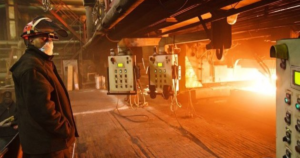
JSC “Kremenchuk Steel Works” (KSZ, Kremenchuk, Poltava Oblast), part of the industrial assets of the TAS Group, ended 2025 with a net loss of UAH 148,080,549, whereas profit for 2024 amounted to UAH 369,337,168,
According to KSZ’s announcement in the NSSMC’s disclosure system regarding the remote general meeting of shareholders to be held on April 24, the agenda includes 12 items, among which are the supervisory board’s report for 2025, approval of measures based on the review’s findings, and adoption of relevant resolutions.
It is also planned to approve the company’s annual report and the audit report for 2025, approve the results of financial and economic activities and determine the procedure for covering losses, as well as approve the annual reports for 2023–2024 in their new versions.
In addition, the meeting will approve significant transactions. Shareholders will also terminate the powers of the members of the supervisory board and elect new ones.
Draft resolutions, copies of which are available to the Interfax-Ukraine agency, provide for the approval of the loss for 2024, while shareholders are proposed to cover it using the company’s retained earnings from previous years. No dividends will be declared or paid.
It was previously reported that KSZ recorded a net profit of 369,337,168 UAH in 2024, 131,086,773 UAH in 2023, in 2022—UAH 50.281 million, while the company ended 2021 with a net loss of UAH 56.833 million and 2020 with a loss of UAH 22.81 million.
The Kremenchuk Steel Foundry is Ukraine’s leading foundry specializing in the production of steel castings for freight cars and heavy-duty trucks.
According to the State Registration Service data for the fourth quarter of 2025, Indeko LLC and Nexum Trade LLC each hold 24.2210% of the shares in KSZ JSC, FinEuroVector Financial Company LLC holds 18.8392%, and the financial company “Alfa Cross” holds 24.9%.
The authorized capital of JSC ‘KSZ’ is UAH 132.123 million, and the par value of a share is UAH 0.25.
The “TAS” Group was founded in 1998. Its business interests span the financial sector (banking and insurance segments), industry, real estate, the agricultural sector, and venture projects. The founder and major shareholder of the group is Serhiy Tihipko.

PJSC “Trubstal Pipe Plant” (Zhytomyr region) reported a net profit of UAH 17,949,261 for 2025, compared to UAH 2,845,767 in 2024.
According to Trubostal’s announcement in the information disclosure system of the National Securities and Stock Market Commission (NSSMC) regarding the remote general meeting of shareholders to be held on April 28, five items are scheduled for consideration, including the report of the supervisory board and the company’s executive body for 2025, approve measures based on the results of the review, and adopt the relevant decisions.
In addition, shareholders will approve the annual report for this period and the distribution of profits, and will give their consent to the execution of significant transactions.
Draft resolutions, copies of which are available to the Interfax-Ukraine agency, propose leaving the net profit for 2025 undistributed.
It is also proposed to grant consent for the execution of significant transactions, the market value of which exceeds 50% of the value of assets according to the company’s latest annual financial statements. Specifically, this includes the conclusion of a contract for the sale of metal products with Metinvest Polska Sp. z o.o. (Poland) in an amount not exceeding UAH 200 million, the conclusion of a contract for the purchase of metal products from Zaporizhstal not exceeding UAH 1.5 billion, and a contract for services related to the production of products from customer-supplied raw materials not exceeding UAH 250 million.
Additionally, the conclusion of a contract for the production of goods from customer-supplied raw materials with Metinvest – SMZ LLC for an amount not exceeding UAH 125 million.
PJSC “Trubostal” was established in 2001; its primary specialization is the production of steel pipes.
According to data from the National Depository of Ukraine for the fourth quarter of 2025, MD Group Dnipropetrovsk LLC owns 41.3177% of Trubostal’s shares, MD Estate LLC owns 23.7145%, Midland Capital Management LLC holds 12.732%, Divata Group LLC holds 12.7317%, and Financial Company “Garonna” (Kyiv) LLC holds 9.504%.
Trubostal’s authorized capital is 811,869 thousand UAH, and the par value of a share is 1 UAH.
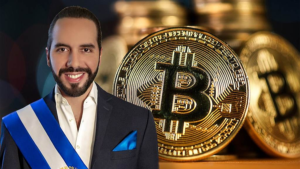
According to Fixygen, El Salvador remains the world’s leading government-led crypto experiment: after President Nayib Bukele made Bitcoin legal tender alongside the dollar in 2021, the country has made cryptocurrency a part of its economic and political identity. However, in January 2025, the country’s parliament swiftly amended the Bitcoin law following a $1.4 billion agreement with the IMF: accepting BTC became voluntary for the private sector, while the government made it clear that it would not abandon its strategy of accumulating Bitcoin in reserves.
In essence, El Salvador now operates under a hybrid model. Bitcoin is no longer imposed on businesses as a mandatory means of payment; taxes must be paid in U.S. dollars; and the state’s role in the Bitcoin project itself has been formally limited by the terms of the IMF program. The fund’s materials explicitly state that amendments to the law removed key features of mandatory legal tender: accepting BTC became voluntary, paying taxes in Bitcoin was abolished, and the public sector’s involvement must be restrained.
At the same time, Bukele and his team have not abandoned the crypto initiative. As early as December 2024, the National Bitcoin Office stated that the country would continue to purchase BTC for strategic reserves, and in August 2025, Reuters reported that El Salvador already held approximately $682 million in Bitcoin and was transferring reserves from a single address to several new wallets to enhance security and transparency. The Bitcoin Office’s public tracker remains active, and industry aggregators citing the office’s data currently estimate the country’s holdings at approximately 7,500 BTC.
In terms of the actual use of cryptocurrency within the country, the experiment has become much more pragmatic than it was in 2021–2022. Formally, Bitcoin has not disappeared from the government’s agenda, but the practical model has shifted from the idea of “Bitcoin as everyday money” to the concept of “Bitcoin as a reserve and image asset of the state.” This allows El Salvador to maintain its status as a global crypto icon without directly conflicting with the terms of international financing. This conclusion follows from a comparison of the January amendments, the terms of the IMF program, and subsequent government statements regarding the continued accumulation of BTC.
At the macro level, the country’s financial situation in 2025 appeared more stable than in previous years. The IMF approved a 40-month $1.4 billion EFF program for El Salvador, and the total expected external support package was estimated at over $3.5 billion.
Following the first review of the program, the Fund reported that key fiscal and reserve targets had been met and announced the allocation of an additional $118 million, bringing the total amount of funds already disbursed to approximately $231 million.
The economy is not in crisis, but it is not experiencing explosive growth either. According to IMF estimates, El Salvador’s GDP is expected to grow by 2.5% in 2025, and the World Bank anticipates similar growth in 2026. Inflationary pressure remains moderate: the World Bank noted that inflation fell to 0.9% in 2024, and in 2025, prices remained generally stable compared to the first half of 2024; the IMF projected inflation of around 1% in 2025.
Fiscally, the country also looks better than it did a couple of years ago, although the debt burden remains high. The World Bank noted that El Salvador’s public debt peaked at 88.9% of GDP in 2024. At the same time, the government is implementing strict fiscal consolidation: the IMF expects a primary surplus of 1.9% of GDP by the end of 2025, and sovereign spreads, according to the fund, have narrowed from over 700 basis points at the end of 2023 to approximately 390 b.p. b.p. in June 2025.
The bottom line for the crypto market is this: El Salvador no longer looks like a country where Bitcoin is set to replace the dollar in the everyday economy, but it remains a country where BTC is embedded in the state strategy, national brand, and reserve policy. For the market, this is an important signal—Bukele’s model is not dead, but has transitioned from a phase of radical experimentation to a phase of more cautious, yet still demonstrative, crypto sovereignty.



