

Rising costs of raw materials and energy resources have led to an average 40% increase in the price of bread and flour in Ukraine over the past two years, according to the Ukrainian Flour Millers Association.
According to the association’s analytical report, published on the APK-Inform website, the price growth rate has been consistently high: in 2024, bread rose in price by 20-22%, and in 2025 — by another 19-23%. A similar 40% increase over a two-year period was also recorded for wheat flour.
According to the association, the price of premium wheat bread rose by 44% over the year to UAH 63.5/kg, rye bread by 45% to UAH 50.6/kg, and loaves by 34% to UAH 30.9/kg.
“Currently, the actual selling prices of flour are 10-15% lower than the declared prices and are practically equal to the cost price. With the average cost of grade 2 wheat at 10,300 UAH/ton and processing costs of no less than 2,500 UAH/ton, a 3% profit margin is a great achievement for flour millers,” the report notes.
Experts note that unlike bakers, who can compensate for the low profitability of social varieties with premium and small-piece products, millers are deprived of this opportunity due to the small sales volumes of packaged flour.
At the same time, “Flour Millers of Ukraine” noted a growing trend in Ukraine toward home baking.
“The population is increasingly turning to home baking. It is much cheaper, tastier, and becoming fashionable,” the industry association noted, adding that premium bread under the Tsar Bread and Kulynichi brands, which is distinguished by its excellent taste, costs more than UAH 100 per 1 kg and is unaffordable for many residents of Ukraine.
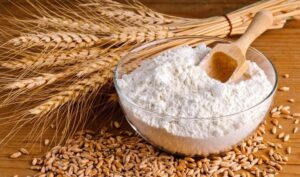
Flour exports from Ukraine fell to 66,800 tons in 2025, the lowest level since 2006, according to a report by the Ukrainian Flour Millers Association published by APK-Inform.
According to the data, this figure is 36.6% lower than the pre-war level in 2021 (105,300 tons) and 15.3% lower than the volume in 2022 (78,900 tons).
“The war has practically blocked the opportunity for our flour millers to earn extra money on the international market. Problems with logistics have led to the loss of almost all our usual markets. Only Moldova remains, and there is now an opportunity to export to the European Union, which accounts for more than half of the total volume,” the document notes.
The association emphasized that deliveries are currently carried out exclusively by rail and road transport. At the same time, experts stressed that until Ukrainian ports are opened, there will be no opportunity to compete with other exporters on the world market, nor any hope for growth in foreign trade volumes.
According to the Ukrainian Flour Millers Association, the recorded volume of flour exports of 66.8 thousand tons is the lowest since 2006, when only about 10.5 thousand tons of this product were supplied to foreign markets.

The Swedish government has announced the end of the “minimum citizenship” period and has prepared a package of changes that raises the requirements for applicants for a Swedish passport.
According to the government’s announcement, the basic residence requirement for applying for citizenship is planned to be increased from five to eight years. It is also proposed to introduce stricter requirements for “lifestyle,” self-sufficiency, knowledge of the Swedish language and the basics of society, as well as to reduce the use of the notification procedure so that more applicants fall under the new conditions.
In terms of financial criteria, the government explicitly states a benchmark – a requirement for self-sufficiency at a level of approximately SEK 20,000 per month. The majority of the changes are scheduled to come into force on June 6, 2026, with certain elements related to language tests possibly being introduced later.
According to Statistics Sweden (SCB), in 2024, there were 2,200,238 people living in the country who were born outside Sweden, accounting for about 20% of the population.
In terms of the structure of new arrivals, 116,197 people immigrated to Sweden in 2024. The largest group was immigrants from Ukraine (28,065 people), followed by “Sweden” (re-emigration, i.e., the return of those who had previously left) with 11,907 people. Among the most notable groups are also India (5,801), Germany (3,647), China (3,558), Syria (2,985), Poland (2,844), Pakistan (2,477), Turkey (2,107), Iran (1,972), as well as Russia (1,721) and Iraq (1,500).

The Veteran Hub in Kyiv hosted a pre-screening of the Israeli series Hatufim (Prisoners of War) as part of a cultural project initiated by the Embassy of the State of Israel in Ukraine, an Interfax-Ukraine correspondent reports.
“For Israeli artists, war is not an abstract topic, but a personal experience. Even during the war, we did not stop cultural exchange for a single moment: the embassy continues to organize events to showcase Israeli culture in its various aspects. Today we are talking about Israeli TV series – they are known all over the world; many people know both Hatufim and Fauda. We will continue to talk about Israeli culture and will continue to work with Ukraine in this direction,” said Michael Brodsky, Ambassador Extraordinary and Plenipotentiary of the State of Israel to Ukraine, emphasizing that these topics are particularly relevant to Ukrainian society today.
As the organizers explained, the event was held to start a conversation about how people return from captivity, how they adapt to peaceful life and what difficulties their families face. The discussion participants emphasized that this topic is important for Ukraine today not only as a cultural topic, but also as a social one.
“Khatufim is a drama series about soldiers who return home after a long captivity and how they change, their families and their relationships with society. The project gained wide international attention and became the basis for further adaptations in other markets: The New York Times named Hatufim the best foreign television series of the decade.
According to Brodsky, the Embassy considers cultural events to be a part of the dialogue between Ukraine and Israel and will continue to pursue initiatives that introduce the Ukrainian audience to Israeli culture in its various manifestations.
https://interfax.com.ua/news/culture/1145052.html

Last week, the National Bank of Ukraine (NBU) reduced sales of dollars on the interbank market by $68.8 million, or 8.7%, to $725.5 million, according to statistics on the regulator’s website.
According to the NBU, in the first four days of last week, the average daily negative balance of buying and selling foreign currency by legal entities decreased to $95.8 million from $110.0 million in the same period a week ago, and totaled $383.1 million for the period.
The negative balance in the household foreign exchange market also decreased to $28.7 million from $36.9 million the week before, and cash purchases exceeded cash sales on all days.
The official hryvnia/dollar exchange rate, which started last week at 43.0487 UAH/$1, weakened to 43.0904 UAH/$1 over two days and ended the week at 42.9930 UAH/$1.
On the cash market, the dollar did not change significantly over the past week: as of February 12, the buying rate was about 42.79 UAH/$1, and the selling rate was about 43.19 UAH/$1.
Analysts of KYT Group (Liberty Finance LLC), a major participant in the cash foreign exchange market, noted that in the first half of February there were no significant stresses on the foreign exchange market, while the hryvnia slightly devalued against the dollar: the official exchange rate since the beginning of the month has changed from 42.84 UAH/$1 to 43.03 UAH/$1 at the end of the second week of February. In their opinion, the moderate dynamics was facilitated by the NBU’s interventions: since the beginning of January, the regulator has sold more than $4.33 billion on the market.
According to experts, the dollar is supported on the international market by the Fed’s keeping the base rate unchanged and relatively strong US labor market data, while the EUR/USD pair saw a slight strengthening of the dollar to 1.1874 in the first half of February.
In the domestic market, the spread at bank cash desks and exchange offices amounted to UAH 0.5-0.6/$1 in the first half of February.
According to the forecast of KYT Group, in the next one to two weeks the basic range of the hryvnia exchange rate will be 43.3-43.8 UAH/$1 with possible fluctuations towards weakening, while in the medium term of two to three months the exchange rate is expected to be in the range of 43.50-44.60 UAH/$1. According to them, the exchange rate in the coming months will be influenced by the demand for currency on the interbank market, the situation in the energy sector and at the front, as well as news about international support.
“Longer term (6+ months): the hryvnia is expected to devalue smoothly against the dollar, as well as regular and large-scale market support by the NBU’s foreign exchange interventions. The benchmark for the first half of 2026 is UAH 43.5-44.95/$,” KYT Group said.
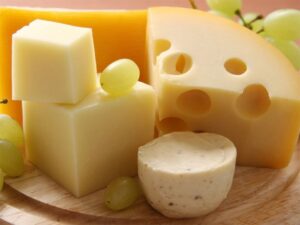
Ukrainian cheese makers continue to lose market share due to competition from imported products from the EU, despite the trend towards a reduction in external purchases, according to the industry analytical agency Infagro.
According to the report, producers are asking the state for support, in particular through the expansion of cashback programs for domestic cheeses and a review of the tax burden. However, experts assess the chances of significant changes in tax policy or the introduction of import barriers as low.
Analysts consider a more effective step to be the regulation of relations with retail chains to reduce significant retail markups that affect the final cost of products.
According to the agency, cheese imports are currently showing a downward trend in both monthly and annual terms, which is associated with rising prices in Europe and currency fluctuations. It is expected that the volume of foreign purchases will continue to decline.
“Despite the difficult market conditions, Ukrainian producers are in no hurry to lower their base prices. They are probably afraid that retail chains will not respond adequately to lower prices or that it will be difficult to return to previous price levels in the future. At the same time, buyers can already count on significant discounts when purchasing large quantities of products,” Infagro concluded.



