
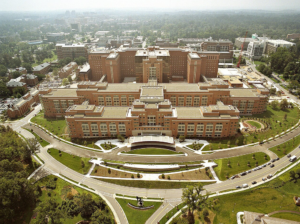
The US National Institutes of Health (NIH) has announced that researchers from the University of Pennsylvania and the Mayo Clinic have developed a panel of four biomarkers in blood plasma to detect pancreatic ductal adenocarcinoma (PDAC). The results are published in Clinical Cancer Research.
According to the NIH, in two retrospective sample sets, the addition of two new protein markers—aminopeptidase N (ANPEP) and polymeric immunoglobulin receptor (PIGR)—to the already studied CA19-9 and thrombospondin-2 (THBS2) allowed cancer cases to be distinguished from “non-cancer” cases in 91.9% of observations, with a false positive rate of 5%. For early stages (I-II), the test identified 87.5% of cases.
The report emphasizes that the panel was able to distinguish between malignant cases and patients with non-malignant pancreatic diseases, including pancreatitis, which is important for future use in risk groups.
The authors note that the results obtained require further verification in larger and “pre-diagnostic” studies – that is, in people before the onset of symptoms, primarily among patients at increased risk (family history, genetic predisposition, cysts, or pancreatitis).

The volume of exports of insulated wires and cables (including fiber optic cables) from Ukraine in January 2026 increased by 8.5% in monetary terms compared to the same month in 2025, reaching $113.2 million.
According to statistics from the State Customs Service, Germany was the largest importer of Ukrainian products, as it was last year, with shipments increasing by 8% to $39 million, while its share of total exports of these products remained almost unchanged at 34.5%.
As in January 2025, the top three importers also included Poland ($18.2 million, 16%) and Hungary ($17.7 million, 15.7%).
At the same time, imports of these products to Ukraine increased by 13.8% to $46.3 million last month.
The largest suppliers of wires and cables to Ukraine in January were China ($13.8 million or almost 30%), Hungary ($12.4 million or 26.7%), and Poland ($5.6 million or 12.2%), while last year imports from China amounted to $10.8 million, Hungary – $10.6 million, and Poland – $5.9 million.
According to the State Customs Service, in 2025 Ukraine increased exports of insulated wires and cables by 10.6% compared to 2024, to $1.41 billion, and imports by 24.3%, to $590.7 million.
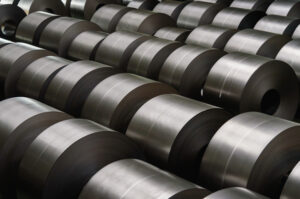
In January 2026, imports of tin and tin products fell by 27% to $168,000 (in December – $290,000).
Exports of tin and tin products in January 2026 amounted to $226,000 (in December — $89,000), while in January 2025 there were no exports.
In 2025, imports of tin and tin products increased by 36.5% to $4.352 million.
Exports of tin and tin products amounted to $241,000, compared to $389,000 in the 12 months of 2024.
In 2024, imports of tin and tin products increased by 16.9% to $3.188 million.
Exports of tin and tin products amounted to $389 thousand, compared to $159 thousand in 2023.
In 2023, Ukraine imported less tin and tin products — $2.728 million (-23%).
Exports of tin and tin products amounted to $159,000, compared to $424,000 in 2022.
Tin is mainly used as a safe, non-toxic, corrosion-resistant coating in its pure form or in alloys with other metals. The main industrial applications of tin are in white tinplate (tinned iron) for the manufacture of food containers, in solders for electronics, in domestic piping, in bearing alloys, and in coatings made of tin and its alloys. The most important tin alloy is bronze (with copper).

The Supervisory Board of VUSO Insurance Company has approved the renewed composition of the Management Board, appointing Olga Levchenko and Igor Frolov, internal specialists, as Deputy Chairpersons of the Management Board, according to information from the insurer.
“The renewal of the board’s composition provides a balance of professional expertise and fresh perspectives, which strengthens the team. This allows us to combine proven approaches with new ideas, increases decision-making flexibility, and contributes to the consistent implementation of business goals,” emphasized Mikhail Nazarchuk, chairman of the insurance company’s supervisory board.
According to the information, Olga Levchenko has more than 23 years of experience in the insurance industry. She has many years of experience in management positions in insurance companies, and for the last three years she has been overseeing the development of medical insurance at VUSO. In her new position, she will focus on medical and travel insurance and underwriting.
Igor Frolov has been working in the financial sector since 2007. In 2016, he headed the central branch of VUSO in Kyiv and managed sales in the region. As a member of the Management Board, he is responsible for alternative sales channels, customer and non-operational support, marketing, and partnerships with tour operators.
As noted in the information, the current composition of the Management Board is as follows: Chairman of the Management Board Andriy Artyukhov, Deputy Chairpersons of the Management Board Olga Kabanets, Olga Levchenko, and Igor Frolov.
VUSO Insurance Company was founded in 2001. According to the NBU, the company ranks fourth among non-life insurers in Ukraine in terms of premiums collected for the first nine months of 2025.
On April 23, 2024, the National Bank of Ukraine reissued the company’s licenses to conduct insurance activities (33 for voluntary and 17 for compulsory types of insurance). VUSO Insurance Company has 34 representative offices, 2 branches, and more than 20 agency sales centers throughout the country.

The government has set a goal for all regions to develop cogeneration to the maximum extent possible, primarily to ensure critical infrastructure, as well as to take measures to ensure energy autonomy in island mode, said Ukrainian Prime Minister Yulia Sviridenko.
“Each region needs to have such detailed energy development plans and implement them. Everything that can be restored must be restored. Everything that can be protected must be protected, at least with a second level of protection,” Sviridenko said at a meeting with journalists in Kyiv on Friday.
She stressed that this winter is the harshest in many years and one of the most difficult in four years of full-scale invasion.
According to her, in the context of unprecedented shelling by Russia, Ukraine needs much larger stocks of equipment and air defense systems.
“Our air defense is working at full capacity. Energy companies are also working beyond their capabilities. Without the help of our partners in terms of equipment and air defense missiles, we will not be able to defend ourselves as effectively as in previous years,” the prime minister said.
At the same time, she noted that the efforts of the government and local authorities to decentralize energy supply are already yielding results.




