

At the same time, Ukraine reduced imports of lead and lead products by 5.2 times to $112,000 in January 2026 (in December — $478,000).
Exports of lead and lead products fell by 63.8% to $1,053 thousand (in December — $466 thousand).
At the same time, in 2025, the country increased imports of lead and lead products by 3.3 times — to $7.801 million.
Exports of lead and lead products decreased by 17.8% to $9.377 million.
At the same time, in 2024, the country increased imports of lead and lead products by 2.4 times to $2.391 million.
Exports of lead and lead products decreased by 22.9% to $11.401 million.
In 2023, compared to the previous year, less lead and lead products were imported into Ukraine — $989 thousand (-65.2%).
Exports of lead and lead products increased by 23.5% to $14.778 million.
Lead is currently mainly used in the production of lead-acid batteries for the automotive industry. In addition, lead is used in the manufacture of bullets and certain alloys.

The volume of passenger car imports to Ukraine, including cargo-passenger vans and racing cars (UKT ZED code 8703), amounted to almost $274 million in January 2026, which is 18% less than in January 2025 (almost $334 million).
According to statistics released by the State Customs Service of Ukraine, passenger car imports fell 2.4 times compared to December 2025.
The top three suppliers of passenger cars to Ukraine in January were Japan, the US, and Germany, while in the previous year, these were the same countries, but the largest exporter was Germany, followed by the US and Japan. In particular, in January 2026, car deliveries from Japan increased by 38% to $57.6 million, and their share in the structure of car imports grew to 21% from 12.5%.
Cars worth $54.5 million (12.8% less) were imported from the US to Ukraine, and $45 million (39.6% less) from Germany.
Imports of passenger cars from other countries in January amounted to $116.8 million, compared to $155.1 million in January last year.
At the same time, Ukraine exported almost no such vehicles last month, while in January 2025, deliveries totaling $1.09 million were made to the UAE (90.5%), Germany, and Moldova.
According to the State Customs Service, passenger cars accounted for 4.1% of the total structure of imports to Ukraine in January this year, compared to 6.02% in January 2025.
As reported, in 2025, passenger cars worth almost $6.15 billion were imported into Ukraine, which is 40.2% more than in 2024. The top three exporters were the United States, Germany, and China. Cars worth $10.1 million were exported (2.7 times less).
The significant increase in passenger car imports to Ukraine in the last months of 2025 was due to information about the cancellation of VAT exemptions on the import of electric cars from January 1, 2026.

The Ukrcement Association advocates for the wider use of cement concrete technologies in road construction in Ukraine and calls on communities to prepare standard solutions and a package of regulatory documents for the rapid restoration of damaged sections, the association announced following the results of the scientific and practical seminar “Cement-concrete roads: technologies, standards, prospects,” which took place on February 11 in Kyiv.
In her report, Lyudmila Krypka, executive director of the Ukrcement association, emphasized the cement industry’s ability to fully supply the domestic market with cement. She also highlighted the transition to European standards in products and regulation, in particular GOST EN 197-1 and the requirements for declarations and the responsibility of participants in the construction product supply chain.
According to Ukrcement, in the context of infrastructure restoration, concrete technologies can be a practical tool for communities both for the construction of individual sections and for road repairs, and the immediate task is to develop standard designs, materials, and technologies that allow restoration work to be carried out in many cases without the involvement of large road companies.
“The most difficult times are times of change. It is important to use these changes for the benefit of the country’s development,” Krypka emphasized, stressing the importance of implementing best practices using domestic building materials that create added value for the economy.
As noted by the association, the development of cement-concrete roads is of strategic importance and could become one of the drivers of the country’s recovery and the formation of a sustainable European-level infrastructure.

In the US and the UK, the proportion of respondents who consider the outbreak of a new world war by 2031 to be “likely” or “very likely” has increased, according to a poll published by Politico and conducted by the research company Public First.
According to the poll, 43% of respondents in the UK believe this, compared to 30% in March 2025, and 46% in the US, compared to 38% a year earlier.
The survey was conducted on February 6-9, 2026, in the US, Canada, the UK, France, and Germany; approximately 2,000 adult respondents were surveyed in each country (10,289 in total), with a stated margin of error of approximately ±2% per country.
The article also notes that more than 40% of respondents in Western countries generally consider the scenario of a “third world war” in the next five years to be more likely, and support for increased defense spending declines significantly when it comes to compromises such as tax increases, increased public debt, or cuts to other budget items.

Housing prices in Hungary rose by 17.5% year-on-year in January 2026, according to data from the ingatlan.com classifieds portal. In Budapest, the increase was even higher – 20.4% y/y, while prices across the country rose 1.7% m/m and in the capital – 2.9% m/m.
In Budapest, one of the most “massive” districts in terms of supply, District XIII, showed an average price of around HUF 1.62 million per square meter in January, which is equivalent to approximately EUR 4,300 at the ECB exchange rate (EUR 1 = HUF 379.88 as of February 12, 2026). In the premium District V, the median price exceeded HUF 2.04 million per square meter (approximately EUR 5,400).
Price growth was also observed outside the capital. In Debrecen, the country’s second-largest city, the level reached about HUF 1.07 million per square meter (approximately EUR 2,800), while the lowest values among administrative centers were recorded in Szalgótarján, at around HUF 339,000 per square meter (about EUR 0,900).
Hungary’s data fits into the overall European picture of accelerating prices, but with a noticeable “overheating” relative to its neighbors. According to Eurostat calculations, in the third quarter of 2025, Hungary showed the highest growth in housing prices in the EU – +21.1% y/y (followed by Portugal and Bulgaria).
Among the factors supporting demand, market participants and economic observers highlight government incentives for buyers. In particular, the Hungarian government announced a program to support first-time home buyers with interest rate subsidies (preferential loans), which, according to the authorities, could become a significant budget item in the coming years.
An additional “booster” for the dynamics in euro terms was the currency component: in 2025, the Hungarian forint strengthened significantly against the euro (in particular, according to Hungarian media estimates, by approximately 6.2% in the first ten months of the year), which makes price growth more noticeable for settlements in euros.
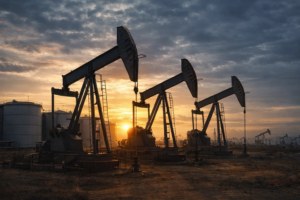
The Experts Club analytical center has prepared a video analysis showing how oil production volumes of the world’s largest countries changed over the period 1900–2024, based on internationally comparable series (the Energy Institute Statistical Review and long-term historical databases consolidated by Our World in Data).
Experts Club co-founder, Candidate of Economic Sciences Maksym Urakin, noted that over more than a century “the center of gravity of global production has repeatedly shifted — from the early dominance of the United States to the strengthening role of the Middle East, and then to a new wave of growth in North America amid a technological leap and changes in the structure of demand.”
According to the data used in the analysis, the “oil production” indicator includes oil and liquid hydrocarbons (including condensates and NGL), but excludes biofuels and synthetic derivatives of coal and gas, which makes it possible to compare countries and periods correctly.
According to Energy Institute estimates, global production in 2024 amounted to about 96.9 million bbl/day. The largest producers (million bbl/day) were as follows: the United States — 20.14, Saudi Arabia — 10.86, Russia — 10.75, Canada — 5.89, Iran — 5.06, Iraq — 4.40, China — 4.26, the UAE — 4.01, Brazil — 3.47, Kuwait — 2.72.
Experts Club notes that in 2024 the top three (the United States, Saudi Arabia, Russia) accounted for about 43% of global production, and the top 10 for around 74%, underscoring the high concentration of supply and the market’s sensitivity to decisions by a limited number of countries and to geopolitical risks.
More details: see the video on the Experts Club YouTube channel —



