
The seven OPEC+ countries that have voluntarily cut production beyond the quotas set for all countries (Saudi Arabia, Russia, Iraq, Kuwait, Kazakhstan, Algeria, and Oman) have decided to increase their oil production quotas in September by 188,000 barrels per day, according to an OPEC press release.
With this decision, the “Seven” have completed the return to the market of volumes previously cut as part of the second phase of voluntary restrictions, totaling 1.65 million bpd. The first phase—amounting to 2.2 million bpd—was “phased out” in September 2025.
Consequently, by the end of 2026, the previously approved quotas will apply to all member countries of the alliance without any restrictions, and the alliance’s total permitted production level will be 36.206 million bpd.
The leaders of the agreement—Saudi Arabia and Russia—will be able to increase production next month by 62,000 b/d, to 10.478 million b/d and 9.949 million b/d, respectively. Iraq is entitled to increase production by 26,000 b/d, to 4.431 million b/d; Kuwait—by 16,000 bpd, to 2.676 million bpd; Kazakhstan—by 10,000 bpd, to 1.628 million bpd; Algeria—by 6,000 bpd, to 1.007 million bpd; Oman – by 5,000 bpd, to 841,000 bpd.
Previously, the OPEC+ “volunteers” had stated that the cuts could be reinstated either fully or partially, depending on market conditions. However, this remark is absent from the current press release.
Despite the conclusion of the latest cycle of voluntary cuts, the OPEC+ “Seven” will continue to hold monthly meetings, the press release states. The next one is scheduled for September 6.
To increase production quotas for all OPEC+ countries, a meeting of ministers from all alliance countries must be scheduled—the next one is currently set for November 29. This decision could be made by the OPEC+ Monitoring Committee, which also met on August 2 but did not adopt a corresponding resolution. Its next meeting will take place on October 4.
Meanwhile, OPEC+ countries are currently discussing a new methodology for determining maximum production capacity, which will serve as the basis for setting production quotas in 2027—for now, quotas for all countries are set through the end of 2026. It was expected that the methodology would be approved in September so that quotas for 2027 could be determined at the November meeting.
Since March, the Gulf countries that are members of OPEC+ have been unable to increase production in line with their quotas because Iran has blocked the Strait of Hormuz, through which approximately 20 million barrels per day of oil and petroleum products from the Persian Gulf were flowing to the global market. Russia is also significantly behind its quota.
The Experts Club analytical center has prepared a video analysis showing how oil production volumes of the world’s largest countries changed over the period 1900–2024, based on internationally comparable series (the Energy Institute Statistical Review and long-term historical databases consolidated by Our World in Data).
Experts Club co-founder, Candidate of Economic Sciences Maksym Urakin, noted that over more than a century “the center of gravity of global production has repeatedly shifted — from the early dominance of the United States to the strengthening role of the Middle East, and then to a new wave of growth in North America amid a technological leap and changes in the structure of demand.”
According to the data used in the analysis, the “oil production” indicator includes oil and liquid hydrocarbons (including condensates and NGL), but excludes biofuels and synthetic derivatives of coal and gas, which makes it possible to compare countries and periods correctly.
According to Energy Institute estimates, global production in 2024 amounted to about 96.9 million bbl/day. The largest producers (million bbl/day) were as follows: the United States — 20.14, Saudi Arabia — 10.86, Russia — 10.75, Canada — 5.89, Iran — 5.06, Iraq — 4.40, China — 4.26, the UAE — 4.01, Brazil — 3.47, Kuwait — 2.72.
Experts Club notes that in 2024 the top three (the United States, Saudi Arabia, Russia) accounted for about 43% of global production, and the top 10 for around 74%, underscoring the high concentration of supply and the market’s sensitivity to decisions by a limited number of countries and to geopolitical risks.
More details: see the video on the Experts Club YouTube channel —
PJSC Ukrnafta has a strategic goal to ensure Ukraine’s energy independence in oil products by 2027 by doubling its oil and gas production, the Verkhovna Rada’s Committee on Energy and Housing and Utilities said Tuesday, citing the company’s director Serhiy Koretsky.
“Our company’s plan is ambitious enough, but there is a reason to announce it. Ukrnafta has every opportunity to be on the list of Ukrainian companies stabilizing the work of Ukraine’s financial and economic system,” he said during a visiting meeting of the Rada energy committee on the prospects of the Ukrainian oil refining industry in western Ukraine on June 1.
According to Koretsky, by 2027 the PJSC plans to increase oil production from almost 1.5 to 3 million tons per year. The company will achieve such indicators by drilling new wells and intensifying production, restoring production at idle wells, as well as by introducing methods to improve oil recovery at existing fields.
As Koretskyy noted, Ukrnafta started implementation of the plan to drill 9 wells in 2023 and at least 30 wells in 2024. At that, the company has been drilling 1-2 wells a year on average in recent years. “Ukrnafta also did not participate in auctions for new licenses.
“Analysis of the external environment shows that in the medium term, the company’s products will remain in demand and Ukrnafta will have the potential to develop on key markets. We believe that very soon the company will be talked about as the best employer, universal supplier of oil products and highly profitable national enterprise,” summarized the head of PJSC.
“In 2023, Ukrnafta plans to increase its oil production by 5.8% (by 0.08 million tons) to 1.45 million tons compared to the previous year, and gas production by 0.3% (by 0.003 million cubic meters) to 1.04 billion cubic meters.
On November 5, 2022, the Supreme Commander in Chief decided to confiscate Ukrnafta shares (except for the controlling interest in Naftohaz Ukrainy) as state property during the martial law. Prior to the seizure, the structures of Ihor Kolomoyskyy and Hennadiy Boholyubov owned about 42% of Ukrnafta shares.
As of the end of March 2023, Ukrnafta had 89 fields with 3.7 thousand oil and gas wells. The company operates 451 gas stations.
In January-March 2023, PJSC Ukrnafta carried out a number of organizational and technical measures at the wells, which made it possible to increase the average daily oil production by more than 100 tonnes and petroleum gas by 30,000 cubic meters.
This was reported in a company press release with reference to the post of director of PJSC Ukrnafta Serhiy Koretsky on his Facebook page on Friday.
“In particular, the transfer to another horizon of one well in the Eastern oil and gas region made it possible to obtain an average daily flow rate of 34.1 tonnes of oil. As of the end of March, 1,100 tonnes of oil and 100,000 cubic meters of petroleum gas have already been received from this well,” he said.
In addition, more than 10 complex operations were carried out at other fields.
“Thanks to these works, it was possible to increase the flow rate at some wells four times, which in total brought more than 100 additional tonnes of daily oil flow rate and about 30,000 cubic meters of petroleum gas,” the PJSC said.
As the company recalled, Ukrnafta aims to increase oil production by 6% in 2023, with a further subsequent increase in production over the next five years. This year it is planned to drill three new wells and three sidetracks.
OPEC+ ministers, in their uncertainty related to the prospects of the world economy and the oil market, due to the need to improve long-term forecasts of the oil market, as well as in accordance with the successful approach to renewal actions, which were consistently applied by the participating countries, adopted a number of decisions, the secretariat of the organization reported.
All is provided, the term of the agreement has been extended until December 31, 2023.
Since November, the oil production quota has been reduced by 2 million b/s compared to the August level (falling in line with the October quotas).
Ministries are responsible for registration with the Office+ Ministerial Monitoring Committee (JMMC) and one at a time. Full-length OPEC+ ministerial meetings will be held this year together with OPEC+ conferences
JMMC may at any time request to the OPEC+ Ministries, if necessary.
The next meeting of OPEC+ ministers is scheduled for December 4.
Refund period for late date March 31, 2023.
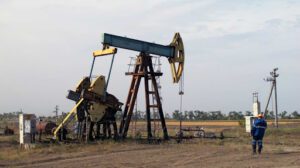
PJSC Ukrnafta in January-September 2021 reduced oil and condensate production by 1.1% (by 12,200 tonnes) compared to the same period in 2020, to 1.122 million tonnes, including in September production grew by 2.1% compared to September 2020, to 125,500 tonnes.
As the company told Interfax-Ukraine, gas production in the first nine months of 2021 fell by 3.4% (by 29 million cubic meters), to 832.8 million cubic meters, including in September it rose by 4.9%, to 94.6 million cubic meters.
Ukrnafta said that the average daily production has been growing since the beginning of the year, in particular, in September 2021 this figure for oil with condensate amounted to 4,180 tonnes, which is 4.8% more than in January 2021, for gas it was 3.15 million cubic meters, which is 7.3% more than in January 2021.
Ukrnafta is the largest oil company in the country. NJSC Naftogaz Ukrainy owns 50% + 1 share in Ukrnafta, a group of companies associated with the former shareholders of PrivatBank – about 42% of shares.
Ukrnafta has 85 licenses for the production of hydrocarbons, it has 1,809 oil and 153 gas wells on its balance sheet. The company owns 537 filling stations.



