
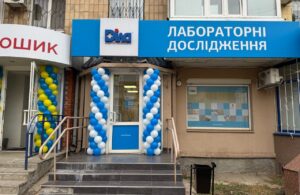
In 2025, the Dila medical laboratory increased the number of tests performed by 10.5%, the number of clients by 4%, and opened 26 new branches.
According to the laboratory’s press release summarizing the results of the past year, the development of online services remained the driver of sales growth in 2025. In particular, in 2025, the share of orders paid online increased by more than 10% to almost a third of orders.
The laboratory notes that in 2025, Dila opened 26 of its own and partner branches. In total, since February 2022, the laboratory has almost doubled its network, and as of the beginning of 2026, the company’s network consists of 276 points of presence.
In the fall of 2025, Dila launched a new clinical diagnostic laboratory in Kyiv with an area of over 2,000 square meters, with a capacity to perform over 15 million tests per year.
The largest amount of capital investment during 2022–2025—about UAH 40 million—was directed toward launching a new laboratory in Kyiv, comprehensively equipping the network of branches with generators and inverters with batteries, and installing additional power lines and uninterruptible power supplies.
“By the beginning of 2026, all of Dila’s own branches and clinical diagnostic laboratories will be operating in a completely autonomous mode,” the laboratory specifies.
They also note that 465 new employees joined the Dila team in 2025, bringing the total number of company personnel to over 2,100.
In addition, as part of corporate social responsibility projects, Dila, together with the Dila Foundation, allocated more than UAH 70.6 million in aid in 2025, and since 2022, over UAH 162.2 million, including UAH 49.3 million for social discounts, of which UAH 45 million was allocated to support the health of military personnel and veterans.
In 2025, Dila transferred UAH 593.2 million in taxes and fees to the state budget, which is 56% more than in 2024.

The volume of the semi-trailer market (new, imported used, domestic market) shrank by 39% in 2025 compared to 2024, to 15,486 thousand units, according to the Automotive Market Research Institute.
“The largest decline (by 46% to 4,445 thousand units) was recorded in the used import segment – the market is actually saturated with European ”second-hand“ vehicles,” according to a statement on the analysts’ website.
It is noted that the secondary market, where the decline was 35.3% to 9,847 units, was dominated by German giants, with Schmitz Cargobull (2,224 units) remaining unattainable, followed by Krone (1,026 units) and Kögel (905 units).
Popular types are flatbed and tent trailers, with tankers holding a significant share, which is critical for the fuel and agricultural sectors.
Experts note that Ukrainian Everlast (129 units) is firmly held in the top ten of this market segment, which, in their opinion, indicates the high liquidity of domestic tankers on the secondary market.
According to analysts, demand in the used imported semi-trailer segment is clearly structured around international routes: in addition to standard tarpaulins, great attention is paid to refrigerated vans.
In this segment, Schmitz Cargobull occupies the lion’s share of the market – almost 2,000 semi-trailers, or almost half of used imports.
Among new semi-trailers, dump trucks (construction and agriculture), refrigerators, and tent trailers are popular. At the same time, among imported new semi-trailers, imports of which fell by 39.1% to 9,581 units, the leading brands were Schmitz Cargobull (352 units) and Wielton (123 units).
At the same time, 236 semi-trailers were produced in Ukraine last year (28.3% less than the previous year), and in the new semi-trailer segment, Ukrainian manufacturer Everlast (82 units) came in fourth after Schmitz Cargobull, Wielton, and Krone, while Ukrainian manufacturers TAD (53 units) and VARZ (46 units) came in fifth and sixth.
Experts believe that when it comes to complex special equipment (trawls or tanks), Ukrainian carriers are increasingly choosing local manufacturers because of better service and adaptation to our conditions.
“The trailer market in 2025 finally got rid of the feverish demand. We see that the number of new Ukrainian-made trailers has fallen significantly less (-28.3%) than imports of new ones (-39.1%). This is an important signal: Ukrainian factories have learned to make a product that businesses are willing to buy even in difficult times,” Stanislav Buchatsky, head of the Automotive Market Research Institute, is quoted as saying in the report.
He notes that the overall decline in the market is not a sign of crisis, but a stage of stabilization—fleets are fully equipped, and logistics chains are in place.
“Now the market is moving towards planned renewal, where the main factors are not the availability of equipment ‘for yesterday’, but its fuel efficiency, weight, and maintenance costs,” he states.

In January this year, Ukraine reduced its exports of processed pig iron in physical terms by 27.1% compared to the same period last year — to 93,795 tons from 128,592 tons.
According to statistics released by the State Customs Service (SCS) on Tuesday, 246,516 tons of pig iron were exported in December.
In January, pig iron exports decreased by 32.5% in monetary terms, to $34.807 million from $51.581 million.
At the same time, exports were mainly to the US (87.25% of shipments in monetary terms), Italy (9.41%), and Poland (2.01%).
This January, the country did not import pig iron, as it did a year ago.
As reported, in 2025, Ukraine increased its exports of cast iron in physical terms by 53.5% compared to the previous year, to 1 million 980.620 thousand tons, and its revenue by 51.9%, to $759.882 million. Exports were mainly to the United States (68.25% of shipments in monetary terms), Italy (20.26%), and Turkey (3.63%).
Over the 12 months of last year, the country imported 39,000 tons worth $78,000 from Germany (51.95%) and Brazil (48.05%), while in January-December 2024, 38 tons of pig iron worth $90,000 were imported.
It was also reported that, starting March 12, 2025, in accordance with President Donald Trump’s decision, the US began imposing a 25% tariff on imports of Ukrainian steel products, except for cast iron.
In 2024, Ukraine reduced its exports of processed cast iron by 3.4% in physical terms compared to 2023, to 1 million 290.622 thousand tons, and by 6.1% in monetary terms, to $500.341 million. Exports were mainly to the US (72.64% of shipments in monetary terms), Turkey (8.03%), and Italy (7.30%). For the whole of 2024, the country imported 38 tons of pig iron worth $90 thousand from Germany, while for the same period in 2023, it imported 154 tons of pig iron worth $156 thousand.
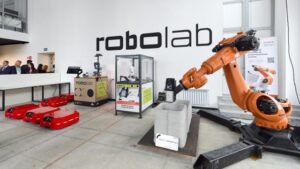
Ukraine’s first robotics laboratory, RoboLab, has begun operations at the Kyiv National University of Construction and Architecture (KNUCA), according to Acting Minister of Digital Transformation Oleksandr Bornyakov.
“I want this place to become a platform where all students, not only from KNUCA, but also anyone who can come here to get involved and test solutions. We, in turn, will work to ensure that there are more such laboratories in other places,” Bornyakov emphasized, according to a correspondent from Interfax-Ukraine.
According to him, this laboratory is designed for about 30 workplaces.
It is noted that the laboratory is equipped with mechatronics kits, robotic arms, 3D printers and scanners, robotic platforms, a VR system for engineering simulation and prototyping, as well as other technical equipment. An important feature of this laboratory is that students from other higher education institutions can also use it.
During the opening ceremony, Irina Legkobit, Director General of the Association of Robotics and Automated Systems, said that the laboratory has a separate practical area where 3D printers will be installed for students to work on their projects. Individual workstations have also been created where students can assemble parts and perform the necessary technical operations.
In a comment to the agency, Natalia Denikeeva, Deputy Minister of Digital Transformation of Ukraine for Digital Economy, noted that the Ministry of Digital Transformation, together with the Ukrainian Startup Fund and the Ministry of Education, is preparing a resolution that will allow the project to be scaled up to five more laboratories. In particular, there are plans to hold an open competition with clearly defined criteria for selecting the winner, similar to the competition won by KNUSA.
“The approach to the project will be structured in such a way that part of the money will be provided by the state, and the higher education institution will have to find partners, donors, businesses, and organizations willing to co-finance the project,” explained the Deputy Minister of Digital Transformation of Ukraine for Digital Economy.
Denikeeva specified that it is also planned to attract businesses, both financially and through the expertise of leading companies such as Hitachi and Mitsubishi.
According to her, by the end of the year, it is planned to determine the winners and finance higher education institutions, start work, and if some of the repairs cannot be completed, they will be completed in early next year.
In September 2025, the Ministry of Digital Transformation reported that KNUCA was selected from among 16 higher education institutions in Kyiv. In particular, the winner for the launch of robotics laboratories was selected by an independent jury due to its experience in the field of robotics and its ability to provide space and a team of specialists.
The RoboLab project is being implemented by the Association of Robotics and Automated Systems on the initiative of the Ministry of Digital Transformation of Ukraine, in partnership with the Ministry of Education and Science of Ukraine and with the support of the Ukraine-Moldova American Enterprise Fund, the technology company Ajax Systems, Deus Robotics, and Profi Robotics.

The number of drunk driving cases has decreased for the first time in five years.
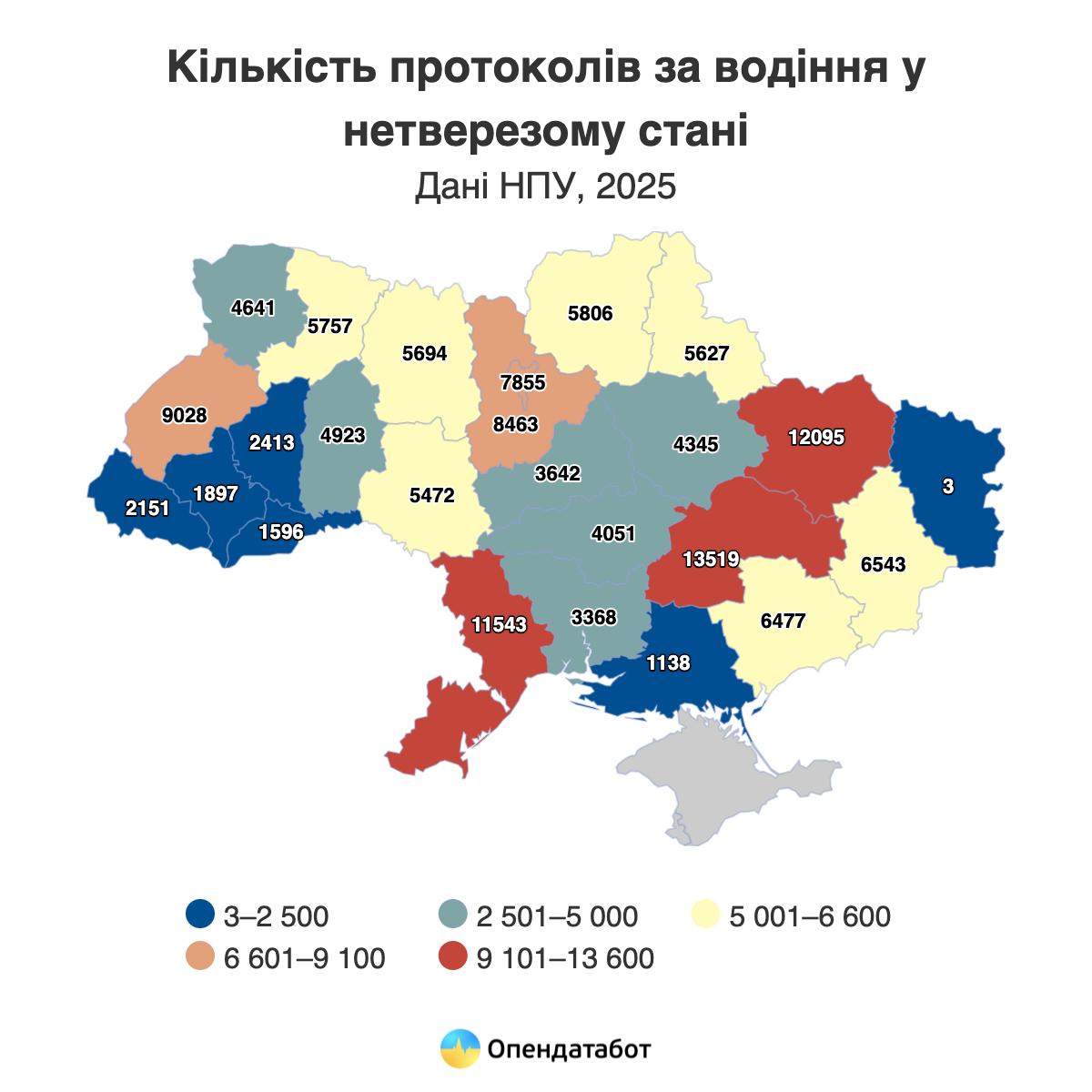
The National Police of Ukraine recorded more than 138,000 reports of drunk driving in 2025. The number of such reports has decreased for the first time in five years. The highest number of drunk drivers is in the Dnipropetrovsk, Kharkiv, and Odesa regions. Last year, the Prosecutor General’s Office of Ukraine opened more than a thousand criminal proceedings for drunk driving. In total, every 40th traffic accident with fatalities or injuries was caused by drunk drivers in 2025. 73 people were killed and 857 were injured in such accidents.
138,047 reports for drunk driving (Article 130 of the Code of Administrative Offenses) were recorded last year. This is 8% less than in 2024. Last year was an exception, as the number of drunk drivers has only been increasing in recent years.
However, this trend does not apply to the whole country: in four regions, the number of drunk driving cases has actually increased. There was a noticeable increase in Rivne region (+19%), followed by Khmelnytskyi region (+18%), Kharkiv region (+8.5%), and Zaporizhzhia region (+3%).
Overall, the highest number of drunk drivers was recorded in Dnipropetrovsk region — 13,519 cases. Kharkiv region also made it into the top three with 12,095 cases, followed by Odesa region with 11,543 reports.
The lowest number of reports was recorded in Kherson region with 1,138 cases, followed by Chernivtsi (1,596) and Ivano-Frankivsk (1,897) regions.
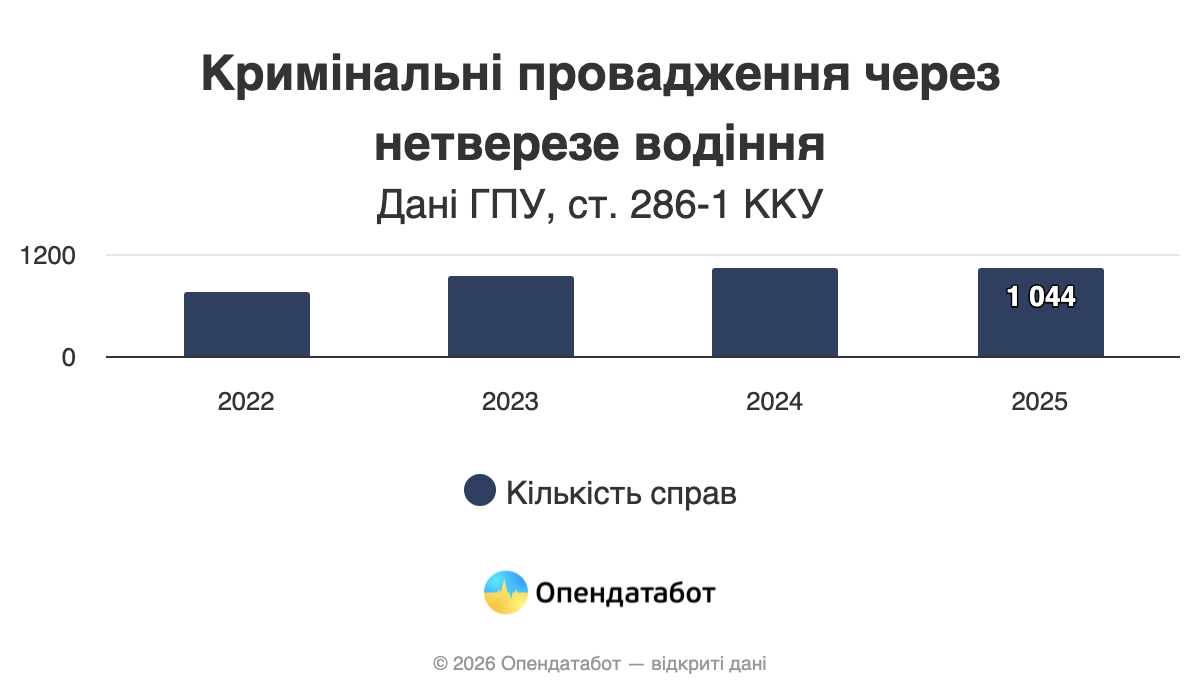
At the same time, in 1,044 cases of drunk driving, criminal proceedings were opened under Article 286-1 of the Criminal Code, according to data from the Prosecutor General’s Office. Last year, 59% of cases went to court.
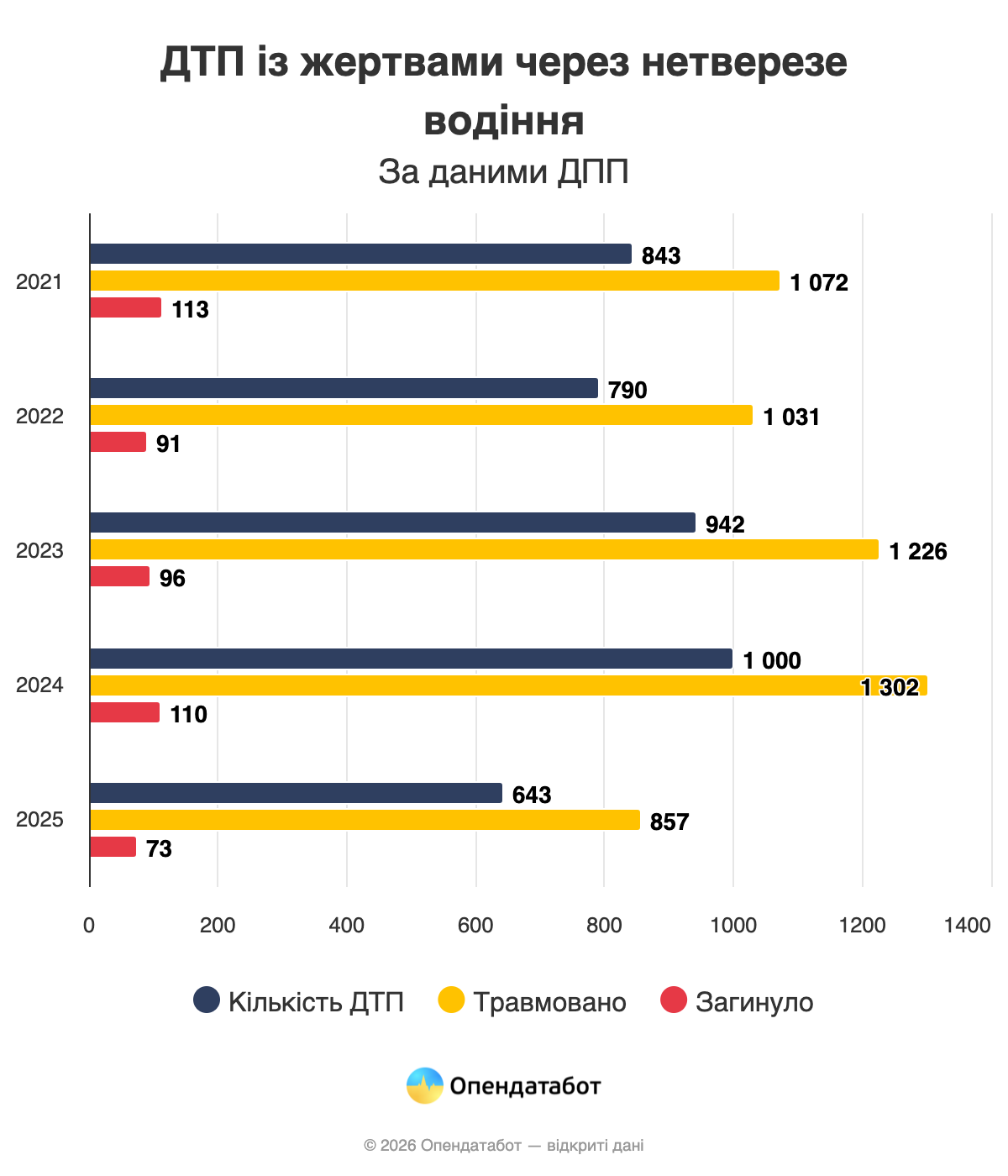
A total of 643 traffic accidents with fatalities or injuries were caused by drunk drivers last year — such accidents also decreased by a third. Seventy-three people died and another 857 were injured as a result of these accidents. Every 40th traffic accident with fatalities and/or injuries was related to drunk driving, while in 2023 and 2024, this figure was every 25th accident.
https://opendatabot.ua/analytics/drunk-dtp-2025

Author: Olga Levkun
Director of the Central State Historical Archive of Ukraine in Kyiv, Yaroslav Fayzulin, spoke exclusively to the Culture Department of the Interfax-Ukraine agency about the institution’s most valuable collections and showed a selection of unique documents, old prints, maps, and manuscripts that form the “treasure trove of Ukraine’s archival heritage” and present it to the world.
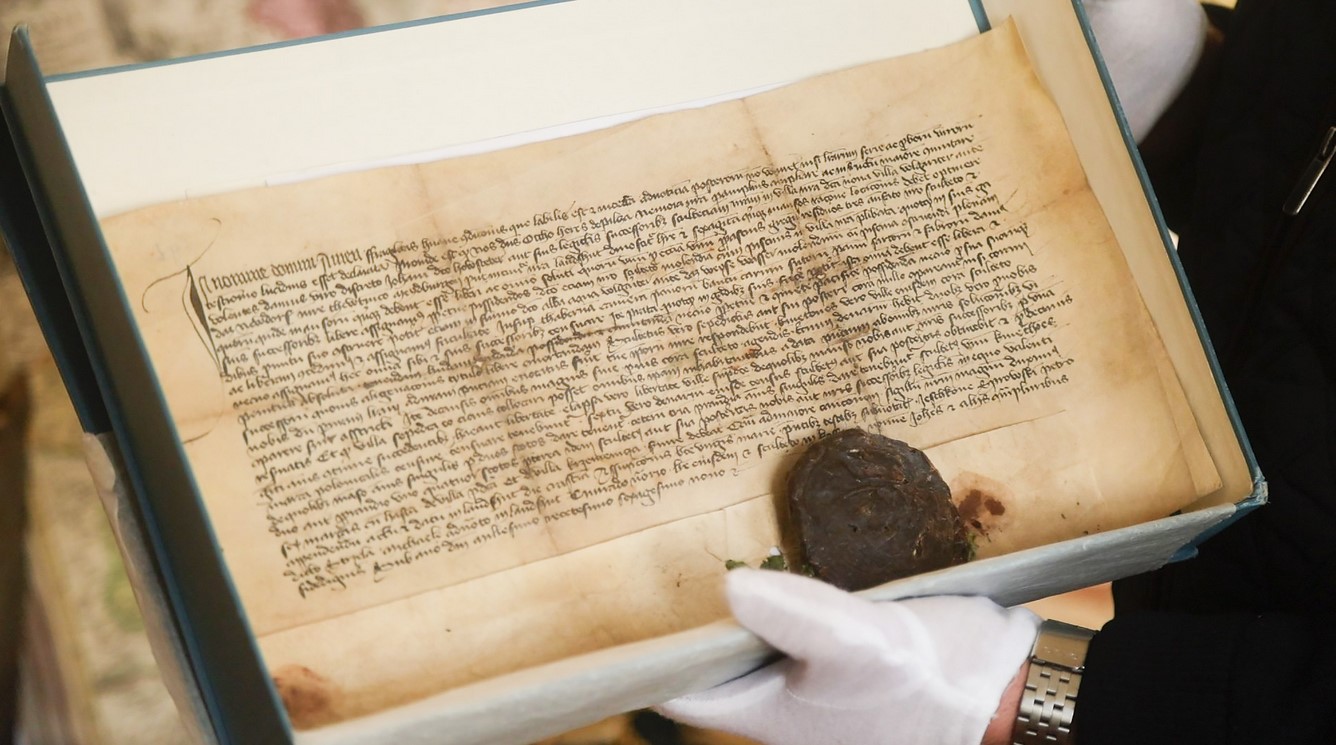
The oldest exhibit shown to journalists was a document from 1369. It concerns the granting of land to Johann Austerter, a resident of Novosidlov. The document is sealed with a wax seal, which confirms its authenticity.
“In the 14th century, as now, documents were sealed with seals, and it is this seal that certifies the authenticity of this document,” said Yaroslav Fayzulin during the demonstration.
A separate section of the exhibition was devoted to how the archive actually began as an institution. The archive began in 1852 with registry books. An imperial decree of 1852 established central archives in Kyiv, Vilnius, and Vitebsk, where ancient registry books and documents of the Polish-Lithuanian Commonwealth and the Grand Duchy of Lithuania were to be stored. The record books contained materials from courts — zemstvo, grodskoe, and podkomorskie — as well as documents from magistrates and town halls: decisions, purchase agreements, notarized deeds, and other original materials.
According to the director of the archive, by the end of the 19th century, about 6,000 record books had been stored, but during World War II, 4,000 were lost. Currently, the archive stores about 2,000 record books. They have already been digitized.
Among the most interesting examples is a record book with an entry of Petro Mohyla’s will regarding the distribution of his estate. During the inspection, attention was drawn to the security measures: the record books were bound with laces to prevent the replacement of sheets or “insertions.” In the 19th century, these documents were often used to confirm property rights or even nobility, and at the end, the book was certified with the seal and signature of the archive director.
In the 19th century and partly in the 20th century, the archive was located in the Red Building of St. Vladimir’s University (now Taras Shevchenko National University of Kyiv), as evidenced by the seal impressions on the documents.
Another rarity on display is the Gospel of the early 17th century, printed in the Lviv printing house and presented by Petro Mohyla to the Church of the Savior in Berestove. The book is decorated with precious metals and bears a dedication by Petro Mohyla and the family coat of arms of the Mohylas. The archive noted that Mohyla came from an ancient boyar family from Moldova.
An equally eloquent symbol of Ukraine’s presence in the European intellectual space is the 18th-century map by German cartographer Johann Baptist Homann, Ukraina, terra Cosacorum (Ukraine, Land of the Cossacks). It shows the Cossack lands and neighboring states. The first edition of the map dates back to 1716, and the atlas we were shown is from 1748. Thus, by the middle of the 18th century, Ukraine was already represented in European atlases under its own name.
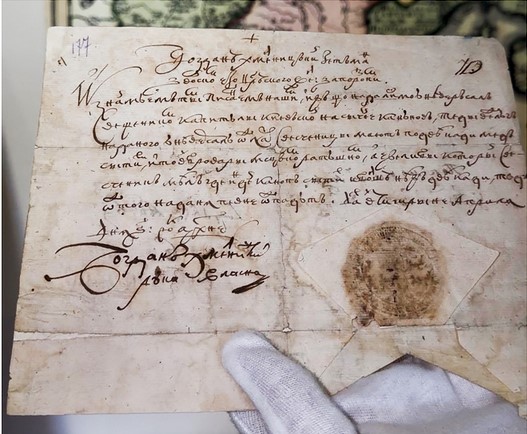
A separate section of the exhibition was devoted to documents of the Hetmanate’s state administration. The archive contains over 200 hetman decrees, from Bohdan Khmelnytsky to Kyrylo Rozumovsky, i.e., decrees from practically all Ukrainian hetmans. We were shown Khmelnytsky’s decree signed “by his own hand,” as well as decrees from Ivan Mazepa and Ivan Skoropadsky.
The documents are certified with seals, and their preservation was ensured by a custodian – a paper overlay over the seal. Using the example of decrees, it can be noted that reading signatures and cursive often requires special training – in particular, knowledge of paleography.
The archive emphasized that the universal letters of the 17th–18th centuries mostly regulated practical issues, such as appointments to positions, granting of land holdings, and transfer of property, while the universal letters of the Central Rada at the beginning of the 20th century were of a different nature, as state acts reflecting Ukraine’s path to independence.
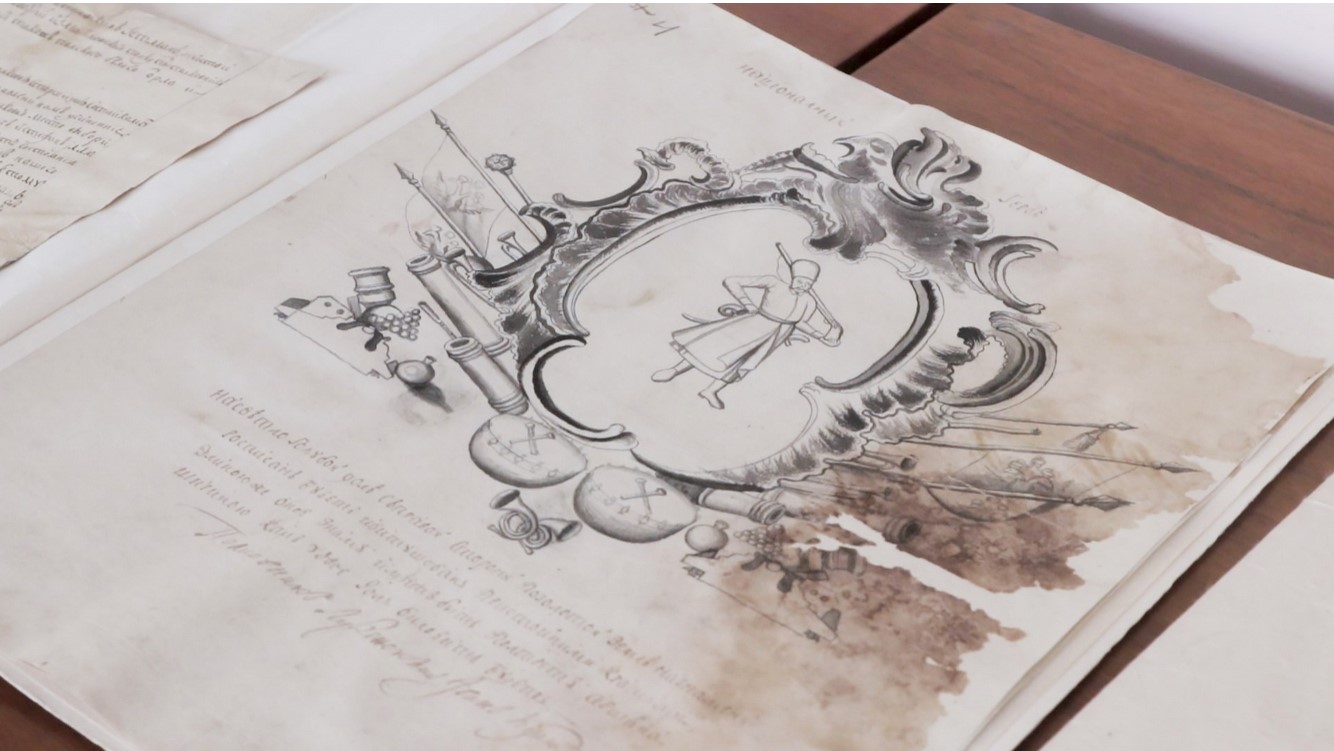
Among the visually striking artifacts is an image of the national coat of arms, which was planned to be developed during the time of the last hetman, Kyrylo Rozumovsky.
At the center of the composition is a Cossack with a musket, an image that was present on the coats of arms of many hetmans and later influenced the symbolism of Hetman Pavlo Skoropadskyi (the graphics were developed by Heorhii Narbut).
They also showed the firman of Turkish Sultan Mehmed IV with a tugra — a sultan’s sign containing key information about the ruler and his titles. The document, dated 1651, concerns the period of preparation of the Ukrainian army for the battle with the Polish-Lithuanian Commonwealth near Berestechko: in it, the sultan promises assistance to Bohdan Khmelnytsky — against the backdrop of the search for allies in the war with Poland.
A separate section focuses on the sources that Ukrainians most often use today to “restore” their own history: metric books, confessional records, and church records.
The archive also contains a metric book with an entry recording the birth of Taras Shevchenko. Archivists emphasize that such metric records are primary sources for researching biographies and family histories.
Confession records were kept to keep track of parishioners, but they were also important for the imperial authorities, particularly for population registration and taxation. Among the most telling examples is the record of the family of Hryhorii Shevchenko coming to confession, which mentions his wife Kateryna and their children Mykita, Taras, and Yosyp.
We were also shown a metric book with an entry about the birth of Goldi Meir, which, according to archivists, is of particular importance to researchers and international institutions.
A separate section of the exhibition was devoted to the collection of Mykhailo Hrushevsky. We were shown manuscripts, in particular those related to “The History of Ukraine-Rus,” as well as printed editions of the work, which show the evolution of the author’s formulations. Among the materials are postcards of European cities and capitals from the early 20th century, as well as a gendarmerie photograph from 1914 with Hrushevsky’s anthropometric data. Separately, they showed police and secret service albums, pocket “reference books” for surveillance, and explained that files were kept on figures in the Ukrainian, Polish, and Jewish movements, recording every episode that came to the attention of the authorities.
The final highlight of the collection was the documents of Hetman Pavlo Skoropadskyi. Among them is his correspondence with Carl Gustaf Mannerheim: some of the letters are handwritten, some are printed, and there are texts in Russian and German.
A separate rarity is the genealogical research of the hetman’s wife, Oleksandra Skoropadska, who traced the Durnov and Skoropadskyi lines back nine generations, compiling materials with coats of arms, portraits, and photographs.
The Skoropadskys’ family album and documents from organizations, in particular the All-Russian Zemstvo Union, with which the biography of Simon Petliura is connected, were also shown.
The archive emphasized that the selection on display is only a small part of the collection: it is an “improvised exhibition” prepared especially for our visit and represents only “one percent” of what is stored in the vaults.
Not only professional researchers can take a look “behind the scenes” of the archive. As explained by the institution, anyone interested can book a paid tour as part of the archive’s paid services, with the format and time of the visit agreed in advance. At the same time, the archive regularly conducts free introductory tours for students, in particular history students, as part of their professional training. Such visits are organized at the request of educational institutions with which the archive has concluded agreements or memoranda of cooperation.
Photo: Olga Levkun, Oleksandr Zubko
Treasury of the nation, documents, hetman, archive



