
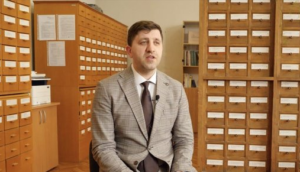
More than 20 million digitized documents have already been collected in the state “online archive” system, where users can search for materials by keywords, Head of the State Archival Service of Ukraine Anatolii Khromov said in an exclusive interview for the Culture desk of Interfax-Ukraine news agency.
“It was presented in 2022, and now the system already contains more than 20 million digitized documents, which can be searched by keywords,” Khromov said.
According to him, the digitization of the archival system has several levels. The first is basic access in reading rooms, where visitors can work with materials and take photos of documents on their own phone. The second is professional digitization using specialized scanners and software, which requires significant resources and is financed through partnership agreements and a special archives fund.
Khromov also noted that today virtually all state archives have their own websites, and the system operates inter-archive search portals that enable users to find information remotely.
Separately, he emphasized the transition of archives to a service-based access model: basic options for users remain free of charge, while additional services are paid due to the need for resources.
“People can work in reading rooms free of charge, view materials online, and make their own digital copies. But if someone needs a professional scan copy, official certification, or special document processing, this is already a separate procedure that requires resources,” the Head of the State Archival Service explained.
He clarified that the free options include, in particular, work in the reading room and self-copying, but for this a person needs to physically come to the archive. At the same time, remote copying, he said, may cost approximately about UAH 5 per page, which for many is more convenient and cheaper than travel expenses.
According to Khromov, digital tools and expanded online access are also important for security during wartime: digital copies allow reducing the physical use of originals and keeping them in storage facilities, minimizing the risks of damage to documents.
Source — Interfax-Ukraine
Ukraine may face a critical shortage of seasonal workers for raspberry harvest in 2026, the head of the Ukrainian Fruit and Vegetable Association (UFOA) Taras Bashtannik said.
According to him, without attracting foreign labor, the country will not be able to harvest raspberries and maintain its position as an exporter of this berry.
As noted in the publication, the area of raspberries in Ukraine in 2024 was about 5 thousand hectares, and the need for labor is estimated at about 15 pickers per 1 hectare. Thus, the season requires more than 70 thousand workers only for raspberries. Labor shortages are also affecting blueberry and strawberry farms, as well as apple orchards.
Volodymyr Gurzhyi, the head of USPA Fruit gardening company, said that in 2026 Ukrainian companies plan to import workers to orchards, including from Bangladesh and Nepal, similar to the practice in Serbia. At the same time, taking into account the growth of orchard areas, the additional need may amount to at least 100 thousand pickers.

Researchers at KAIST, in collaboration with the Hong Kong University of Science and Technology (HKUST) have developed a “cap” with flexible OLED light sources for scalp phototherapy, which in laboratory tests suppressed markers of hair follicle cell aging by up to 92% – this is considered one of the factors in the progression of hair loss.
According to KAIST, the development is a soft textile wearable platform with specially designed OLEDs that emit near-infrared light. The team selected the 730-740 nm range as optimal for activating human dermal papilla cells (hDPCs), which regulate hair growth, and showed that exposure to such OLEDs reduced signs of cellular aging by approximately 92% compared to the control group.
The authors note that their approach is designed to overcome the limitations of traditional phototherapy “helmets”—their bulkiness and the unevenness of point sources (LEDs/lasers). The next step, according to the developers, is to test safety and efficacy in preclinical studies to assess the prospects for real-world application.
The work has been published in Nature Communications.

According to Serbian Economist, the authorities of Bosnia and Herzegovina are considering the introduction of a temporary duty of 30% on imports of steel and steel products for a period of 200 days. The proposal was prepared by the Ministry of Foreign Trade and Economic Relations at the request of Nova Željezara Zenica, the final decision after public consultations should be made by the Council of Ministers of BiH.
The initiative is explained by a sharp increase in the supply of certain categories of metal products. According to the Ministry, in 2025, imports of reinforcement mesh in BiH increased by 192.87% compared to the average of the previous four years, with Serbia being the largest supplier, with more than 9,000 tons, which is 408% higher than the 2021-2024 average. In second place was Italy (7,794 tons, about double the previous level).
Separately, the dynamics of imports from Turkey are pointed out: the supply of rebar in coils in 2025 increased by 885% relative to the four-year average, while imports of bars increased by 229.56%. The ministry believes that this creates pressure from foreign producers and leads to underutilization of local capacity.
In an explanation of the initiative, the ministry notes the risk of increased dependence of the construction sector on imports and warns of possible consequences, including job cuts, lower budget revenues, falling investment and higher prices on the domestic market.
The decision is being discussed against the backdrop of Serbia’s recent protective measures: as of January 1, 2026, Belgrade introduced a temporary import quota scheme for a number of iron and steel products (as well as Portland cement) with an additional duty of 50% on shipments above the quotas.
Nova Željezara Zenica itself, acquired last year by H&P Zvornik (Pavgord Group), had previously initiated bankruptcy proceedings against the company, explaining that it had been insolvent for a long time.
https://t.me/relocationrs/2256
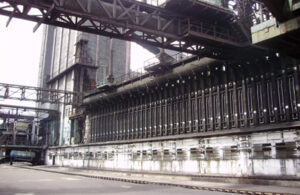
According to Fixygen, PJSC Pivdenkoks (Kamensk, Dnipropetrovsk region) will hold an extraordinary general meeting of shareholders on February 20, 2026, in a remote format—by means of a poll, according to the company’s announcement.
The date for compiling the list of shareholders eligible to participate in the meeting is February 17, 2026. Ballots will be made freely available on the company’s website on February 10, and depository institutions will accept ballots from February 10 (from 11:00 a.m.) to February 20 (until 6:00 p.m.).
The agenda includes the appointment of an auditor for the mandatory audit of the company’s financial statements for 2025. The materials for the meeting include alternative draft decisions on the selection of an auditor, with the candidates being Standard-Audit LLC, Creston Ukraine LLC, and Lukas Audit LLC, as well as the proposed terms of payment for their services.
Pivdenkoks PJSC (EDRPOU 05393079) is a coke chemical enterprise located in Kamyanske (Dnipropetrovsk region). The plant has been operating since 1935; the first coke was produced on August 4, 1952. Its main activity is the production and sale of coke chemical products.
February 13, 2026, 11:00
Kyiv City State Administration (KCSA), Column Hall
(Kyiv, 26 Khreshchatyk St.)
Competition organizers:
The National Industry Partnership in Ukraine’s Light Industry “Fashion Globus Ukraine” and the Italian association VITAWORLD
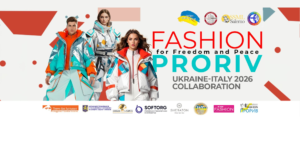
On February 13, 2026, the Column Hall of the Kyiv City State Administration will host the ceremonial final of the 8th All-Ukrainian Professional Skills Competition “Fashion PRORYV for Freedom and Peace” https://fashionglobusukraine.com/konkurs/ua/fashion-proryv-2026 — a large-scale event that brings together fashion, education, culture, and international partnership between Ukraine and Italy. The final in Kyiv will take place in the format of a runway show featuring collections of sportswear and adaptive clothing, as well as an awards ceremony for the winners.
The Fashion PRORYV competition, launched in 2016, has become a unique platform for cooperation among educators, manufacturers, young designers, and sewing professionals. The project, initiated by Fashion Globus Ukraine, has created an effective model of interaction between education, business, and creativity.
“Over the years of the war with the Russian Federation, we have created a platform of peacebuilding cultural diplomacy, where Ukraine speaks to the world not in the language of pity, but in the language of dignity, creativity, and culture. We have created a precedent: when a competition in the fashion industry became a narrative about humanity, strength, resilience, and hope,” says the competition’s President, Golda Vynohradska.
Over the years, the competition has been held under the patronage of the city halls of Lviv, Kharkiv, Khmelnytskyi, and Kryvyi Rih. In 2025, the project received support from the U.S. Embassy in Ukraine, and in 2026—from the City of Milan.
Fashion as cultural diplomacy
During wartime, Fashion PRORYV has taken on special significance, turning into a platform for cultural diplomacy and international dialogue. Each year, between 60 and 100 educational institutions from all regions of Ukraine take part in the competition. In 2025, the winners’ collections were presented in Paris, Oslo, Milan, and Luxembourg.
This year’s competition is dedicated to cooperation with Italy and the theme of sports. It features students from 52 Ukrainian fashion-industry educational institutions and 4 Italian universities (Venice, Salerno, Milan, Rome).
International finals in Kyiv and Milan
A ceremonial international presentation will take place on February 28, 2026, in Milan (Milan San Siro Hotel) as part of the Milano-Cortina 2026 events and Milan Fashion Week.
Such projects demonstrate Ukraine’s innovative potential, young people’s prospects, and the value of human capital.
Distinguished guests and professional jury
The event will be attended by:
• representatives of the diplomatic corps,
• Olympic champions,
• cultural and sports figures,
• leaders of the fashion industry of Ukraine and Italy.
The jury includes leading experts in fashion, education, and creative industries of Ukraine and Italy: Ivan Frolov, Katya Silchenko, Olena Holets, Taras Prytula, Kateryna Myroshnychenko, Halyna Yerko, Emilia Ametrano, Walter Togni, Elena Kalencani.
General partner of the competition: SOFTORG
Invitation
The organizers invite journalists and media representatives to share in the celebration of Fashion PRORYV—an event about courage, talent, and the power to create the future even in the most difficult times. Such projects demonstrate Ukraine’s breakthrough, prospects for youth, and above all the value of human capital!
Media accreditation
For accreditation and additional information:
+38 067 220 86 37
Goldafashion.ua@gmail.com
www.fashionglobusukraine.com
Interfax Ukraine is the official information partner of the event.



