
H&M has launched an online store in Ukraine, according to a statement by H&M Hennes & Mauritz AB’s press service to the Interfax-Ukraine news agency.
“The launch of hm.com is a historic event for H&M in Ukraine. I am very pleased that our long-awaited online store is finally available to all customers. I believe that a combination of a strong offline and online presence is key to building strong relationships with our customers,” commented Michalina Ludwiczak, Sales Manager for Sales Market Poland at H&M.
Customers in Ukraine can order items from the main collections online, as well as H&M Home (excluding furniture and lamps), H&M Move, and special lines, such as H&M Studio. Subscribers to the H&M Fashion Newsletter are the first to receive information about exclusive offers, current selections, presentations of new collections, and other news.
The first H&M store in Ukraine opened in 2018. Today, the brand has nine physical stores: seven in Kyiv, one in Odesa (renovated in June 2025), and one in Lviv.
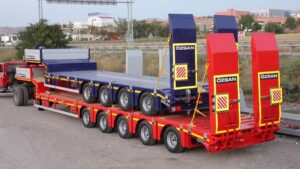
The production of trawls for transporting large-sized cargo in Ukraine in 2025 increased by 18% to 415 units, according to Dmytro Kysilevsky, deputy chairman of the Verkhovna Rada Committee on Economic Development.
“We have achieved good results in the machine-building industry, which we risked losing just a few years ago. Demand generated by farmers, logistics companies, and partly by the state has been transformed into domestic production thanks to the ”Made in Ukraine” policy. The main instruments were localization in public procurement and compensation of 15% of the cost of Ukrainian equipment,” he wrote on Facebook.
Kysilevsky noted that last year, trawls in Ukraine were manufactured by three companies that are actively investing in the development and establishment of exports. Production of a new type of product, modular trawls, has also begun.
At the same time, the MP emphasizes that low-quality Turkish and Chinese trawls are still widely present in defense procurement.
“Bill No. 13392 on localization in defense procurement is designed to correct this. It will extend localization requirements to the procurement of civilian goods by the defense forces, including this type of product,” Kysilevsky wrote.
He recalled that in 2025, the share of the processing industry in the state budget was the largest – 18%, meaning that it is gradually becoming one of the driving forces of the Ukrainian economy.
The “Made in Ukraine” policy for the development of Ukrainian manufacturers combines programs that stimulate production, industrial investment, and non-raw material exports.
As reported, draft law No. 13392, co-authored by Kysilevsky, was adopted by the Verkhovna Rada in the first reading on November 4, 2025.
In particular, the document provides for amendments to the Law “On Public Procurement,” whereby, until December 31, 2032, localization requirements will temporarily apply to defense procurement of civilian goods worth more than UAH 1 million, provided that such goods are included in the list of goods with a confirmed degree of localization of production directly by their manufacturer.
The required level of localization in 2026 is 30% (2025 – 25%).
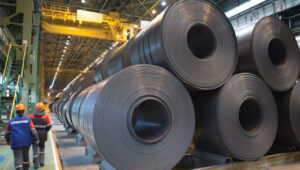
Metinvest B.V. (Netherlands), the parent company of the Metinvest mining and metallurgical group, sold 39% of its steel products on the domestic market in January-September 2025, amounting to $3.777 billion, compared to 38% in the same period of 2024, with total sales of $3.688 billion.
According to a presentation based on Metinvest B.V.’s interim report for the first nine months of 2025, published on Tuesday, sales in Europe accounted for 49% of total sales during this period (the same as in the first nine months of 2024), in North America – 7% (6%), in the MENA macro-region – 3% (5%), and in other regions – 2% (2%).
At the same time, the share of iron ore sales in Ukraine during this period amounted to 14% of total sales – $1.698 billion – compared to 25% for the same period of the previous year with a total volume of $2.170 billion. The share of IRR sales in Europe (excluding Ukraine, European CIS countries, and Turkey) was 29% (32%), in Asia (excluding the Middle East and Central Asia) – 55% (42%), and in the MENA macro-region – 2% (1%). However, the mining segment’s revenues do not include United Coal’s results for either the first nine months of 2024 or the first nine months of 2025.
The presentation notes that sales in the metallurgical sector grew by 2% year-on-year, mainly due to higher sales volumes of pig iron (up 88%) and flat products (up 12%). These trends reflect an increase in both own and resale operations. The segment’s performance was also supported by higher shipments of own-produced long products (up 4%). Average steel sales prices for the first nine months of 2025 declined year-on-year in line with global trends, while finished steel prices in the third quarter of 2025 recovered compared to the previous quarter.
Ukraine and Europe remained key markets, accounting for 39% and 49% of the metallurgical sector’s total revenue, respectively.
Sales in the mining sector decreased by 7% year-on-year, mainly due to the suspension of operations at Pokrovskvuhillya and a 6% year-on-year decline in iron ore concentrate resales. Iron ore pellet shipments increased by 6% amid growth in production and stronger demand from key customers in neighboring markets. The Black Sea maritime corridor continued to support sales of iron ore products to Asia, increasing the region’s share to 55% (up 13 percentage points). Although average iron ore sales prices were in line with global benchmarks, FCA prices for concentrate increased due to improved logistics efficiency.
Sales in hard currency (US dollars, US dollar-pegged currencies, euros, and pounds sterling) accounted for 81% in the first nine months of 2025 (down 5 p.p. year-on-year).
Iron ore and steelmaking assets operated relatively steadily during the period in 2025, with no significant changes observed despite various operational difficulties caused by the war. Iron ore assets operated at an average of about 50% of pre-war capacity. The group secured alternative sources of coking coal for steel production.
After the overhaul of blast furnace (BF) No. 9 at the Kametstal plant in the first half of the year, pig iron production was restarted and restored to its original design capacity. Zaporizhstal, in turn, operated three of its four furnaces. Since the end of 2025, intensified Russian attacks targeting Ukraine’s energy infrastructure have led to significant electricity shortages and increased electricity rationing across the country. These disruptions affected the group’s assets and joint ventures, leading to a decline in production levels. Operations at Pokrovskvuhillya remain suspended.
In addition, Metinvest’s assets outside Ukraine reportedly continued to operate as separate business units while providing support for the group’s overall activities. In particular, operating activity at the group’s Italian rolling assets fluctuated depending on market conditions and the availability of profitable orders in Europe. Ferriera Valsider resumed hot-rolled coil production in the first half of 2025. The group’s plants in Bulgaria and the UK showed relatively stable results.
In December 2025, Metinvest acquired a Romanian welded pipe plant in Iasi with an annual capacity of 240,000 tonnes. This ensured stable sales for Zaporizhstal’s hot-rolled coils and increased Metinvest’s presence in the EU in the higher value-added steel products segment. The Group is in the final stages of selling United Coal (USA). Metinvest’s trading divisions, headquartered in Switzerland and Poland, continued to support the Group in generating revenue.
Metinvest is a vertically integrated group of mining and metallurgical enterprises. Its enterprises are located in Ukraine – in the Donetsk, Luhansk, Zaporizhia, and Dnipropetrovsk regions – as well as in the European Union, the United Kingdom, and the US. The main shareholders of the holding are SCM Group (71.24%) and Smart Holding (23.76%). Metinvest Holding LLC is the managing company of the Metinvest Group.

The European Bank for Reconstruction and Development has set records for financing Ukraine for the second year in a row: in 2025, it amounted to EUR2.9 billion after EUR2.4 billion in 2024, according to a press release from the bank on Thursday.
“Energy security accounted for more than €1.2 billion of EBRD financing to Ukraine in 2025… And for the second year in a row, more than 90% of projects and 57% of its investments were directed to the private sector,” the information notes.
According to the press release, in 2025, the EBRD allocated a record EUR 1.2 billion through partner financial institutions in Ukraine, including EUR 550 million under the Trade Facilitation Program.
The bank also provided EUR 504 million under portfolio risk-sharing programs, which provided new lending by Ukrainian partner financial institutions in the amount of up to EUR 1.6 billion.
In total, since 2022, these programs have enabled more than EUR 2.4 billion in new lending through 30,000 sub-loans to Ukrainian businesses, mainly small and medium-sized enterprises (SMEs).
In addition, the bank has focused on supporting skills development and employment in Ukraine, enabling partner financial institutions to develop specialized lending products that mobilize financing for veterans and veteran-owned businesses.
As EBRD First Vice President Gregory Hayett, who was visiting Kyiv this week, told reporters, the issue of personnel and their quality currently appears to be the most important for companies, even more so than ensuring their electricity supply.
In 2025, as part of programs with partner banks, the EBRD supported 111 sub-loans totaling EUR 12.2 million for the reintegration of veterans.
According to EBRD calculations, it is the largest provider of risk-sharing services for loan portfolios outside of government programs.
The EBRD stressed that the increase in funding for Ukraine was made possible by additional forms of financing and assistance from partners. In 2025, this included significant donor grants and trade financing amounting to EUR 600 million, while the EBRD’s core investments reached a record EUR 2.3 billion.
According to the release, since the start of Russia’s full-scale war against Ukraine in February 2022, the bank has allocated EUR 9.1 billion to the country, including nearly EUR 3.3 billion for energy security.
During this time, the EBRD mobilized EUR 3.4 billion in donor funds for Ukraine, including unfunded guarantees, of which EUR 904 million in secured financing was signed in 2025.
An additional EUR 20 million was mobilized in 2025 through multilateral donor funds, enabling investment in a variety of projects across the country, the EBRD noted.
“We will continue to support Ukraine and are already working with the government to lay the groundwork for reconstruction,” EBRD President Odile Renaud-Basso said in the release.
According to him, the bank will continue to provide Ukraine with at least EUR 1.5 billion per year during the war, with the possibility of further increases once reconstruction begins. These intentions are backed by a 2023 agreement to increase the EBRD’s paid-in capital by EUR 4 billion, which provides support to Ukraine. The capital increase has already been 95% completed.
The release also notes that, in addition to financing, the EBRD continues to support Ukraine’s reform efforts and preparations for the effective absorption of the huge amount of financing that the recovery is expected to bring. To this end, the bank is involved in project preparation, including the multinational Ukraine FIRST initiative announced in 2025, which aims to accelerate the restoration of Ukraine’s critical infrastructure by optimising and coordinating the preparation of large-scale projects.
Overall, in 2025, the bank’s annual investments in all EBRD regions increased to EUR16.8 billion, also a record, from EUR16.6 billion in 2024. The bank’s full financial results are expected to be announced in the spring.
The EBRD was established in 1991. According to data at the end of 2024, during its operation, the financial institution approved 624 projects for Ukraine worth EUR22.15 billion, of which EUR14.14 billion was disbursed. The current portfolio at the end of 2024 consisted of 241 projects worth EUR6.13 billion.

The sugar beet processing season in Ukraine officially ended on February 1, 2026, with total sugar production in the country amounting to 1.72 million tons, according to the National Association of Sugar Producers “Ukrtsukor.”
According to the association’s data, the 26 factories that are members of the association produced 1.64 million tons of sugar. Taking into account one more enterprise operating outside the association, the total figure reached 1.72 million tons.
Despite a significant reduction in sugar beet acreage — by 50,000 hectares, or 23% compared to the previous year — sugar production fell by only 4%, or 80,000 tons.
Yana Kavushevska, head of the Ukrtsukor association, explained this dynamic by historically record yields and raw material quality.
“This is primarily due to an increase in sugar beet yields to a record 58 tons/ha for the industry, improved technological characteristics, in particular sugar content, which this year amounted to 17.6%, as well as operational improvements at factories. All these factors offset the impact of the reduction in acreage,” Kavushevska said.
According to the association, the average sugar yield for the industry in 2025 was 15.17%, which is almost 1 percentage point higher than in 2024.
The industry association also announced the top five sugar producers for the 2025 season, which included Radehivsky Sugar (32% of the total volume), Astarta (21%), UKRPROMINVEST-AGRO (15%), Teofipol Sugar Factory (6%), and ASPIK Group (5%).
As previously reported, Ukraine’s sugar industry remains export-oriented, with the European Union countries remaining the key market for Ukrainian producers within the established quotas.
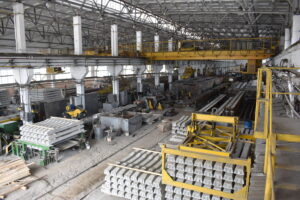
The Korosten Reinforced Concrete Sleeper Plant (ZBSH Plant, Zhytomyr Region), which is part of Ukrzaliznytsia, increased its net profit by 7.4 times in 2025 compared to 2024, to UAH 47.1 million.
According to the company’s financial statements in the information disclosure system of the National Securities and Stock Market Commission (NSSMC), net income for the past year increased by 11.8% to UAH 478.2 million.
The plant received UAH 93.7 million in gross profit (3.9 times more), and operating profit increased 7.4 times to UAH 59.9 million.
At the same time, the report notes that in the fourth quarter of 2025, the company received net sales revenue of UAH 167.47 million, which is UAH 104.77 million (2.7 times) more than planned, but UAH 8.75 million (-5%) less than in the same period of 2024, due to a decrease in orders for reinforced concrete products.
Korosten ZBS specializes in the production of reinforced concrete sleepers, switch beams, and mobile modular shelters.
Production capacity utilization is 95% dependent on orders from Ukrzaliznytsia.
At the beginning of 2026, the plant had 363 employees, with an average monthly salary of UAH 34,900.
In 2024, the company produced 269,810 sleepers and 80 sets of switch beams. Its net income decreased by 10% compared to the previous year, to UAH 427.8 million, while net profit increased 4.6 times, to UAH 6.3 million.



