
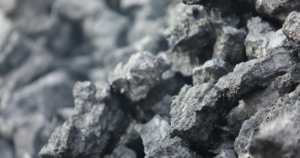
PJSC Zaporizhkox, one of Ukraine’s largest producers of coke and chemical products and a member of the Metinvest Group, reduced its blast furnace coke production by 19.7% in January this year compared to the same period last year, from 74.4 thousand tons to 59.7 thousand tons.
According to the company, 73.3 thousand tons of coke were produced in December 2025, compared to 76.3 thousand tons in the previous month.
As reported, Zaporizhkox increased its output by 2.7% in 2025 compared to 2024, to 898,300 tons from 874,700 tons.
In 2024, Zaporizhkox increased its production of blast furnace coke by 2.1% compared to 2023, to 874,700 tons from 856,800 tons.
In 2023, Zaporizhkox increased its blast furnace coke output by 16% compared to 2022, to 856.8 thousand tons from 737.4 thousand tons.
Zaporizhkox has a full technological cycle for processing coke chemical products.
Metinvest is a vertically integrated mining group of companies. Its main shareholders are SCM Group (71.24%) and Smart Holding (23.76%). Metinvest Holding LLC is the managing company of the Metinvest Group.
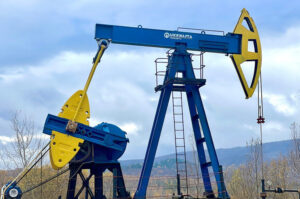
According to the results of 2025, JSC Ukrnafta drilled 25 new wells and increased oil and gas production in oil equivalent by 3.39% compared to 2024.
“New drilling, intensification, and other measures taken collectively enabled Ukrnafta to increase its production in 2025 by 3.39% in oil equivalent compared to 2024. In particular, oil production increased by 3.77%, and gas production by 2.86%,” the company said in a press release on Tuesday.
In 2025, the company drilled 25 new wells, which was 150% more than in 2024, when 10 wells were drilled, and became a record figure in recent years.
“Seven of these wells were drilled by the company’s own forces, which indicates the growth of internal production capabilities,” the company added.
According to Ukrnafta, drilling volumes began to grow steadily after the company came under state control. Until 2023, the pace of new drilling remained minimal, averaging one to two wells per year.
“In fact, in 2025, the same number of wells were built as in the entire period from 2015 to 2022. At the same time, the volume of drilling by the company’s own forces is also growing,” the company said.
In particular, 6,188 m were drilled in 2023, 11,082 m (+79%) in 2024, and 18,994 m (+71%) in 2025.
“We are increasing drilling within the limits of existing special permits and at the same time restoring our own drilling capacities. This allows us to systematically increase the volume of work and reduce dependence on external contractors,” said Bogdan Kukura, Chairman of the Board of JSC Ukrnafta.
It is noted that a separate focus of attention for Ukrnafta is to increase the efficiency of well construction.
“The approach to the construction of drilling sites and access roads has been updated; we are continuing to replace outdated logistics equipment. As a result, the time required for installation and dismantling work has been reduced by 24% — to 10 days of savings on the construction of one well — and the amount of equipment used has been reduced,” the company stated.
Ukrnafta JSC is Ukraine’s largest oil production company and the operator of the largest national network of gas stations — UKRNAFTA. The company has 1,807 oil and 164 gas production wells on its balance sheet.
In 2024, the company entered into asset management with Glusco. In 2025, it completed an agreement with Shell Overseas Investments BV to purchase the Shell network in Ukraine. In total, it operates 663 gas stations.
The company is implementing a comprehensive program to restore operations and upgrade the format of its network of gas stations. Since February 2023, it has been issuing its own fuel vouchers and NAFTAKarta cards, which are sold to legal entities and individuals through Ukrnafta-Postach LLC.
The largest shareholder of Ukrnafta is Naftogaz of Ukraine with a 50%+1 share. In November 2022, the Supreme Commander-in-Chief of the Armed Forces of Ukraine decided to transfer the company’s corporate rights, which belonged to private owners, to the state, which is now managed by the Ministry of Defense.
Personnel reshuffles initiated by the President of Ukraine at the start of 2026 are perceived by society with restraint: amid high awareness, Ukrainians more often speak of cautious hope than of a feeling of real renewal of power, according to the results of a nationwide survey by the research company Active Group.
According to the published data, 79.2% of respondents reported that they had heard about the personnel changes, and another 14.8% noted that they “had heard something but are not sure about the details.” 6.0% of those surveyed learned about these decisions for the first time – thus, the overall level of awareness exceeds 94%.
At the same time, assessments of the consequences of the personnel changes remain uncertain: 43.6% of respondents believe that these decisions brought more benefit to the country, 18.3% – more harm, and almost 38.0% were unable to give an unambiguous answer.
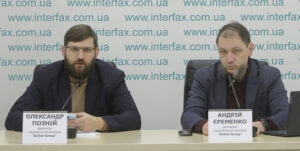
The founder of the sociological company Active Group, Andrii Yeremenko, commenting on the survey results, noted that the recorded high awareness of the personnel decisions did not transform into a formed assessment of their consequences.

“We see a situation where more than 94% of respondents have at least heard about these appointments, but almost 38% cannot say whether this is more benefit or harm. This means that society currently does not have sufficiently clear markers of effectiveness – people expect practical results, not signals of a ‘reset’ at the level of personalities. The distribution of answers regarding the ‘renewal of power’ almost equally additionally confirms that there is a demand for change, but it is tied to governance logic and the implementation of decisions, not to the very fact of personnel replacements,” Yeremenko emphasized.
When asked whether the decisions of recent weeks can be considered a renewal of power, 42.5% answered in the affirmative, while 46.7% answered negatively. In the emotional dimension, 52.1% of respondents stated that the personnel reshuffles give more hope, while 29.1% said that disillusionment prevails; at the same time, 10.2% feel “only hope.”
Among the areas of state policy that, in respondents’ opinion, may be strengthened as a result of the appointments, foreign policy, diplomacy and the negotiating track were most often named: 41.5% expect strengthening, 13.2% – weakening. Regarding the defense of the state, 39.0% forecast strengthening, 20.5% – weakening. For a number of domestic areas – social policy, the economy, the work of law enforcement agencies and the fight against corruption – restrained or negative expectations prevail, while a significant share of “hard to say” answers remains.
Assessing the impact of personnel decisions on trust in key officials, most respondents report no changes. In particular, regarding President Volodymyr Zelensky, 63.8% noted that the level of trust did not change, 17.5% speak of an increase in trust, and 13.5% – of a decrease. Regarding Kyrylo Budanov, 54.5% did not feel changes, 24.0% record an increase in trust, and 13.4% – a decrease; regarding Mykhailo Fedorov, respectively 55.3%, 18.6% and 15.8%. The most critical indicators are for Denys Shmyhal: 57.5% stated no change, 24.9% – a decrease, and 8.2% – an increase in trust.
The director of the sociological company Active Group, Oleksandr Poznyi, emphasized that the emotional background around the reshuffles remains restrained, and the impact on trust in key figures is limited.

“More than half of respondents say that personnel decisions give more hope, but only about 10% feel this hope unconditionally. At the same time, for most of those involved in the appointments, the dominant answer is ‘trust has not changed,’ which indicates the absence of an effect of rapid restoration of trust. In such a situation, society will assess these decisions through concrete results – primarily in the external contour and the security sphere, where the balance of expectations is more positive, while in domestic areas, in particular the economy, the law enforcement system and anti-corruption policy, significant skepticism remains,” Poznyi added.
The distribution of trust in well-known public figures, according to the survey data, indicates fragmentation: the highest level of trust is held by Kyrylo Budanov (43.2%), followed by Valerii Zaluzhnyi (37.7%) and Volodymyr Zelensky (27.4%). Also on the list are: Andrii Biletskyi (15.6%), Petro Poroshenko (13.1%), Denys Prokopenko (13.0%), Serhii Prytula (12.0%), Dmytro Razumkov (11.6%), and Vitalii Klychko (10.1%). Separately, 21.3% of respondents stated that they do not trust any of those listed.
The highest indicators of distrust, according to the study, are recorded for Oleksii Arestovych (68.5%), Yuliia Tymoshenko (60.7%) and Yurii Boiko (54.5%); Petro Poroshenko (46.7%) and Vitalii Klychko (36.5%) also have high levels of distrust. At the same time, distrust is also expressed toward Volodymyr Zelensky (33.1%), Valerii Zaluzhnyi (16.6%) and Kyrylo Budanov (15.6%).
More than half of Ukrainians already feel the start of the election campaign: 54.2% answered “yes” (including 17.3% – “definitely yes”), 32.6% – “no,” and 13.2% were undecided.
In February 2026, the highest support among potential presidential candidates is held by Volodymyr Zelensky – 22.3% (compared to 17.8% in December 2025 and 21.7% in January 2026). Support for Valerii Zaluzhnyi, according to the survey, decreased to 10.8% (from 16.6% in December and 14.9% in January). Kyrylo Budanov’s rating increased to 9.4% (after 6.3% in January), Petro Poroshenko has 7.4%, and other candidates do not exceed 4%. The share of those ready to vote “against all” or spoil the ballot increased to 10.6% (from 7.5% in December), 7.2% do not plan to take part in the elections, and 14.5% were undecided. In the negative ratings, the greatest rejection is toward Oleksii Arestovych (56.5%) and Yuliia Tymoshenko (52.2%), followed by Yurii Boiko (45.3%) and Petro Poroshenko (42.5%).
Electoral attitudes regarding possible elections to the Verkhovna Rada also do not form a dominant force. Valerii Zaluzhnyi’s party has 11.9% in February (against 14.2% in December), Kyrylo Budanov’s party – 10.1% (after 8.8% in January), Volodymyr Zelensky’s party fluctuates within 9.9–10.7%, and European Solidarity – 10.3% in February (after 11.0% in January). The Azov party decreased to 6.1% (from 7.6% in December). The share of those ready to vote “against all” increased to 10.1% (from 6.3% in December), 7.7% do not plan to participate in the elections, and 13.1% were undecided.
The survey was conducted by Active Group using the SunFlower Sociology online panel методом self-completion of questionnaires among citizens of Ukraine aged 18+. The sample size is 2,000 respondents; the sample is representative by age, gender and regions of Ukraine. The data collection period was January 31 – February 1, 2026. The theoretical margin of error at a confidence probability of 0.95 does not exceed 2.2%.

PJSC Insurance Company PZU Ukraine (Kyiv) collected UAH 2.884 billion in net premiums in 2025, which is 41.9% more than in 2024 (UAH 2.033 billion), according to the insurer’s interim data posted on the information disclosure system of the National Securities and Stock Market Commission (NSSMC).
Premiums written for the year increased by 27.7% to UAH 2.772 billion.
In 2025, the company made compensation payments of UAH 2.739 billion, which is 23.5% more than in 2024. At the same time, gross profit amounted to UAH 145.042 million, compared to UAH 184.743 million a year earlier.
The financial result before tax amounted to UAH 391,015 thousand, and profit expenses amounted to UAH 60.088 million.
The insurer’s net loss for 2025 amounted to UAH 330.931 million, while in 2024, the company ended with a net loss of UAH 21.749 million.
PZU Ukraine Insurance Company is supported by one of the largest insurance groups in Central and Eastern Europe, the PZU Group, which includes the parent company of PZU Ukraine Insurance Company, PZU S.A.
According to the National Bank of Ukraine, PZU Ukraine ranks 11th among non-life insurers in Ukraine in terms of premiums collected for the first nine months of 2025.

Ukraine’s total national debt in 2025 has risen to a new historic high: in dollar terms, by $47.27 billion, or 28.5%, to $213.33 billion, and in hryvnia terms, by 2 trillion 61.7 billion hryvnia, or 29.5%, to 9 trillion 42.7 billion hryvnia, according to data on the Ministry of Finance website.
According to the data, direct public debt increased by 29.9% in dollars to $206.8 billion, or to 8 trillion 766.0 billion hryvnia, and accounted for 96.9% of the total public and state-guaranteed debt.
Ukraine’s total external public debt in 2025 increased by 47.5%, or $45.51 billion, to $160.39 billion, while total internal debt increased by 5.6%, or UAH 104.1 billion, to UAH 1 trillion 967.2 billion.
As a result, the share of total external public debt increased over the year to 75.2% from 72.3%.
According to the Ministry of Finance, the share of liabilities in euros at the end of 2025 increased to 44.76% (33.01% at the end of 2024), in British pounds – to 0.40% (0.11%), while in US dollars it decreased to 22.65% (26.81%), in hryvnia – to 20.86% (25.33%), in SDRs – to 8.63% (11.39%), in Canadian dollars – to 2.31% (2.83%), and in yen – to 0.40% (0.51%).
The agency also specified that 72.21% of the national debt has a fixed interest rate, while 10.15% is tied to SOFR, 8.63% to the IMF rate, 3.54% to EURIBOR, 0.38% to SONIA, and 0.10% to TORF.
The rate for another 3.21% of the national debt is tied to the NBU’s discount rate, 1.61% to the consumer price index, and 0.17% to the rate tied to the Ukrainian index of deposit rates for individuals.
As reported, Ukraine’s state and state-guaranteed debt in 2024 increased by $22.74 billion to $166.06 billion.
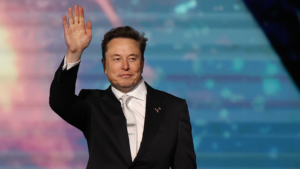
Entrepreneur Elon Musk’s net worth has exceeded $800 billion, according to Forbes estimates: the publication currently values his capital at approximately $852.5 billion.
The increase in valuation is linked to the announced deal in which SpaceX acquired xAI. According to Reuters, the deal values SpaceX at $1 trillion, xAI at approximately $250 billion, and the combined business at approximately $1.25 trillion.
However, Musk has not yet crossed the $1 trillion threshold: based on Forbes’ current estimate, he is about $150 billion short of a trillion. Forbes also noted that the key sources of his wealth remain his stakes in SpaceX and Tesla, and not just the effect of the xAI deal.



