

Most residents of Romania would support the unification of the country with the Republic of Moldova in the event of a referendum, according to the information and analytical center Experts Club, citing a nationwide January survey by the Romanian Center for Urban and Regional Sociology (CURS).
According to the study, in a hypothetical vote on the reunification of Moldova with Romania—publicly supported by Moldovan President Maia Sandu—56% of respondents said they would vote “in favor,” 37% “against,” and another 7% were undecided.
The survey was conducted from January 14 to 23, 2026, using the CATI method (telephone interviews) on a sample of 1,067 adult residents of Romania. The stated maximum margin of error is ±3% with a 95% confidence level.
In the event of a hypothetical unification of Romania and Moldova within Moldova’s internationally recognized borders (that is, including the territory of Transnistria), the united country would have:
a population of about 22 million people (18.91 million in Romania plus 3.0 million in Moldova, according to UN estimates),
an area of about 272.1 thousand square kilometers (238,298 sq. km + 33,847 sq. km),
a nominal GDP of about $423 billion, according to IMF estimates for 2025 (Romania $403.4 billion plus Moldova $19.5 billion).
In comparison with pan-European rankings, this would correspond to approximately 10th place in Europe by population (above Kazakhstan and below Poland), 11th place by area (between Italy and the United Kingdom), and around 15th place by nominal GDP (between Denmark and the Czech Republic).
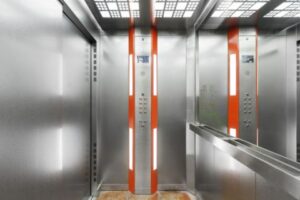
In 2025, the Euroformat plant increased elevator production by 20% compared to 2024, primarily due to government programs to support domestic manufacturers, according to Igor Tkachenko, CEO of the Euroformat Lifts group of companies.
“We consider the program to compensate 15% of the cost of Ukrainian equipment within the framework of ”Made in Ukraine“ and the introduction of a minimum localization requirement for goods participating in public procurement to be effective tools for promoting national production,” he told the Interfax-Ukraine news agency.
Tkachenko did not specify the number of elevators produced by the plant, citing the military context, but noted that every tenth elevator installed during the year is a Euroformat elevator, and one in three of the elevators that meet current construction requirements, since imported elevators supplied as one-off deliveries often have serious deviations from standards and requirements.
Describing the elevator market in Ukraine in recent years, Tkachenko said that it was previously characterized by a large number of imports, often in the form of one-off contracts for small batches.
“In 2022, out of 80 companies that imported elevators, 46 imported no more than 10 units, and 38 imported no more than five. Most of these suppliers (76%) imported elevators from Turkey and China. The situation in 2023 only got worse: 97 companies imported elevators from Turkey alone. At the same time, most importers were unable to provide adequate warranty service, technical support, or regular supply of spare parts,” he said.
Tkachenko added that the expectations from the support programs were generally met: the growth of Ukrainian elevator production in 2025 by approximately 25% and an increase in the share of the domestic market to about 40% testify to the effectiveness of these mechanisms.
“At the same time, imports continue to account for more than half of the market, which means there is significant potential for further growth in the coming years,” said the CEO of the group of companies.
According to him, domestic manufacturers have untapped production capacity: the combined capacity of Ukrainian enterprises allows them to produce up to about 5,000 elevators per year, but the actual production load remains significantly lower.
“In particular, at the Euroformat plant, the utilization rate in 2025 was about 35%. This figure is still lower than it was before 2022, but we see positive dynamics,” Tkachenko emphasized.
At the same time, he believes that when an elevator is manufactured in Ukraine, the manufacturer is responsible for the entire life cycle of the equipment, from installation to service, for decades. “For the end user, this means less downtime, faster elevator repair, higher safety, and predictable operating costs,” Tkachenko emphasized.
He also said that in parallel with its production activities, the company has invested in its production base — new laser cutting and welding sections have been launched, the range of wheelchair lifts has been expanded, and dozens of design improvements have been introduced in elevator equipment.
“It is important that this is not a one-time growth, but the formation of a stable production cycle — with planning, predictable volumes, and the development of service infrastructure,” Tkachenko emphasized.
According to him, the volume of investments in production modernization in 2025 exceeded UAH 12 million, without attracting grants, while in 2024, about 60% of the UAH 25 million invested was grant aid.
Among the landmark projects implemented in 2025, Tkachenko named two projects for the manufacture and installation of hospital elevators in medical facilities — in one of them, they worked in a building, an architectural monument, and developed an exclusive elevator with custom cabin dimensions. Before putting it into operation, additional tests were conducted. In another project, the company worked on a request from project development to commissioning.
“These cases confirm that a national manufacturer is capable of meeting the complex, custom, and inclusive needs of Ukrainian medical institutions,” Tkachenko emphasizes.
According to Dmytro Kysilevsky, deputy chairman of the Verkhovna Rada Committee on Economic Development, Ukrainian elevator manufacturers increased production by 25% in 2025, and their share in the domestic market grew from 30% to 40%.
According to the MP, participation in the program to compensate 15% of the cost of Ukrainian equipment requires a localization level of at least 40%. All leading Ukrainian elevator manufacturers meet these requirements, in particular, elevators from the Euroformat plant have a localization level of 60%.
The Euroformat group of companies has been operating in the Ukrainian market for over 18 years. It specializes in the production of products and provision of services for residential and commercial construction. The main focus of the plant is the production of elevator equipment. The company has the only testing tower in Ukraine and the largest in Eastern Europe, with a height of 40 m and two shafts. It exports its products to Poland, where it has a representative office.
According to YouControl, in January-September 2025, the Euroformat plant received UAH 2.98 million in net profit, which is almost equal to the figure for the nine months of 2024, with revenue growing by 27.3% to UAH 236.5 million.

Irish Minister for Foreign Affairs and Trade Helen McEntee approved on Thursday the allocation of EUR 25 million from the country’s budget to the Ukrainian Energy Support Fund (UESF) to assist Ukraine’s critical energy infrastructure, according to the Irish government’s website.
“Ireland is providing EUR 25 million to the Ukraine Energy Support Fund to help Ukraine restore light and heat to people’s homes at a time when they are facing harsh winter conditions. We once again call on Russia to stop these attacks on the civilian population and civilian infrastructure,” McEntry said in Brussels, where she is attending a meeting of the Foreign Affairs Council.
The statement notes that this contribution comes at a time when civilians across Ukraine are suffering from prolonged power, heating, and water outages due to repeated Russian attacks on energy infrastructure, with winter temperatures dropping below -20 °C and many regions of Ukraine are experiencing their harshest winters in recent years.
“The people of Ukraine continue to suffer greatly. These attacks on civilian energy infrastructure have left people without heating at a time when Ukraine is facing freezing conditions. This contribution of EUR 25 million to the Ukraine Energy Support Fund is an important demonstration of Ireland’s continued support for Ukraine. We are determined to do everything we can to alleviate the suffering that Russia is causing in this dark and cold winter. This funding complements Ireland’s existing humanitarian and development contributions to Ukraine,” said Irish Minister of State for International Development and the Diaspora Neil Richmond.
He said Ireland would continue to support Ukraine for as long as necessary while Russia’s aggressive war continues, as well as on the road to recovery and reconstruction.
“Today’s announcement fulfills the commitment made by the government during President Volodymyr Zelenskyy’s visit to Ireland last December to support the restoration and protection of Ukraine’s energy infrastructure,” the statement said.

Schneider Electric, a global leader in energy technologies, announces its participation in the Annual Meeting of the World Economic Forum in Davos, Switzerland. The company delegation is led by CEO Olivier Blum, who will advocate for cross-industry cooperation to advance energy technologies.
“It is clear that we have entered a new era where artificial intelligence and energy are inseparable, and together they will transform every business,” said Olivier Blum, CEO of Schneider Electric. “AI requires computing power, and computing requires energy. That is why the world needs greater energy intelligence. Customers across all sectors face the same challenge—using energy efficiently. As your partner in energy technologies, we electrify, automate, and digitize every industry, business, and home, improving efficiency and sustainability for all. And we are not just connecting systems—we are creating ecosystems in which AI, data, and people work in harmony. Let’s use the opportunity in Davos to advance energy technologies together.”
During this year’s meeting, the company will make a number of important announcements, including those listed below. The full list of Schneider Electric delegates and the format of the company’s participation can be viewed at se.com.
AI applications delivering real results
Schneider Electric was recognized in the 1st and 2nd cohorts of the MINDS program (Meaningful, Intelligent, Novel, Deployable Solutions), the Forum’s global program highlighting high-impact real-world applications of artificial intelligence. CEO Olivier Blum will receive awards for EcoStruxure Microgrid Advisor and Snaplogic Touchscreen Room Controller at the winners’ award ceremony during the Annual Meeting of the World Economic Forum on January 20, 2026.
Ninth recognition of a Schneider Electric plant as a flagship smart factory
The Forum’s Global Lighthouse Network, which identifies and recognizes the most advanced manufacturing sites in the world, honored Schneider Electric’s plant in Wuhan. It became one of only three plants worldwide to receive recognition for work with talent—a new category introduced this year. This recognition became the ninth in Schneider Electric’s series of Lighthouse awards. The plant was recognized for implementing an innovative, people-centered workforce-of-the-future model that bridges the skills gap and sets a new standard for manufacturing resilience.
Gathering of C-level executives from different industries
Frederic Godemel, Executive Vice President for Energy Management at Schneider Electric, will convene a cross-industry group of global leaders and influencers on behalf of the Forum’s Bloomberg New Economy Energy Technology Coalition. This will be the Coalition’s first significant meeting, aimed at accelerating the adoption of technologies that make energy consumption more efficient, sustainable, and flexible amid growing global demand for electricity.
Driving change for underserved communities
Schneider Electric and EDP jointly launched the EDGE Transition program—a global accelerator that will support social entrepreneurs offering clean and affordable energy solutions and creating inclusive economic opportunities for underserved communities.
The program helps early-stage startups through mentorship, technical expertise, strategic partnerships, and access to long-term, high-risk-tolerant capital, inviting solutions that serve underserved communities and promote equitable access to energy. The initiative aims to accelerate the energy transition and drive global electrification for sustainable impact.
The organizations will announce their partnership in Davos on January 21.
More information about Schneider Electric’s participation in the Annual Meeting can be found at https://www.se.com/ww/en/about-us/events/davos/.
About Schneider Electric
Schneider Electric is a global leader in energy technologies that improves efficiency and sustainability by electrifying, automating, and digitizing industry, businesses, and households. The company’s technologies enable buildings, data centers, factories, infrastructure, and power grids to operate as open, interconnected ecosystems, increasing productivity, resilience, and environmental performance. Its portfolio includes intelligent devices, software-based architectures, AI-enabled systems, digital services, and expert consulting. The company has 160,000 employees and 1 million partners in more than 100 countries and consistently ranks among the world’s most sustainable companies.
www.se.com
Learn about the latest trends shaping sustainability, Electricity 4.0, and next-generation automation at Schneider Electric Insights.

The public joint-stock company Rivne Radio Technical Plant (Rivne) is convening an extraordinary general meeting of shareholders in a remote format, with the date of the meeting being the date of completion of voting – March 2, 2026, according to a statement in the SMIDA information disclosure system.
The meeting will take the form of a survey. The list of shareholders eligible to participate will be compiled as of 23:00 on February 25, 2026. Ballots for voting (except for cumulative voting) are planned to be made freely available on February 13, 2026, and a single ballot for cumulative voting will be made available on February 24, 2026.
The draft agenda includes, in particular, issues related to amendments to the charter (new version), early termination of the powers of the current members of the supervisory board and election of new members, establishment of the term of office of the elected members of the supervisory board (3 years is proposed), approval of the terms of civil law contracts with members of the supervisory board, as well as preliminary consent to significant transactions during the year with a maximum total value of up to UAH 1 billion and compensation for the costs of organizing the meeting.
PJSC Rivne Radio Technical Plant was registered on February 15, 1996, and its main activity is the production of communications equipment (KVED 26.30). Its authorized capital is UAH 11.21 million. According to state registry services, the state’s share in the company is 50% (through the regional branch of the State Property Fund of Ukraine in Rivne and Zhytomyr regions).

Cocoa bean prices fell below $4,000 per ton for the first time since 2023.
The market has been declining over the past year due to signs of weakening demand. Prices have now fallen nearly 70% from their peak levels reached at the end of 2024.
The decline in the price of March cocoa bean futures in New York on Friday reached 5.9%, with the price falling to $3,931 per ton, the lowest since November 2023.
As of 1:20 p.m. ET, these contracts are trading at $4,117 per ton.
The price of cocoa beans rose above $12,000 per ton in December 2024 due to poor harvests in West African countries. High prices led to a decline in consumer demand for chocolate, and its manufacturers began to change recipes, using cheaper substitutes and adding more fillers, such as nuts, according to Bloomberg.
Companies in Europe, the world’s largest consumer of cocoa beans, reduced their processing volumes in the fourth quarter to the lowest level since records began in 2013. Combined with increased supplies from some of the key cocoa bean producers, global supply will soon exceed demand.
This week, brokerage firm StoneX confirmed its forecast of a global cocoa bean supply surplus of 287,000 tons in the 2025/2026 agricultural year (October 2025 – September 2026), noting increased production in Côte d’Ivoire and Ghana. The surplus supply in the next agricultural year is forecast at 267,000 tons.



