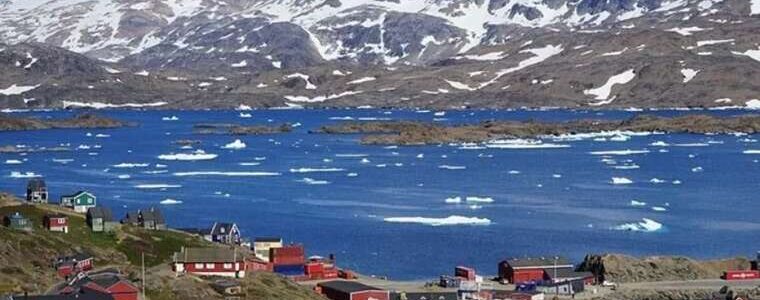
The potential cost of a hypothetical deal on the purchase of Greenland by the United States could be up to $700 billion, a number of media outlets reported, citing NBC News. The publications claim that the assessment was prepared by experts and former U.S. officials, and U.S. Secretary of State Marco Rubio was allegedly tasked to draft a proposal for the purchase of the island in the coming weeks.
At the same time, it is emphasized that this is not an official price position of the US government, but a calculation within the framework of discussions around the initiative of President Donald Trump. According to NBC News’ retelling of the story, the $700 billion amount is comparable to more than half of the Pentagon’s annual budget, illustrating the scale of the financial and political hurdles to any such “deal.”
The reaction from Copenhagen and Nuuk remains negative. Denmark and Greenland authorities have publicly stated that the island is not for sale and that the issue of the autonomous territory’s status is related to sovereignty and the right to self-determination. Reuters reported this week that after a meeting in Washington between Rubio and U.S. Vice President J.D. Vance, the Danish and Greenlandic sides, while not changing their “no-sale” position, agreed to set up a working group to discuss a wide range of issues related to security and cooperation around the island.
The new $700 billion estimate falls in line with a number of previous, highly divergent “paper” estimates that have appeared in recent years. For example, The Washington Post in 2019 within the hypothetical valuation called a very wide range of possible price – from hundreds of millions of dollars to $1.7 trillion.
U.S. interest in Greenland is usually explained by a combination of security and resource factors. The island occupies a key position in the Arctic and North Atlantic, and is also seen as a potentially significant territory in terms of access to minerals and strategic infrastructure.
At the same time, even if there is political will in Washington, the “purchase” scenario is constrained by basic legal and political limitations: Greenland is an autonomous territory within the Kingdom of Denmark, and its status and future, according to the position of local and Danish authorities, cannot be subject to external “bargaining”. Against this background, analysts call the most realistic continuation of the plot not a change of sovereignty, but bargaining around increased U.S. cooperation with Denmark and Greenland – on defense, infrastructure and investment – without formally changing the island’s status.