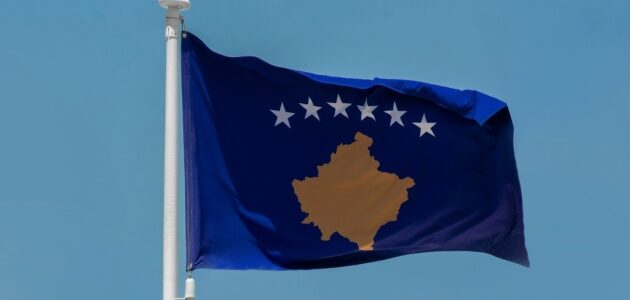
According to The Serbian Economist, Kosovo is heading toward a new political crisis: if the parliament fails to elect a president by October 6, the Assembly will be dissolved, and the region will once again hold early parliamentary elections—the fourth in less than two years.
This time, the presidential crisis is directly linked to the trial of former leaders of the Kosovo Liberation Army (KLA) in The Hague. According to a ruling by the Constitutional Court, the deadline for electing a new president expires on October 6. If the vote fails, parliament will be dissolved, and new elections must be held within 45 days—that is, no later than November 15.
Over the past 18 months, voters in Kosovo have already cast ballots three times in parliamentary elections—on February 9, 2025, December 28, 2025, and June 7, 2026.
The situation seems almost paradoxical: it was only on September 13 that Parliament finally approved Albin Kurti’s new government following the June elections. Sixty-two out of 120 lawmakers voted in favor of the government. But they have not yet managed to resolve another key issue—the election of a president.
In September, the Kosovo Special Chambers in The Hague handed down first-instance verdicts against four former leaders of the Kosovo Election Commission—Hashim Thaçi, Kadri Veseli, Redžep Selimi, and Jakup Krasniqi.
Following this, the Democratic Party of Kosovo (PDK), of which Thaçi is a co-founder, demanded changes to the law governing the Special Chambers.
In particular, the PDK is seeking to limit the court’s jurisdiction to investigating the crimes listed in Dick Marty’s report, as well as to introduce international oversight of its activities. It was precisely after the Hague verdict that the party sharply stepped up this initiative.
For Kurti, this is an extremely difficult situation: there is practically no time left before October 6.
The Serbian publication “Blic” calls what is happening a “dangerous game.” Analysts interviewed by the publication believe that the DPK is attempting both to change the rules governing the Hague Tribunal and to shift political responsibility for any potential new elections onto Kurti’s “Self-Determination” movement.
Belgrade does not recognize Kosovo’s independence, declared in 2008, and considers the territory to be part of Serbia.
Moreover, non-recognition of Kosovo is by no means solely a Serbian position. Kosovo’s independence remains unrecognized by Russia and China—two permanent members of the UN Security Council—which is one of the obstacles to Kosovo’s admission to the UN.
Kosovo is also not recognized by Spain, Ukraine, India, and other countries.