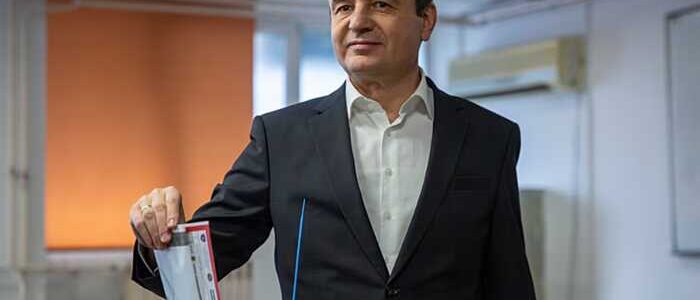
According to Serbian Economist, Kosovo held early parliamentary elections—the third in less than a year and a half. According to preliminary results, Prime Minister Albin Kurti’s Vetëvendosje movement once again took first place, garnering about 43% of the vote.
In second place is the Democratic Party of Kosovo with approximately 21%, followed by the Democratic League of Kosovo with about 18%. The “Serbian List,” the main party of Kosovo Serbs, received about 6.4% of the vote, according to Democracy in Action projections. Voter turnout was low—less than 37%—indicating voter fatigue from constant elections and a protracted political crisis.
The main problem for Kurti is that his victory does not give him a stable majority. To form a government, he will again have to seek partners or negotiate with the opposition. Therefore, the elections may not resolve the main issue—the creation of stable institutions and a way out of the political impasse.
For Serbia, these elections are important primarily because of Kurti’s stance on the dialogue between Belgrade and Pristina. His party traditionally takes a hard line and is not prepared to make significant concessions to Serbia. This means that rapid progress in EU-mediated negotiations is unlikely.
A separate issue is the representation of the Serbian community. If the “Serbian List” maintains its dominance among Serbian parties, Belgrade will continue to have an important political channel of influence in northern Kosovo and within Pristina’s institutions. But given Kurti’s hardline stance, this is unlikely to quickly reduce tensions.
For the region, this is also an economic issue. Political instability in Pristina is hindering reforms, obstructing access to international financing, and complicating the European agenda. And for Serbia, there remains an additional pressure from Brussels, which will continue to link Belgrade’s progress toward the EU with the normalization of relations with Pristina.
It is also important to keep the international context in mind. Kosovo declared independence from Serbia in 2008, but its statehood remains partially recognized. Kosovo is not a member of the UN. Many countries do not recognize Kosovo’s independence, including Serbia, Russia, China, Ukraine, and Spain.
Therefore, the new elections in Pristina are not just a matter of Kosovo’s domestic politics. They are part of a broader Balkan issue where the interests of Serbia, the EU, the US, Russia, China, and countries that do not recognize Kosovo’s independence intersect.
https://t.me/relocationrs/2984