Ukrainians cite the outflow of medical personnel and the destruction of medical infrastructure by the aggressor as the main reasons for the deterioration in the availability of medical services during the war.
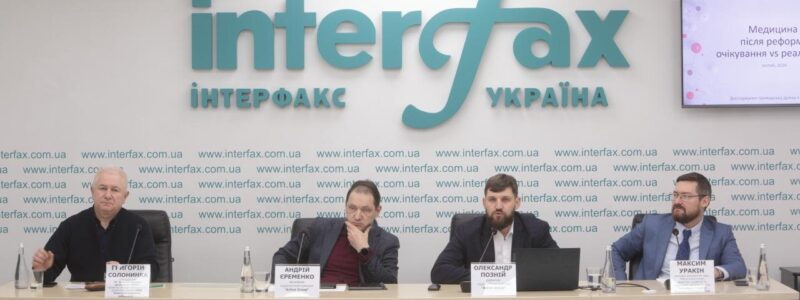
According to the results of a survey conducted by the research company Active Group and the Experts Club analytical center in early February and presented to the Interfax-Ukraine agency on Friday, 48% of respondents noted that they felt a deterioration in medical services during the war.
Among the main problems of medicine in wartime, 60% of respondents cited the outflow of medical personnel, 22.7% cited the destruction of medical infrastructure, and 13.4% cited a shortage of medicines.
“Considering that the deterioration in medical services is due to the fact that medical facilities have either been physically destroyed or doctors have left them, the fact that only 48% of respondents felt a deterioration is not a bad result. The main problems in medicine during the war are the outflow of medical personnel, followed by the destruction of infrastructure, and then the shortage of medicines. In other words, we see that the main problem is the shortage of medical personnel,” said Active Group founder Andrey Eremenko.

The reforms carried out in the medical sector in recent years have contributed to the fact that medicine continues to function, and the fact that people talk about the lack of improvement or deterioration in the quality of medical services, according to the expert, is still “not subject to harsh criticism.”
According to the survey, 7.2% currently rate the state of affairs in the healthcare system as very poor, 18.7% as rather poor, 16.7% as rather good, and 2% as very good. At the same time, 54.6% gave it an average rating.
At the same time, 29.5% of respondents completely trust their family doctor, and 61.9% trust them partially.
When assessing the possibility of obtaining consultations from a family doctor in their region, 88.8% of respondents said that it was very easy or easy to do so, while 21% said it was very difficult or difficult.
Just over 10% of respondents noted that their local hospital has a sufficient supply of medicines and modern equipment, while 45.8% said that there is a partial supply.
At the same time, 40% of respondents noted that consultations with a specialist take up to a week, 28.4% take 1-2 weeks, and 11.5% take more than a month. In 2024-2025, 68% of respondents regularly paid for medical services themselves.
At the same time, 16% of respondents noted that they spend less than 5% of their family budget on medicine, while almost 21% of respondents reported spending more than 20%.

“The study revealed both the positive and painful aspects of the Ukrainian healthcare system. The most painful issue is the brain drain. But it is important to see the strengths as well. I was very pleased that the level of trust in family doctors is very high. So, the foundation for the development of the healthcare system is there, although, in particular due to the war, there are economic barriers and barriers to accessibility,” said Maksim Urakin, founder of the Experts Club information and analytical center.