

In July 2026, the National Bank of Ukraine (NBU) imposed a fine totaling 42.545 million UAH on JSC “Ukrainian Capital Bank” for violating financial monitoring and foreign exchange supervision regulations.
The regulator imposed the main fine of 40.545 million UAH for the improper organization and conduct of initial financial monitoring. Specifically, the NBU identified shortcomings in the bank’s application of a risk-based approach, its assessment of customer risks, and its internal documents regarding financial monitoring and customer due diligence. The bank also did not always provide information and documents in a timely and complete manner in response to requests from the inspection team.
An additional fine of 2 million UAH was imposed for violations of foreign exchange legislation. According to the NBU, the bank improperly carried out foreign exchange supervision, failed to ensure a comprehensive analysis of documents related to certain foreign exchange transactions, and did not identify the indicators of such transactions as required by regulations.
In addition, “Ukrainian Capital” received two written warnings. One relates to additional due diligence on customers who are politically exposed persons (PEPs), the automation of certain procedures, and the completion of customer questionnaires. The second concerns the late submission of and errors in statistical reports on foreign exchange transactions.
The NBU announced the imposition of these enforcement measures on August 7, 2026. In total, in July, the regulator imposed sanctions for violations in the areas of financial monitoring and foreign exchange legislation on two banks and 19 non-bank financial institutions.
Ukrainian Capital Bank has been operating in the Ukrainian market since 1992 and was originally registered as Zakarpattia Bank; it has used its current name since 1996. The NBU classifies it as a privately owned bank. According to the regulator, as of February 1, 2026, the bank’s assets totaled 3.079 billion UAH, liabilities amounted to 2.874 billion UAH, and capital stood at 204.7 million UAH. The NBU lists Serhiy Belashov, Liliana Belashova, Daria Zlidar, and Nataliia Kiva as major shareholders. Yevhen Chechyl serves as chairman of the board.
BANK, financial monitoring, FINE, foreign exchange supervision, NBU
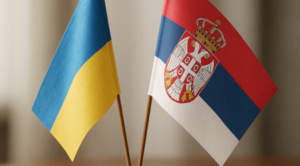
According to Serbian Economist, Ukraine and Serbia have agreed to expand cooperation in the areas of animal health and food safety, which could help remove veterinary and sanitary barriers to bilateral trade in agricultural products.
The relevant Memorandum of Understanding was signed on August 8 in Belgrade during Ukrainian President Volodymyr Zelenskyy’s official visit to Serbia.
The practical significance of the agreement for businesses may lie in the further harmonization of veterinary certificates, sanitary requirements, and control procedures necessary for the supply of food products and products of animal and plant origin between the two countries.
Serbia is interested in increasing imports from Ukraine of soybeans, soybean meal, flaxseed, and other agricultural products. Serbian companies, in turn, are exploring opportunities to increase shipments to the Ukrainian market of seeds, fruit tree seedlings, baby food, and other products.
The signing of the document coincided with the resumption of negotiations between Ukraine and Serbia on the creation of a free trade area.
In May 2026, the parties officially resumed negotiations on the relevant agreement after a long hiatus. Ukraine currently remains the only European country with which Serbia does not have a free trade agreement.
In 2025, trade between the two countries totaled approximately $442 million. Serbia exported about $203 million worth of goods to Ukraine, while Ukraine exported $239 million worth to Serbia.
Already in the first quarter of 2026, bilateral trade reached $152.8 million, with Serbian exports to Ukraine accelerating significantly.
The combination of the future free trade agreement and the simplification of veterinary and sanitary procedures has the potential to significantly expand the range of goods traded between Ukraine and Serbia.
https://t.me/relocationrs/3412

The European Union has transferred an additional 30 million euros to the Ukraine Energy Support Fund, thereby increasing its total contribution to the fund to 279 million euros, according to Ukraine’s First Deputy Prime Minister and Minister of Energy Denys Shmyhal.
“The funds received through this financial instrument are helping us restore energy infrastructure damaged by Russian attacks, purchase urgently needed equipment for our energy companies, and ensure a reliable energy supply, first and foremost for critical infrastructure,” – Shmyhal was quoted as saying by the Ministry of Energy’s press service on its Telegram channel on Saturday.

Vacancy rate in Kyiv’s warehouse real estate market is at a minimum – Expandia
The vacancy rate in Kyiv’s warehouse real estate market fell by 1 percentage point in the first half of 2026 to 2.5%, and the available supply is unable to meet the demand for large spaces, said Yaroslav Gorbushko, director of Expandia’s capital markets department.
“Demand for warehouses is currently enormous. They continue to be demolished, and all available space is leased out. The 2.5% vacancy rate we see based on the results of the first half of 2026 is structural vacancy. In other words, there isn’t a single large block available. These are leftover spaces of about 1,000 square meters each. If a company enters the market and wants to lease, say, 10,000 square meters, such spaces are not available,” Gorbushko said during the analytical panel “Market Analytics for Construction and Real Estate: First Half of 2026” organized by the Confederation of Builders of Ukraine (CBU).
According to him, demand for warehouse space in Kyiv continues to grow: gross absorption in the market increased by 46% in the first half of 2026, reaching 160,000 square meters. Logistics operators and the wholesale and retail trade segment remain the main drivers of demand, although the forced relocation of companies from damaged warehouses is an additional driver of demand.
In January–June 2026, 98,000 square meters of new supply entered the market, which is 54% less than in the previous half-year and 16% less year-over-year. However, developers remain optimistic about the warehouse market: in 2026, an additional approximately 21,000 square meters of new speculative space is planned to be brought to market.
“Leasing activity and new completions in recent years have been at their highest levels, even compared to the pre-war years,” noted Gorbushko.
However, the losses are also significant. According to Expandia, excluding the large-scale enemy attack on warehouse real estate in early August, Ukraine’s total loss of warehouse supply since the start of the full-scale invasion amounts to approximately 950,000 square meters. In the Kyiv region alone, losses accounted for more than a third of the total supply—650,000 square meters.
According to Expandia, demand for warehouse real estate is likely to center on build-to-suit projects, distribution centers, and multi-temperature warehouses.
In addition, the market’s geographic reach is gradually diversifying to include the western and central regions of the country.
Expandia is the largest commercial real estate company in Ukraine. It was founded in January 2008 under the CBRE Ukraine brand as part of the CBRE affiliate network. Since August 2025, the company has been operating under its own brand, Expandia, and is the sole official representative of CBRE in Ukraine and Moldova. Its portfolio of managed properties totals over 1 million square meters across more than 20 regions of Ukraine and Moldova.

How to conduct sanctions screening of a foreign company, its owners and executives, and reduce the risk of payments and contracts being blocked. The strengthening of international sanctions has made counterparty screening a mandatory part of the work of Ukrainian exporters, importers, banks, logistics companies, and enterprises attracting foreign financing.
Searching for a partner’s name in an open sanctions list is only the initial stage. A company may not be directly subject to restrictions but may be linked to a sanctioned owner, director, parent company, or another legal entity from the same corporate group.
Additional complexity is created by different spellings of company names and surnames, transliteration, trade names, changes in registered addresses, and the use of intermediaries. Because of this, a simple check based on an exact name match may fail to identify a significant risk.
D&B compliance solutions are used to screen legal entities, beneficial owners, and related persons against sanctions lists, lists of politically exposed persons, information on legally significant events, and negative media coverage.
“Sanctions screening should not be reduced to entering a company’s name into a search bar. It is necessary to identify its owners, executives, parent companies, and subsidiaries. Amid tightening international restrictions, an error can lead to a payment being blocked, a contract being terminated, or reputational losses,” said Maksym Urakin, Director of Development and Marketing at Interfax-Ukraine, Head of the D&B-Interfax-Ukraine business unit, PhD in Economics.
Before concluding a contract, a Ukrainian company should identify the legal entity, verify its registration details, establish its ownership structure, and compare the information obtained against sanctions and other risk lists.
Banks, carriers, insurance companies, and other participants in the future transaction require particular attention. Even when the seller and buyer are not subject to sanctions, a payment or delivery may be stopped due to the involvement of a high-risk intermediary, vessel, financial institution, or related company.
Based on the results of the screening, a business may refuse the transaction, request additional documents, change the payment route, include sanctions clauses in the contract, or provide for the right to terminate cooperation if the partner’s status changes.
Sanctions compliance does not end after a contract is signed. The status of a company or its owner may change while a long-term contract is already being performed. That is why regular monitoring is advisable for key partners.
Dun & Bradstreet has been operating in the field of business information since 1841. The company provides solutions for third-party screening, analysis of corporate relationships, identification of beneficial ownership, sanctions screening, credit risk management, and supply chain monitoring.
In Ukraine, Dun & Bradstreet products and data are represented by the Interfax-Ukraine News Agency. Its specialized division helps Ukrainian companies screen foreign counterparties and work with international business information. Interfax-Ukraine is an independent Ukrainian news agency that has been operating since 1992 and is headquartered in Kyiv.
Questions can be submitted through the specialized D&B resource — dnb.ua, by email at Urakin@interfax.kyiv.ua, or by phone at +38 (044) 270-65-74.

Agromat LLC, an industrial and technical company that began a public offering of three-year Series “J” bonds worth 100 million hryvnia in late July, launched a similar offering of Series “K” bonds worth another 100 million hryvnia on August 5.
According to the company’s filing with the National Securities and Stock Market Commission (NSSMC), the interest rate on the bonds—which have three-month coupons—is 16% per annum for the first six months, and for each subsequent six-month period through July 2029, it is 3-month UIRD (Ukrainian Index of Interest Rates on Deposits for Individuals) +4.9 percentage points.
Bonds with a face value of 1,000 UAH will be placed at par through the PFTS exchange, with the state-owned Ukrgasbank acting as the investment firm. The public offering of the bonds is limited to qualified investors and will run from August 5 to October 4, 2026.
The nominal interest rate for the previous “J” series issue, registered by the National Securities and Stock Market Commission on July 17 of this year, is set at 16% per annum for the first six months of circulation. The public offering period runs from July 29 to September 21, 2026.
It is noted that Agromat corporate bonds of Series “H,” “I,” and “J” are currently in circulation, each with a total face value of 100 million UAH.
Agromat, established in 1993, manufactures and sells ceramic tiles and bathroom fixtures. It operates through 33 retail locations in 21 cities across Ukraine and online at agromat.ua. According to the YouControl analytical system, the company’s co-owners, each holding a 28.65% stake, are CEO Serhiy Voitenko, Oksana Reva, and Anatoliy Taday; an additional 10.05% is owned by Olga Bashota, and 4% by Nadiya Rushelyuk.
According to information on its website, based on the results for 2025, PTK LLC “Agromat” increased its net revenue by 5.2% compared to the previous year—to 3.59 billion UAH—and its net profit by 91.4%, to 148 million UAH. In the first half of 2026, net revenue grew by 20.2% compared to the same period last year—to 1.9 billion UAH, while the net loss amounted to 177.5 million UAH, compared to a net profit of 87.1 million UAH a year ago.
As of June 30, 2026, the Agromat Group’s creditors include Raiffeisen Bank—UAH 199 million at 14.9%, Pivdenny Bank—UAH 30 million at 16.5%, OTP Bank—UAH 90 million at 16.5%, Crédit Agricole—78 million UAH at 14.25%, Kredobank—75.1 million UAH at 15.5%, and ProCredit for a total of 185.8 million UAH at rates ranging from 3.76% to 15.5%.



