

D&B Hoovers helps Ukrainian exporters find potential buyers, importers and distributors abroad and verify them before negotiations begin.
Ukrainian manufacturers entering the markets of the European Union, the United States, the Middle East and Asia often begin their search for foreign buyers through trade fairs, recommendations, open directories or personal contacts. However, this approach does not always make it possible to assess the actual scale of the market and quickly distinguish promising companies from inactive or unreliable counterparties.
One of the tools for systematically searching for clients abroad is the international business data platform D&B Hoovers. It makes it possible to compile lists of potential buyers, importers, distributors and corporate customers by country, region, industry, company size, sales volume, number of employees and other parameters.
In particular, a Ukrainian furniture manufacturer can find distributors in Germany, Poland or Romania, an agricultural company can find food importers, and an IT business can find corporate customers of a certain size and profile. D&B Hoovers also contains information about executives and individuals who may influence purchasing decisions.
“A Ukrainian exporter often begins searching for partners through trade fairs, personal contacts or open online directories. Business data makes it possible to turn this into a systematic process: first compile a list of potential buyers, then verify each of them and only after that spend resources on negotiations,” said Maksym Urakin, Director of Development and Marketing at Interfax-Ukraine, Head of the D&B–Interfax-Ukraine business unit and Candidate of Economic Sciences.
According to him, the search for buyers abroad should consist of at least two stages. At the first stage, the company identifies its target market and compiles a list of potential clients. At the second stage, it verifies the legal status, scale of operations, corporate links, financial stability and business activity of each candidate.
For an effective search, a Ukrainian exporter must define the profile of the desired client in advance. Important criteria may include the country, type of activity, annual turnover, number of employees, presence of its own retail network, import experience and affiliation with an international corporate group.
This approach helps avoid the mass distribution of identical commercial proposals and allows efforts to be focused on companies that may genuinely be interested in Ukrainian products. Additional reasons for making contact may include the expansion of a potential buyer’s business, a change in management, the launch of a new business area or the conclusion of major deals.
Dun & Bradstreet is an international business data and analytics company founded in 1841. Its solutions are used for finding clients, identifying businesses, verifying counterparties, assessing credit and commercial risks, compliance and supply chain management. D&B Hoovers is the company’s solution for prospecting potential clients and sales intelligence.
The Interfax-Ukraine News Agency is the official representative of Dun & Bradstreet in the Ukrainian market. The specialized D&B–Interfax-Ukraine unit provides Ukrainian companies with access to international business data, helps them find and verify foreign partners, obtain a D-U-N-S Number and assess commercial risks. The agency has operated in the Ukrainian political and economic information market since 1992.
Inquiries can be submitted through the specialized D&B resource, dnb.ua, or by telephone at +38 (044) 270-65-74.
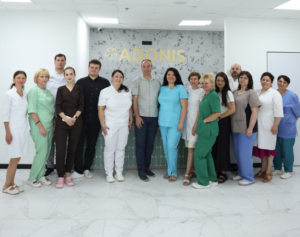
The ADONIS network of medical centers has reopened its branch at 8-B Raisa Okipna Street in Kyiv following renovations to the premises and medical facilities, as well as the installation of new diagnostic and treatment equipment.
According to a press release from ADONIS on July 30, 2026, the center is once again seeing adult and pediatric outpatients, providing diagnostic services, and has resumed operations at its same-day surgery unit.
The diagnostic and pediatric departments are located on the first floor of the medical center. Patients have access to CT scans, X-rays, mammograms, ultrasound diagnostics, and laboratory tests conducted in the center’s own laboratory.
Consultations are provided by pediatricians, family physicians, infectious disease specialists, allergists, pulmonologists, and orthopedic surgeons. Under the National Health Service of Ukraine’s (NSZU) medical guarantee program, patients with a health declaration can receive free consultations with a pediatrician and a family physician. The center also conducts screenings under the “Health Screening 40+” program.
The Department of Clinical Research and the educational center are located on the second floor. Patients can participate in clinical trials conducted at ADONIS. The center is also used for medical resident rotations and continuing professional development events for healthcare professionals.
The fourth floor houses the adult outpatient clinic, the same-day surgery unit, endoscopy, dentistry, and rehabilitation medicine. Consultations are provided by more than 20 specialists in various fields, including internists, cardiologists, gastroenterologists, endocrinologists, gynecologists, urologists, surgeons, neurologists, ophthalmologists, breast specialists, and otolaryngologists.
The branch also offers dermatology, trichology, dermatosurgery, non-invasive cosmetology, and regenerative medicine. For the diagnosis of skin and hair conditions, the clinic uses the HEINE DELTAone dermatoscope, the Aram Huvis API digital trichoscope, and a Wood’s lamp.
The day surgery department performs minimally invasive procedures and treatments on an outpatient basis without the need for extended hospitalization. The endoscopy department offers diagnostic procedures, including those performed under sedation.
The Dental Department provides therapeutic and surgical care for adults and children. Dental treatment under sedation is also available. The network plans to further expand the range of medical services at the renovated branch.
The medical center is located about a seven-minute walk from the “Livoberezhna” metro station. It is open Monday through Friday from 8:00 a.m. to 8:00 p.m., Saturday from 8:00 a.m. to 7:00 p.m., and Sunday from 9:00 a.m. to 5:00 p.m.
ADONIS is a Ukrainian network of multidisciplinary medical centers for adults and children, founded in Kyiv in 1997. The network’s first private cardiology and family medicine practice was opened on Raisy Okipna Street. According to the company, by 2026 the network will include medical centers in Kyiv and the Kyiv region and will offer services in 89 medical specialties.

More than 80% of Ukrainian agricultural companies raised employee salaries by 10–20% in the first half of 2026; however, the labor shortage remains one of the industry’s key challenges, and recruiting has become more difficult than last year, according to a study by the analytical firm Agrohub.
According to the study, 81% of the companies surveyed have already adjusted their pay scales. Salaries rose most sharply for agronomists, engineers, tractor operators, and drivers—precisely the categories of workers where the labor shortage is most acute. To retain drivers, piecework rates and variable pay components were increased more often than fixed salaries.
The greatest labor shortages in the first half of the year were observed among tractor operators, drivers, engineers, and grain elevator workers. All survey participants cited mobilization as the main factor complicating the search for personnel; 69% cited a shortage of qualified specialists, and 56% cited rising salary expectations among candidates. Other reasons included population migration and competition among employers.
In response to the labor shortage, agricultural holdings are increasingly recruiting workers from other regions of Ukraine, as well as people aged 50 and older and women for positions that were traditionally considered male-dominated. In addition, companies are investing in in-house staff training and the automation of production processes to reduce their reliance on hard-to-fill positions.
“Companies have met their targets for the first half of the year and increased employee compensation; however, filling a vacancy today often costs more than retaining a current specialist. At the same time, we see that financial incentives are proving insufficient as the sole tool—the endless ‘salary race’ cannot overcome the physical shortage of workers in the market,” commented Dmytro Lebedev, head of the HR360 division at Agrohub.
According to him, in the second half of the year, companies will shift their focus from large-scale salary increases to automation, the development of internal training, expanding recruitment channels, and revising work organization models.
Agrohub’s study was conducted in June 2026 among 16 agricultural holdings with a combined land bank of 2.2 million hectares, operating in crop production, livestock farming, and the grain storage business.
agricultural company, agricultural sector, employee, SALARY, workforce

Turkish authorities have begun the process of revoking the citizenship of 687 foreigners who, according to investigators, obtained Turkish passports through fictitious real estate transactions and forged property appraisal reports. The original source of this information was a statement by Turkish Justice Minister Akin Gürlek, published on August 4, 2026. The operation was coordinated by the Organized Crime Investigation Bureau of the Istanbul Chief Prosecutor’s Office. Investigative actions took place simultaneously in 16 provinces across the country.
According to the investigation, participants in the scheme purchased relatively inexpensive real estate and then, using forged expert reports, artificially inflated its value to the minimum threshold required to obtain Turkish citizenship. The transactions were accompanied by fictitious bank transfers designed to create the appearance of investment inflows.
As a result, Turkish authorities estimate that the country was deprived of approximately 2.5 billion Turkish lira—or roughly $52 million—that was supposed to have been invested by foreign applicants.
As part of the investigation, arrest warrants were issued for 90 people, and 72 suspects have already been detained. The government has placed seven companies that may have been linked to the scheme under its control. Additionally, 1,045 properties, a hotel in Bodrum, 15 vehicles, a yacht, and funds in ten bank accounts have been seized.
It is important to note that this does not yet involve the automatic and immediate revocation of passports, but rather the initiation of legal proceedings. Citizenship will be revoked once it is confirmed that a specific applicant obtained it based on fraudulent documents or a transaction that did not meet legal requirements.
Turkey’s investment citizenship program has been in effect since 2017. Currently, a foreigner can apply for a Turkish passport by purchasing real estate worth at least $400,000. The property cannot be sold for three years, its value must be verified by an authorized appraisal company, and payment must be made through the banking system. Alternative options include an investment or a bank deposit of at least $500,000.
The Ministry of Justice, the Istanbul Prosecutor’s Office, and the Turkish media have not yet disclosed the nationalities of the 687 individuals initially implicated. However, data on previous participants in the investment program and foreign buyers of Turkish real estate allow us to identify groups that potentially used such services more frequently.
Between 2018 and 2021, approximately 19,600 foreigners obtained Turkish citizenship through the investment program. Iran, Iraq, Afghanistan, and Russia were cited as the main countries of origin for applicants, and since 2022, Ukrainian and Russian citizens have significantly increased their purchases of Turkish real estate and have become the most prominent groups of applicants for investment-based citizenship.
According to official statistics from the Turkish Statistical Institute (TÜİK), in 2025, Russians purchased 3,649 residential properties in Turkey, Iranian citizens purchased 1,878, and Ukrainian citizens purchased 1,541. These three countries ranked first among foreign buyers of Turkish housing. This trend continued in 2026. In June, Russian citizens purchased 381 residential properties, while Ukrainians and Iranians each purchased 170 properties.
Based on this data, it is most likely that among the 687 investors under investigation are citizens of Russia, Iran, and Ukraine, who are simultaneously among the largest real estate buyers and the most active participants in the investment citizenship program. The list of those under investigation may also include individuals from Iraq and Afghanistan who participated in the program in previous years.
Additional risks may arise for the spouses and children of investors if they obtained citizenship as family members of the primary applicant. Turkish authorities have not yet clarified whether such relatives are included in the announced total of 687 people or whether their status will be reviewed automatically or through separate procedures. The investigation will likely lead to stricter scrutiny of appraisal companies, bank transfers, intermediaries, and the sources of funds. For new applicants, this may mean longer processing times and additional requirements, but it does not indicate that the investment citizenship program itself is being shut down.

On the night of August 5, a Russian attack destroyed the high-tech, automated, Class A DENKA LOGISTICS logistics complex in the village of Chaiky, Kyiv Oblast, according to a press release from the MTI Group.
There were no fatalities or injuries among the employees. The company noted that the extent of the damage is very significant.
DENKA LOGISTICS was the main logistics hub of the MTI Group, as well as one of the largest and most modern logistics hubs in Ukraine. The complex had been operating continuously since 2009 and featured a high level of automation in its warehouse processes.
Every day, thousands of pairs of shoes, items of clothing, gadgets, electronics, and home appliances were shipped from the warehouse to stores and directly to customers. The complex provided logistics services for retail chains and other businesses within the MTI Group.
“We are continuing to operate. We are already assessing the consequences of the attack and reorganizing all processes. We are doing everything possible to ensure that customers are affected as little as possible by this disruption,” the group said in a statement.

MTI Group intends to restore the damaged facilities. The company has promised to keep customers and partners informed about changes in logistics operations and further steps toward restoring the complex.
MTI’s official website notes that the DENKA LOGISTICS complex was equipped with an automated warehouse logistics management system and had approximately 20,000 square meters of specialized facilities. The main categories of goods handled at its facilities were clothing and footwear, cosmetics, office equipment, and household appliances.
MTI Group operates in Ukraine, Kazakhstan, and Kyrgyzstan. The group includes businesses in the fields of retail, information and communication technologies, cybersecurity, services, and logistics.
In Ukraine, the group comprises eight businesses, including INTERTOP, AMADEO (the official distributor of Pandora), PROTORIA (which operates the Samsung Experience Store chain), as well as MTI, OCTOPUS CYBER SERVICES, MTI-SERVICE, TECHNOGARD, and DENKA LOGISTICS.
According to MTI Group, its Ukrainian businesses operate 238 stores and employ approximately 2,700 people. The total area of stores and offices is 39,700 square meters, while warehouse space totals 28,400 square meters. The group collaborates with over 1,400 partners. In 2025, its businesses paid 3.6 billion UAH in taxes to Ukraine’s state budget.

Poltava Medical Glass Plant JSC (PMGP, Poltava) saw its net profit decline by 19% in 2025 compared to 2024—to 105.564 million UAH, and for the January–June 2026 period, by 30.5% compared to the same period in 2025, to 45.204 million UAH.
As the company reported in the NSSMC’s disclosure system, its net sales revenue in 2025 decreased by 3.52% compared to 2024—to 364.281 million UAH, while in the first half of 2026, revenue grew by 31.76% compared to the same period in 2025, reaching 231.01 million UAH.
According to the company, the main export markets outside Ukraine in 2025 were Kazakhstan, where products worth 51.503 million UAH were shipped; Georgia (3.732 million UAH); Turkey (3.233 million UAH); and Moldova (1.258 million UAH). In total, products worth 61.369 million UAH were exported during this period, which is 2.29% more than the previous year.
In the first three months of this year, the plant manufactured 89,488 million ampoules and shipped 150.923 million units worth 107.4 million UAH. Specifically, in January–March, ampoules were exported to Kazakhstan, Georgia, Turkey, Moldova, and Uzbekistan. The volume of exports increased by 32%.
The company generated 5.402 million UAH from the sale of oxygen and nitrogen.
The cost of goods sold amounted to 70.333 million UAH; the company’s revenue from core and operating activities for the first quarter of 2026 totaled 120.232 million UAH, with net profit at 21.154 million UAH.
As previously reported, in July 2025, Oleksandr Nekrasov, who owned nearly 53.7% of PZMS’s shares, gifted this stake to his relative, Leonid Oleksandrovych Nekrasov, who had previously held more than 6% of the company’s shares; following the gift, his stake exceeded 59.7% of the company’s authorized capital.
Oleksandr, Leonid, and Konstantin Oleksandrovych Nekrasov, in particular, are co-owners of the pharmaceutical manufacturer “Lubnyfarm.”
According to information on its website, the Poltava Medical Glass Plant is Ukraine’s leading manufacturer of ampoules for pharmaceuticals.



