

In October 2023, Ukraine imported 6.08 thousand tons of dairy products, which is 27.8% more than in September and 35% more than in October 2022, which is the highest figure since March 2022.
According to the Ukrainian Agribusiness Club (UCAB), growth is recorded in all categories of dairy products, but the largest imports are cheese – 3.2 thousand tons. In addition, in October, the volume of butter imports doubled, reaching 619 tons, which is the highest figure since November 2021.
“In total, 48.89 thousand tons of dairy products were imported in 10 months of 2023, which is 6.1% less than in the same period last year, but at the same time, the value is 11.3% higher ($210.2 million),” the UCAB emphasized.
According to the association’s analysts, the volume of dairy exports remained stable for the second month in a row – 8.25 thousand tons, which corresponds to the same period last year. However, in monetary terms, the revenue decreased by 19% to $226.94.
At the same time, UCAB experts noted the intensification of demand in the global dairy market after a nine-month decline in prices. This is confirmed by the FAO index for October and the increase in trading on the Global Dairy Trade: the average value of the FAO Dairy Price Index in October was 111.3 points, which is 2.4 points (2.2%) higher than in September, but still 28 points (20.1%) lower than in the same period last year.
“In October, world prices for milk powder increased the most, mainly due to a sharp increase in import demand under both short- and long-term contracts. An additional factor in the growth of prices for dairy products was the limited supply of milk in Western Europe and some uncertainty about the impact of weather conditions on production in Oceania,” explained UCAB analyst Maxim Hopka.
World butter prices rose under the influence of stronger retail prices before the start of the winter holidays in Western Europe and increased import demand from Northeast Asia. At the same time, cheese prices, on the contrary, slightly decreased due to the weakening of the euro against the US dollar and the growth of export supply from Oceania, UCAB summarized.

On November 7, 2023, the 23rd (and the first since the beginning of the full-scale invasion) award ceremony of the annual competition of pharmaceutical industry professionals “Panacea” was held at the Ukrainian House, hosted by the famous TV presenter Timur Miroshnichenko.
February 24, 2022, undoubtedly marked a new countdown, a new chapter in the history of the competition and the pharmaceutical industry of Ukraine, so this year’s ceremony was different from the previous ones, meeting the new conditions and challenges of today. This year, the organizers of the competition recognized companies and individuals who have become a model of courage and resilience that surprised people around the world, making them look at charity, resilience and Ukrainians themselves from a different angle.
The PharmFront honorary commemorative award, made of the wreckage of the “analog” ballistic missile “Kinzhal”, which was shot down over Kyiv, was presented to Darnitsa, Acino, Kusum, Interchem, Farmak, and BaDM, “Delta Medical, Novo-Nordisk, as well as the National University of Pharmacy, the Polish Medical Solidarity Foundation, and Yulia Klymenyuk, a volunteer, founder of the PharmRukh Foundation, Marketing Director of the 9-1-1 pharmacy chain.
In order to preserve the memory of the tragic chapter in the modern history of the Ukrainian pharmaceutical industry, examples of heroism, resilience and indomitability, the organizers of the Panacea contest announced the release of a special photo album “FarmFront. Unbreakable”, which will be published in December.

In addition to summarizing the results of the year, celebrating and awarding the winners, the organizers of the contest together with the Ducat auction house held a charity auction, where the lots included paintings by contemporary Ukrainian artists (22 works) and a Superhumans T-shirt signed by the Commander-in-Chief of the Armed Forces of Ukraine Valeriy Zaluzhny. The proceeds will be used to restore the victims of Russian aggression at the Superhumans center, which provides free medical services for prosthetics and rehabilitation to military and civilians who lost limbs during the war.
That evening, 25 Panacea-2023 statuettes were awarded to the best among the best in the pharmaceutical industry. Ukraine. The winners were determined based on the data of the competition’s analytical partners – Business Credit, SMD and IQVIA.
Farmak was recognized as the Company of the Year among domestic manufacturers. The award among foreign manufacturers went to Acino. And MSD was recognized as the best manufacturer of innovative medicines.
Chemoteka Personalized Pharmacy Center was recognized for a unique project for Ukraine, a compounding center that provides a full range of oncopharmaceutical products and services (personalized selection, individual manufacturing and, if necessary, delivery of anticancer drugs from a wide range of active substances).
During the ceremony, drugs in the prescription and OTC groups were also recognized.
The winners in the nomination “Drug of the Year. Among OTC Drugs” nomination were:
– AMIXIN, Interchem;
– ACC, Sandoz;
– BEPANTEN, Bayer;
– Exoderil, Sandoz;
– REGIDRON, Orion;
– RELIF, Bayer;
– Tantum Verde, Dileo Pharma;
The winners in the nomination “Drug of the Year. Among Prescription Drugs” nomination are:
– DIFORS, Acino;
– ZOLOFT, Viatris;
– LEVANA, Interchem;
– MOVEX, MoviHealth;
– NEUROCOBAL, Kusum Company;
– CERMION, Viatris Company;
– SERRATA, Kusum;
– TRITTICO, Deleo Pharma.
In the nomination “Drug of the Year. Dynamic Leader” category, the Panacea statuette was awarded to VITAPROST by Stada.
Among the dietary supplements, the following products were recognized: PROBAM by Baum Pharm, Sakhnil by Kusum, SUPRADIN by Bayer, and FOLIO by Novalik Pharm.
The international company Berlin-Chemi-Menarini was awarded the Panacea for 30 years of conscientious work of the Ukrainian representative office.
The special atmosphere of the ceremony was created by the artists of the National Academic Orchestra of Folk Instruments of the National Academy of Sciences of Ukraine, Marta Adamchuk and the Probass & Hardi band.
Open4business is a media partner

In January-October this year, Ukraine reduced exports of processed pig iron in physical terms by 3.2% compared to the same period last year, to 1 million 113.079 thousand tons.
According to the statistics released by the State Customs Service (SCS), pig iron exports in monetary terms amounted to $423.414 million in the period under review (down 26.3%).
At the same time, exports were carried out mainly to Poland (56.20% of supplies in monetary terms), Spain (22.64%) and the United States (6.24%).
In ten months of 2023, Ukraine imported 79 tons of pig iron worth $132 thousand from Germany (50.38%) and Brazil (49.62%), while in October, imports of pig iron amounted to $1 thousand. In the same period last year, 16 tons of pig iron were imported from Germany for $29 thousand.
As reported, in 2022, Ukraine reduced exports of processed pig iron by 59% in physical terms compared to the previous year – to 1 million 325.275 thousand tons, and by 61.1% in monetary terms – to $638.774 million.
In 2022, Ukraine imported 40 tons of pig iron worth $23 thousand, while in 2021 it imported 185 tons of pig iron worth $226 thousand.
Exports were made mainly to the United States (38.47% of supplies in monetary terms), Poland (32.91%), and Turkey (8.12%), while imports were made from Germany (100%).

The shortage of men threatens the maintenance of production volumes, so companies have begun to attract women to “male” positions. This is evidenced by the results of a study of labor market trends conducted by the Confederation of Employers of Ukraine.
The Confederation of Employers of Ukraine noted that after the full-scale invasion, the role of women in the economy has been growing rapidly. “After the mobilization of men to the Armed Forces of Ukraine, medium and large enterprises faced a significant shortage of personnel, so women were transferred to fill the vacant positions. This practice exists in the areas of metalworking and agricultural processing in highly automated industries, if retraining can be done quickly. Often, the new position requires women to perform certain physical activities. This practice is spreading, in particular, in the furniture industry,” the study notes.
Among other new trends, the Confederation of Employers of Ukraine noted a threefold higher interest in starting a business among veterans than among ordinary Ukrainians. “Employers fear that when hiring veterans, they will face a difficult psycho-emotional state of such employees (79%), alcohol or drug addiction (25%), and conflict (24%). A way out may be the development of individual employment for veterans and people with disabilities. 63.6% of the surveyed veterans said they wanted to start their own business. This is three times more than in the country as a whole in peaceful 2018,” the study notes, citing previously published sociological research.
Other factors contributing to the development of self-employment among veterans include their unwillingness to accept their current social situation. “Companies record cases of dismissal of veterans for reasons that are not clear at first glance. Upon closer inspection, it turns out that the employee was in command of a unit during the war, but in civilian life he returns to the position of a subordinate. It is often difficult for demobilized employees to accept the fact that they received UAH 100,000 during their service and earn UAH 18-20,000 upon their return,” the Confederation of Employers of Ukraine study says.
Another trend in the labor market is the existing high level of distrust between employers and people with disabilities, as indicated by sociological research. This distrust is based on employers’ lack of knowledge about these people and their not always satisfactory level of qualifications. 61% of such people said that they are perceived as “unable to work” and “people with communication difficulties,” which is why employers do not want to hire them. This distrust creates a destructive phenomenon that makes it possible for some businesses to “rent” employment records to meet the 4 percent standard for hiring people with disabilities.
“Employers don’t believe in the ability of people with disabilities to work at a decent level, so they don’t want to let people they don’t trust into their companies. However, quite a few people who have recently received disability status have a specialty that they can work in in their new status. There are cases where people with disabilities are extremely qualified. As part of the Razom project, we interviewed a blind girl who graduated from the Shevchenko National University with a red diploma and simultaneously interprets three-hour negotiations while at home,” the Confederation of Employers noted. “For people with disabilities, work is extremely important, as it gives them some financial freedom and allows them to feel in demand. Staff turnover among people with disabilities is half that of employees without disabilities. The duration of work in the same position is significantly longer,” the study says.
Expectations of a negative reaction from society lead many companies to not disclose to customers the fact that services are provided by a person with a disability. In particular, this applies to transportation companies, although modern prostheses allow people with upper or lower limb amputations to adapt to driving cars and trucks or even special equipment.
The involvement of people with disabilities and veterans in the labor market is an important factor in compensating for the labor market shortage. The Confederation of Employers of Ukraine has developed the most comprehensive guide on employment of persons with disabilities, which contains practical advice on the legal requirements for their inclusion in the labor market.
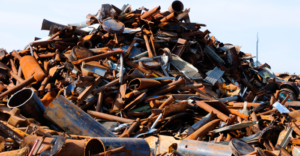
In January-October of this year, Ukrainian enterprises increased exports of ferrous scrap by 3.89 times compared to the same period last year, up to 146.927 thousand tons.
According to the statistics released by the State Customs Service (SCS), in monetary terms, exports of scrap metal amounted to $42.088 million in the period under review (up 2.9 times).
At the same time, the export of scrap metal has been growing since March: in January, about 8.28 thousand tons of scrap were exported, in February – 16.5 thousand tons, in March – 15.45 thousand tons, in April – about 16 thousand tons. tons, in April – about 16.19 thousand tons, in May – 21.003 thousand tons, in June – 14.6 thousand tons, in July – 9.567 thousand tons, in August – 15.849 thousand tons, in September – 13.7 thousand tons, in October – 15.796 thousand tons.
Scrap metal was exported to Poland (87.39%), Greece (6.42%) and Bulgaria (2.59%).
In the first two months of the year, the country did not import scrap metal; in March-October, it imported 898 tons of scrap worth $333 thousand (51.95% from Slovakia, 22.82% from Poland, 8.41% from Estonia).
Earlier, Ukrmetallurgprom President Oleksandr Kalenkov stated in an article on the Interfax-Ukraine website that scrap metal is exported through the European Union, which has a preferential export duty of EUR3 per ton, and from there the raw materials are redirected to real customers. Exporting raw materials directly to customers would cost EUR180 in export duty, and the Ukrainian budget has already lost UAH 350 million.
According to him, the State Bureau of Investigation has already taken an interest in such export schemes.
The head of Ukrmetallurgprom called for a temporary ban on the export of ferrous scrap to provide steelmakers with strategically important raw materials in the ongoing war.
“If the scrap metal remains in the country, more than 500,000 people will be employed and the country will receive millions in foreign exchange earnings from steel exports. At the same time, the military will also benefit, as steelmakers do a lot to help the military by purchasing equipment and vehicles for them and even producing bulletproof vests. No one benefits from scrap exports. That is why the government should be proactive and temporarily ban exports until the situation stabilizes and ceases to threaten national economic security,” Kalenkov said.
He clarified that a ton of scrap metal processed into steel brings in 10 times more to the budget than the EU export duty, which is about $300 per ton.
As reported, in 2022, Ukraine reduced exports of ferrous scrap by 11.5 times compared to the previous year to 53,557 thousand tons, while in monetary terms it decreased by 12.4 times to $19.271 million. At the same time, last year the country reduced imports of scrap metal in physical terms by 12.6 times to 1,824 thousand tons. tons, compared to the previous year – to $19.271 million tons, in monetary terms by 12.9 times – to $3.488 million. Imports of scrap metal in 2022 were mainly from Turkey (78.92% of supplies in monetary terms), the Russian Federation (13.25%) and Cyprus (5.08%); exports – to Turkey (38.97%), Poland (34.25%) and Greece (10.12%).
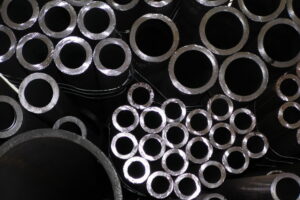
In January-October of this year, Ukraine’s steelmaking companies reduced their earnings from ferrous metal exports by 45.7% year-on-year to $2 billion 255.514 million.
According to statistics released by the State Customs Service (SCS) on Wednesday, ferrous metals accounted for 7.56% of total export revenues during this period, while the share was 11.26% in the first ten months of 2022.
In October, revenues from exports of ferrous metals amounted to $175.871 million, while in the previous month – $258.675 million.
At the same time, Ukraine increased imports of similar products by 43.4% to $1 billion 103.047 million over 10 months of this year. In October, the country imported products worth $124.012 million.
In addition, in January-October, Ukraine reduced exports of metal products by 16.3% year-on-year to $756.184 million. In October, exports were worth $62.852 million.
At the same time, imports of steel products increased by 35.5% to $723.032 million over the same period. In October, Ukraine received $117.868 million worth of these products.
As reported earlier, in 2022, Ukraine’s steelmaking companies reduced revenues from ferrous metal exports by 67.5% compared to 2021, to $4 billion 533.088 million. During this period, ferrous metals accounted for 10.26% of total revenues from exports of goods, compared to 20.49% in 2021. At the same time, last year Ukraine reduced imports of similar products by 38.3% to $954.387 million.
In addition, in 2022, Ukraine reduced exports of metal products by 18.6% to $1 billion 52.512 million. Imports of metal products fell by 42.9% to $643.162 million over the year.



