
The Executive Board of the International Monetary Fund (IMF), following the discussion of Program Monitoring with Board involvement (PMB) for Ukraine, previously approved at the IMF management, declares that this four-month program is designed to help Ukraine maintain stability and catalyze donor financing amid very large balance of payment needs and exceptionally high risks.
“The PMB is tailored to Ukraine’s exceptional circumstances, to help the authorities implement prudent macroeconomic policies during this particularly difficult period and catalyze donor financing. Large and predictable external financial support will be critical for the success of the authorities’ strategy, and frontloaded disbursements would help address strains in early 2023,” IMF First Deputy Managing Director and Acting Chair Ms. Gita Gopinath said.
“Key measures under the PMB include enhancing revenue mobilization and reviving the domestic debt market, preparing a financial sector strategy, and enhancing transparency and governance,” the fund said.
“Notwithstanding all these strains, the authorities have largely managed to maintain macroeconomic and financial stability, and they are committed to continue adapting policies to fast changing circumstances, including in the case of a severe downside scenario. Balance of payment needs remain very large and risks are exceedingly high,” Gita Gopinath stated.
“The PMB focuses on a targeted set of policy actions to support macroeconomic and financial stability. This will require enhancing revenue mobilization, containing monetary financing and therefore reviving domestic debt markets. At the same time, the PMB seeks to promote transparency and preserve hard-won gains from past Fund-supported programs, including in the areas of independence of the National Bank of Ukraine and, more broadly, governance and anti-corruption. Strong implementation of the PMB should help pave the way toward a possible full-fledged IMF-supported program,” she said.
Canada has transferred 500 million Canadian dollars to the administered account of the International Monetary Fund for Ukraine, and the Netherlands – EUR200 million, IMF Managing Director Kristalina Georgieva said.
“Thank you, Canada, for a new contribution of CAD 500 million to the Administered Account for Ukraine. This is Canada’s third contribution to the account, which supports efforts to help stabilize the Ukrainian economy,” she said on Twitter.
“I am delighted to see another member of the international community joining the efforts to help stabilize the Ukrainian economy using the Administered Account for Ukraine. Thank you, the Netherlands, for your EUR 200 million contribution,” she said.
As reported, Canada is transferring to Ukraine as a loan through the IMF in the amount of CAD500 million received from the issuance of special five-year sovereign bonds in support of Ukraine.
In early July this year, the Netherlands announced its decision to allocate another EUR200 million to Ukraine through the IMF account.
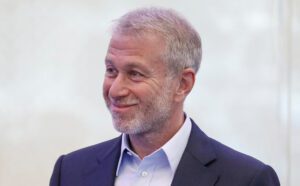
Foreign Minister Melanie Joly has announced that Canada will seize $26 million of Granite Capital Holdings Ltd. owned by Russian oligarch Roman Abramovich, who is under sanctions, and will seek confiscation, the Canadian Foreign Ministry press office said.
This is the first time Canada has used a law that allows the government to confiscate assets belonging to sanctioned individuals, according to the ministry’s website. It is noted that Minister Joly can now apply to the court for confiscation of assets in favor of Canada.
“If confiscated, the proceeds could be used to rebuild Ukraine and compensate the victims of the Putin regime’s illegal and unjustified invasion,” the report said.
Canada was the first G7 country to apply such measures, demonstrating its strong commitment to Ukraine and its reconstruction and calling for accountability for those who profited from and supported President Putin’s regime.
“Putin’s oligarchs are complicit in Russia’s illegal and barbaric invasion of Ukraine. Canada will not be a safe haven for their ill-gotten gains, and today’s statement demonstrates our determination to make the Russian elite pay the price for their support of Putin’s brutal regime. Using Russian assets to rebuild Ukraine is just and appropriate,” said Canadian Deputy Prime Minister and Finance Minister Chrystia Freeland.
Following Russia’s illegal occupation and attempted annexation of Crimea in 2014, Canada imposed sanctions on more than 2,100 individuals and entities. Since February 24, 2022, Canada has imposed sanctions on more than 1,500 additional individuals and entities from Russia, Ukraine and Belarus.
Source
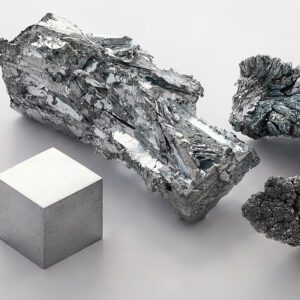
According to customs statistics released by the State Customs Service of Ukraine, the export of aluminum and aluminum products for 11 months of 2022 decreased by 41.3% compared to January-November 2021 – to $90.723 million ($7.173 million in November), lead and zinc products by 70.2% – to $10.574 million ($0.804 million), nickel and products – by 72.5%, to $1.168 million ($0.082 million).
Imports of tin and tin products fell 25.7% to $3.140 million ($246,000) and imports of zinc and zinc products fell 60.4% to $34.304 million ($3.813 million).
Zinc exports during the reporting period amounted to $1.321 million (in November there were no deliveries), while in January-November 2021 it was $408 thousand. Tin exports and products in January-November 2022 totaled $423 thousand (in November – $2 thousand) compared to $220 thousand during the same period last year.
Exports of aluminum and aluminum products for 2021 rose 53.9% to $169.094 million, lead and lead products rose 52.8% to $38.229 million, and nickel and nickel products rose 55% to $4.856 million.
Zinc exports last year were $550,000, up from $69,000 in 2020 (up eightfold). Tin and products exports in 2021 were $346,000 compared to $117,000 a year earlier.
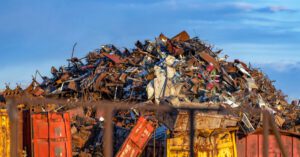
In January-November this year, enterprises on operations with scrap ferrous metals reduced the procurement of scrap metal by 76.6% compared to the same period last year – to 886.1 thousand tons from 3 million 783.6 thousand tons.
As reported in the operational information of the Ukrainian Association of Secondary Metals (UAVtormet), the export of scrap metal during this period amounted to 42 thousand tons, which is 13 times less compared to 11M2021 (547.5 thousand tons). In this case, the import of scrap was 2.3 thousand tons, compared to 21.3 thousand tons in January-November 2021.
Scrap shipments to the country’s metal companies in 11M-2022 decreased by 72.4% compared to January-November-2021 – to 841.9 thousand tons from 3 million 55.9 thousand tons.
As of December 1, 2022, the level of scrap metal stock at Ukrainian steel mills was estimated at 30-35 thousand tons.
The World Bank (WB) has set up a multilateral trust fund to support the Ukrainian government, the WB said in a statement.
The fund has attracted $250 million in seed financing.
“The Ukraine Recovery, Rehabilitation and Reform Trust Fund (URTF), which will be managed by the WB, will provide a coordinated mechanism for financing and supporting government activities,” the WB said in a press release.
According to the Swiss government’s commitments to the founding contribution and contributions from the governments of Austria, Iceland, Lithuania, the Netherlands, Norway and Sweden, the initial total amount of the fund is $250 million.
Canada and Japan have also pledged to support the URTF. Other partners are expected to join, the report said.
As the bank notes, due to the uncertainty of the situation in Ukraine, Kiev’s partners have to take a long-term approach to supporting the government’s efforts. Therefore, the fund has the structure of a flexible platform, which will provide the ability to respond quickly to changing circumstances and the needs of the country in the first 10 years of its operation.
The URTF will operate within the overall Multidonor Fund for Ukrainian Institutions and Infrastructure, which is part of the broader international support for the country and is coordinated by the World Bank group.
The WB recalls that to date it has mobilized $18 billion in emergency financing for Ukraine, taking into account donor commitments, of which more than $13 billion has already been disbursed. The largest donor is the United States.



