

Kernel, one of the largest Ukrainian agrarian holdings, in the second quarter of 2021 fiscal year (FY), which started in July 2020, increased sales of sunflower oil by 23% compared to the same period of the previous FY, to 425,340 tonnes.
According to a report published on the website on Thursday, sales of bottled sunflower oil for the period amounted to 9.1% of total sales (in the same period previous FY it was 8.4%).
In October-December this year, the holding’s oil extraction plants processed 1 million tonnes of oilseeds, up 5% from the second quarter of 2020 FY. The company said that this is a record high indicator for the quarter.
The report said that grain exports from Ukraine in the first quarter of 2021 FY increased by 6%, to 2.4 million tonnes, of which 52% from external suppliers, the rest was produced by the company’s agricultural divisions.
Grain transshipment at export terminals in Ukraine in the specified period increased by 41%, to 2.38 million tonnes. As the company said, this is due to the increase in transshipment volumes at the new Kernel export terminal in Chornomorsk seaport. The volume of grain received by the company’s elevators increased by 17%, to 2.38 million tonnes, but in general for the first half of the year it decreased by 9%, to 3.63 million tonnes due to a decrease in the harvest this season.
In general, in the first half of 2021 FY, the company increased oilseed processing by 5%, to 1.66 million tonnes, oil exports by 11%, to 721,580 tonnes, grain transshipment at export terminals by 47%, to 4.25 million tonnes and grain exports by 16%, to 4.52 million tonnes.
Kernel ended 2020 fiscal year (FY, July 2019-June 2020) with net income of $123 million, less by 31% compared to 2019 FY. Its revenue grew by 4%, to $4.11 billion, and EBITDA by 28%, to $443 million. The company’s net debt in 2020 FY grew by 41%, to $980 million.
Kernel is a producer and exporter of sunflower oil. It operates in such business segments as production, export and domestic sales of sunflower oil, crop production, export of grain crops, provision of services for storage and transshipment of grain at elevators and in port terminals.

The international vertically integrated pipe and wheel company Interpipe in 2020 reduced steel output by 11.2% compared to the previous year, to 758,700 tonnes.
According the company’s monthly report, the production of pipes in 2020 decreased by 20.9%, to 464,000 tonnes and the production of railway products, by 8.3%, to 190,600 tonnes.
In December, steel output amounted to 61,800 tonnes, output of railway products to 16,500 tonnes, and pipes to 38,400 tonnes.
It is also reported that in 2020 pipes were sold in Europe (29%), the MENA (Middle East and North Africa) region (24%), Ukraine (22%), the CIS (11%), the American continent (11%) and other regions (3%). In December, pipes were sold in Europe (21%), Ukraine (28%), the MENA region (20%), the CIS (9%), the American continent (18%) and other regions (4%).
Railway products last year were sold in the CIS (43%), Europe (35%), Ukraine (14%), the MENA region (4%), the American continent (3%) and other regions (1%). In December, railway products were sold in the CIS (46%), Europe (27%), Ukraine (16%), the MENA region (5%), the American continent (5%) and in other regions (1%).
According to Interpipe’s commentary, sales of most of the company’s products rose in December amid a recovery in the global economy and markets, despite stricter lockdowns in some countries.
Total pipe sales in December 2020 grew 37.2% compared to November 2020, surpassing pre-coronavirus (COVID-19) monthly sales in the fourth quarter of 2019 and the first quarter of 2020. However, year-over-year sales for the 12 months of 2020 were still lower, less by 21% compared to 2019.
Oil country tubular goods (OCTG) sales, after a 142.4% rise in November versus October, grew by 29.8% compared to November amid intensive drilling activity worldwide and optimistic expectations for COVID-19 vaccines and exceeding the threshold of $50 per barrel of crude oil for the first time since March 2020.
Sales of general purpose pipes in December increased by 8.1% versus November due to sales growth in Turkey, the United States and Belarus, while sales of welded pipes fell by 34.1% compared to November in all regions due to unfavorable market conditions.
At the same time, sales of railway products in general over the past year decreased by 5.4%. At the same time, it is noted that the total sales of wheelsets in 2020 increased significantly by 32%.
Interpipe is a Ukrainian industrial company, a manufacturer of seamless pipes and railway wheels. The company’s products are supplied to more than 80 countries around the world through a network of sales offices located in the key markets of the CIS, the Middle East, North America and Europe.

Ukrainian enterprises in 2020 increased the consumption of rolled metal by 4.4% compared to the previous year, to 4.904 million tonnes.
According to a press release from the Ukrmetalurgprom association, in 2020, some 1.228 million tonnes, or 25.4% of the domestic market for the consumption of rolled metal were imported.
“For the period January-December 2020, the capacity of the domestic market amounted to 4.904 million tonnes of rolled metal, of which 1.228 million tonnes, or 25.4%, accounted for imports. For the same period of 2019, the capacity of the domestic market was 4.697 million tonnes, of which 1.419 million tonnes, or 30.2%, were imported. Thus, for the 12 months of 2020, there is an increase in the capacity of the domestic market of rolled metal by 4.4% compared to January-December 2019, with a simultaneous a decrease in the import share by 5.2%,” the press release said.
In addition, it is reported that the import structure of 2020 is characterized by the domination of flat-rolled products over long products (55.84% and 42.93%, respectively), which is almost equal to the import structure in 2019 (some 55.21% and 41.87%, respectively).
According to Ukrmetalurgprom, in 2020, Ukrainian metallurgical enterprises produced 18.43 million tonnes of rolled metal (101.2% compared to 2019), of which, according to ETR-Spectr LLC, about 14.75 million tonnes or 80% were exported. In 2019, the export share was 82% (some 14.94 million tonnes with a total production of 18.21 million tonnes of rolled metal).
The share of semi-finished products in export deliveries in 2020 accounted for 50.77%, which is slightly higher than in 2019 (some 47.18%). Share of flat-rolled products in export deliveries in 2020 is almost equal to the indicator of 2019 (some 32.51% and 32.80% respectively). The share of long products in export deliveries last year is noticeably lower to the 2019 indicator (16.71% in 2020 versus 20.02% in 2019).
According to ETR-Spectr LLC, the main export markets for Ukrainian metal products in 2020 were the European Union (28.5%), other European countries (14.5%) and Asian countries (14.2%).
Among metallurgical importers in 2020 the first place is occupied by the CIS countries (38.5%), the second is the EU-28 (24.5%), and the third is Asian countries (20.5%).
Mobile network operator Kyivstar has expanded its 4G network coverage in Volyn and Zhytomyr regions and connected 402 more settlements to new mobile technologies.
The press service of the company said on Thursday that in particular, in Zhytomyr region, high-speed mobile Internet appeared in the settlements of Andriyivka, Bilkivtsi, Zamyslovychi, Kalynivka, Korostyshiv, Lebedivka, Nemyrivka and in Volyn region in the settlements of Borokhiv, Volodymyr-Volynsky, Horodysche, Domanove, Liubeshiv, and Ruzhyn.
The operator said that in order to improve coverage, LTE900 technology was activated at 98 base stations.
According to the data provided, a total of 14,000 base stations of the operator support 4G communication, which makes it possible to access new mobile technologies for 87% of the population of Ukraine.
At the same time, the operator said that in 2021 it intends to continue developing the network to increase the population’s access to 4G up to 90%.
Ratio of fertility and mortality by region as of Jan-Oct, 2020.
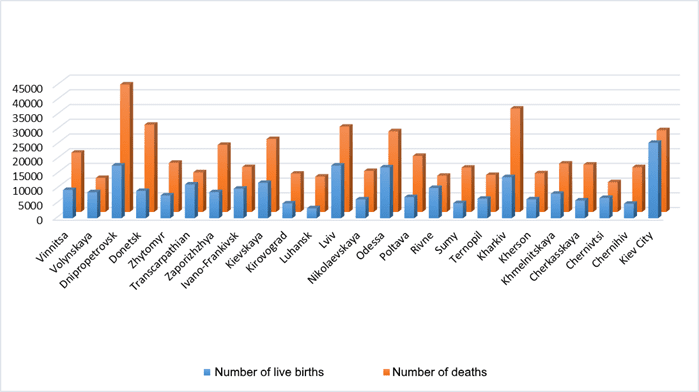
SSC of Ukraine
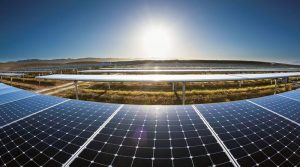
The volume of investments in household solar power plants reached EUR 600 million from 2015 by the end of 2020, the State Agency on Energy Efficiency and Energy Saving has reported.
“As of the end of 2020, there are more than 29,900 families in Ukraine who have installed solar panels. Their total capacity reaches 780 MW,” the agency said on Facebook.
According to the report, the top three in terms of the number of household solar plants are Dnipropetrovsk (4,184), Ternopil (2,512) and Kyiv (2,350) regions.
The agency also indicated that from 2018 to 2020 inclusive, the number of households with solar plants increased fourfold – from 7,450 to 29,900.
Taking into account the agency’s data for the first three quarters of 2020, in its last quarter, the capacity of solar plants increased by 68 MW, and investments by EUR 40 million. The number of households that connected home solar generation facilities rose by almost 1,500.



