

The Gulliver shopping center has officially announced the reopening of stores belonging to one of the world’s leading fashion retailers. Starting today, key brands of the Inditex group—Massimo Dutti, Stradivarius, Bershka, Pull&Bear, Oysho, and Zara Home—are once again available to visitors.
The return of these brands is an important step toward restoring the shopping and entertainment center’s full-fledged fashion offering. For visitors, this means the return of familiar and beloved stores to a well-known location in the heart of the capital.
The resumption of cooperation with international retailers became possible after the property’s legal status was stabilized. Since July 2025, the shopping and entertainment center has been owned by Oschadbank and Ukreximbank due to the previous owner’s failure to meet its credit obligations. In October 2025, the court lifted the seizure of the property, after which the complex came under the management of state-owned banks.
“The reopening of Inditex stores at Gulliver is a clear indicator of confidence in the new landlord. Transparency of ownership and predictability of terms are key factors for global business. Today, we provide exactly these conditions, and it is paying off. We are pleased to see that world-class brands are betting on Gulliver and Kyiv shoppers,” said Arsen Milyutin, Deputy Chairman of the Board of Oschadbank, responsible for NPL operations.
The Inditex Group is a leading global Spanish fashion retailer and one of the world’s largest fashion manufacturers and distributors, managing brands such as Massimo Dutti, Bershka, Pull&Bear, Stradivarius, Oysho, Zara, and Zara Home.
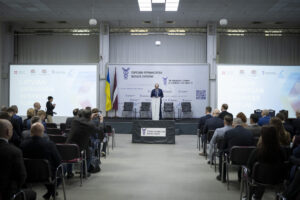
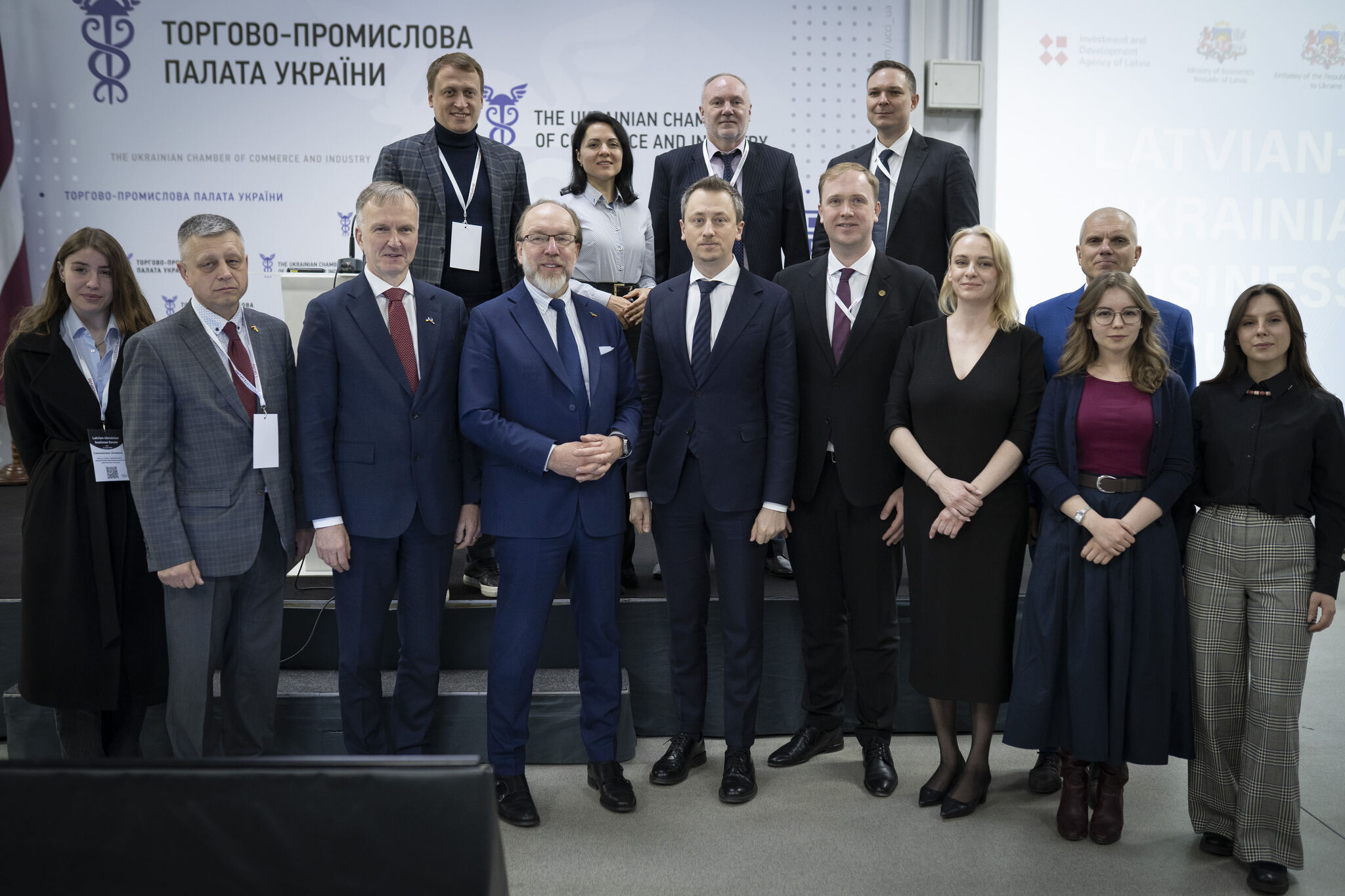
The Ukrainian-Latvian Business Forum was held at the Ukrainian Chamber of Commerce and Industry, during which the parties discussed cooperation in defense, energy, infrastructure, technology, and investment, and held a series of B2B meetings. Following the event, nine memorandums were signed, seven of which were in the military and dual-use sectors, and two in the trade sector.
The forum was attended by Ukrainian Minister of Economy Oleksiy Sobolev, Latvian Minister of Economy Viktors Valainis, Latvian Ambassador to Ukraine Andrejs Pildegovičs, Gennadiy Chizhikov, President of the Ukrainian Chamber of Commerce and Industry; Aigars Rostovskis, President of the Latvian Chamber of Commerce and Industry; representatives of the Latvian Investment and Development Agency; and representatives of Ukrainian and Latvian businesses. The program also included a plenary session, a business session, separate panel discussions on defense, technology, energy, and infrastructure, as well as an AirBaltic workshop for Ukrainian companies.
Speaking at the forum, Gennadiy Chizhikov, President of the Ukrainian Chamber of Commerce and Industry, emphasized that the event signals a shift from political support to substantive economic cooperation. “Today’s forum is a very important signal for our business communities. It shows that Ukraine and Latvia are not limited to political support or general declarations. We are shaping a concrete agenda for economic cooperation—substantive, sector-specific, and results-oriented,” he said.
According to Chizhikov, for the Ukrainian Chamber of Commerce and Industry, cooperation with Latvia has a practical dimension, particularly in terms of expanding partnerships between companies, forming new production chains, promoting investment projects, and cooperation in sectors that will shape the economy of the future. He specifically noted that the forum’s program focuses on areas where both countries can achieve the greatest mutual added value—defense, energy and infrastructure, technology, investment cooperation, and practical B2B contacts.
Speaking about defense cooperation, Chizhikov stated that Ukraine today is not only a country that is defending itself but also a country that generates new solutions in the fields of security, defense technologies, and dual-use developments. “We are convinced that Ukrainian-Latvian cooperation in the field of defense tech can include joint development, technological cooperation, the integration of engineering solutions, and the creation of new products for the European security market,” he noted.
Separately, the president of the Ukrainian Chamber of Commerce and Industry emphasized the potential for cooperation in the fields of energy, infrastructure, and technology. According to him, Ukraine is interested in partnering with Latvian companies in the fields of energy efficiency, energy services, infrastructure restoration, logistics, municipal solutions, the digital economy, cybersecurity, telecommunications, and innovative entrepreneurship. He also highlighted the practical nature of the forum as a platform for negotiations, project presentations, and the launch of new partnerships.
“Our main message today is simple and clear: Ukraine and Latvia can achieve much more together. We can invest together. We can produce together. We can enter new markets together. And we can create a new economic reality together, in which the Ukrainian-Latvian partnership will be one of the examples of successful European economic cooperation,” Chizhikov stated.
He added that the Ukrainian Chamber of Commerce and Industry is ready to continue serving as an institutional partner for Latvian businesses in finding contacts, supporting projects, developing B2B dialogue, and deepening inter-chamber cooperation.
The “Architecture of Resilience” Veterans Institute at the Kyiv National University of Construction and Architecture will hold a series of open house events in May for veterans, defenders, and their family members.
According to the organizers, the events will take place on May 15, May 21, and May 28, 2026, at 3:00 PM at the following address: 2 Preobrazhenska St., KNUCA Student Center.
During the open house events, participants will be able to obtain information about admission opportunities to higher education institutions for veterans and their family members, benefits, support, and personalized admission pathways, as well as learn about educational, retraining, and professional development programs.
In addition, the organizers will present opportunities for psychological, social, and rehabilitation support provided by the Veterans Cluster of Ukraine and the KNUBA Institute of Veterans. Veterans and their families will also have the opportunity to ask the support team questions regarding education, adaptation, and further professional development.
KNUBA noted that the Institute of Veterans has begun preparations for the 2026 admissions campaign for veterans, defenders of Ukraine, as well as their children and family members. The program provides for admission to higher education institutions without the National Multidisciplinary Test (NMT)—based on an interview—the opportunity to study in over 100 fields and more than 250 educational programs, as well as individual support—from submitting documents to finding employment or starting a business.
The institute notes that education for veterans is viewed as a tool for returning to an active professional role and participating in the country’s reconstruction. That is why the program combines academic study with psychological support, rehabilitation components, practical projects, and partnerships with employers.
Programs are available in full-time, part-time, and distance learning formats—across Ukraine and from abroad. For veterans and defenders, admission is granted without the National Multidisciplinary Test (NMT) or the Unified State Exam (USE), based solely on an interview that takes into account prior service, educational, or work experience.
The 2026 admissions campaign places special emphasis on fields critical to the country’s recovery, including engineering, construction, architecture, IT, management, security, ecology, physical rehabilitation, and sports.
Participation in tuition-free education, as the organizers clarify, involves the use of state compensation programs, grants, scholarships, and support from employers.
Admission takes place within the framework of the main admissions campaign—from July 1 to August 10—with documents required to be prepared and submitted by July 1.
The program’s partner universities include Kyiv National University of Construction and Architecture, National University of Physical Education and Sports of Ukraine, Western Ukrainian National University, Yuriy Kondratyuk Poltava Polytechnic National University, Vasyl Stefanyk Precarpathian National University, National University of Life and Environmental Sciences of Ukraine, Drohobych National Pedagogical University, Igor Sikorsky Kyiv Polytechnic Institute, Ivan Pul’uj Ternopil National Technical University, and the University of Educational Management.
Details and consultations are available on the website www.Veterano.info
Contact information for inquiries: +38 073 94 96 179, +38 050 22 35 182, +38 067 49 81 098.
Email: center@uvc.in.net or veterano@knuba.edu.ua
Director: Artem Goncharenko, +38 073 177 72 73.

The National Bar Association of Ukraine (UNAU) held an awards ceremony for the winners of the All-Ukrainian competition for student law-making initiatives, “New Ukraine: A Security Treaty Through the Eyes of Young Lawyers.”
As reported to the INTERFAX-UKRAINE agency by the UNAU, the competition was dedicated to the preparation of student projects for an international legal treaty for Ukraine following the end of the war. It was organized by the Center for Legal Information, Professional Development, and Expert Research at the Law Institute of the V. Hetman Kyiv National Economic University (KNEU) in collaboration with the UNBA Youth Committee—UNBA NextGen.
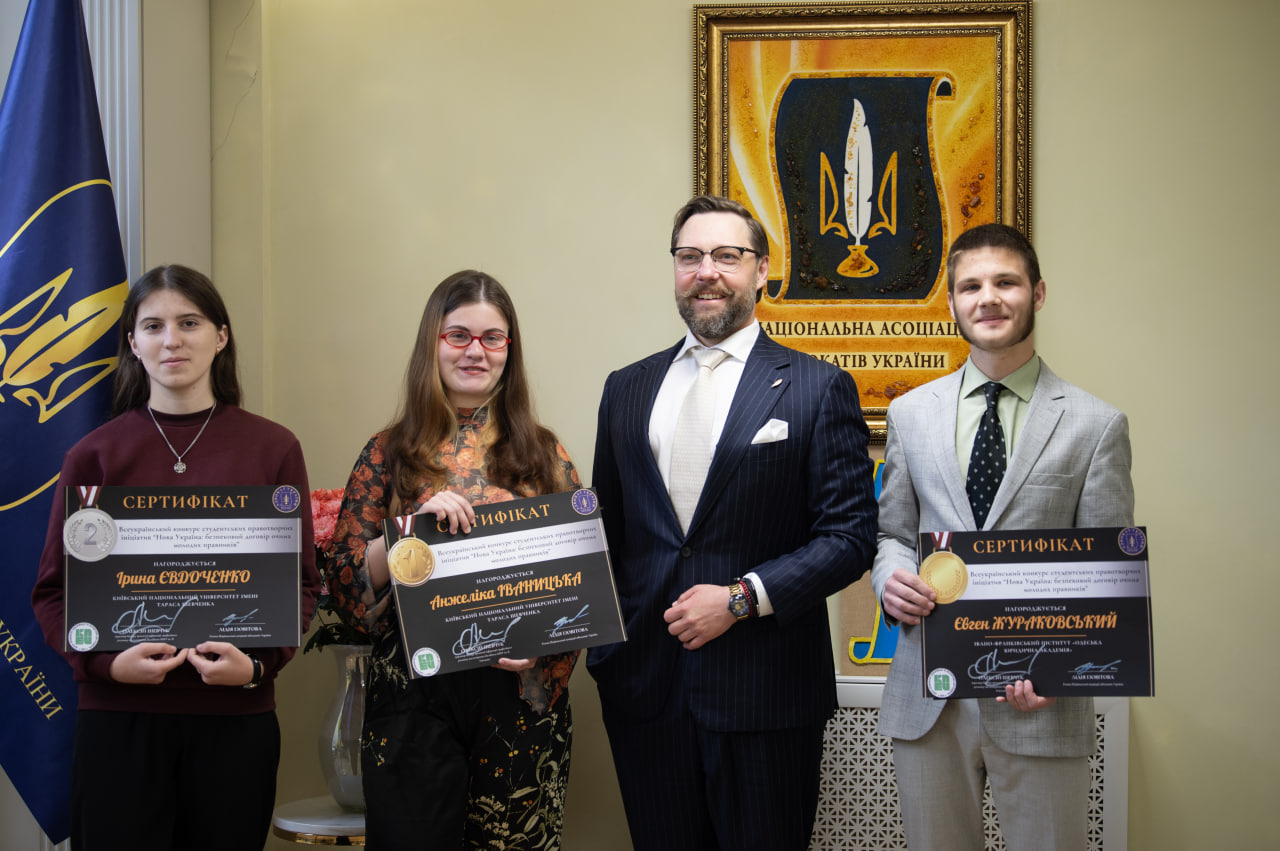
First place went to Anzhelika Ivanitska, a student at Taras Shevchenko National University of Kyiv. Her work was recognized for its high level of legal technique, structure, and doctrinal depth.
Second place went to Iryna Yevdchenko, a representative of the same university, for her innovative conceptual architecture, particularly the idea of a digital embassy and the 24/72 algorithm.
Third place was awarded to Anna Korniyash from the Yaroslav Mudryi National Law University.
A special prize from the organizers was awarded to Yevhen Zhurakovsky, a student at the Ivano-Frankivsk Institute “Odessa Law Academy,” for an original law-making idea, specifically the mechanism of an incomplete session and the approach to the succession of obligations.
The winners received cash prizes ranging from 50,000 to 200,000 UAH. The prize fund was provided by the law firms Barristers and DGRAVITY LEGAL.
The winners’ works will be presented in diplomatic circles, including to representatives of the Council of Europe, as well as to state institutions involved in issues of international responsibility for crimes committed by the Russian Federation against Ukraine.
During the ceremony, Oleksiy Shevchuk, head of the Legal Information Center at the V. Hetman KNEU, emphasized that this is the first time such an initiative has been held in Ukraine, and its participants have effectively become pioneers in a new format for engaging students in law-making work in the field of national security and international law.
“It is important that talented young people do not seek opportunities for professional development only abroad, but can realize their potential in Ukraine. That is why the organizers plan to make the competition an annual event,” he said.
Shevchuk also drew the students’ attention to the practical significance of participating in the competition. According to him, winning the all-Ukrainian competition on drafting a security treaty could become an important element of young lawyers’ professional portfolios and a first step toward working in international legal institutions.
The winners thanked the organizers for the opportunity to present their own ideas. In particular, A. Ivanitska noted that, while studying legislative activities and regulatory drafting, she had been looking for an opportunity to prove herself in precisely this format. Y. Zhurakovsky explained that while drafting the treaty, he sought to draw upon mechanisms of international law that existed even before World War II and to assess how they might function in contemporary conditions.
Concluding the ceremony, the organizers encouraged students not to stop at the competition entry, but to continue writing, speaking, participating in professional initiatives, and using such opportunities for further development in the legal profession.
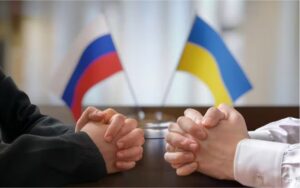
Ukrainian President Volodymyr Zelenskyy discussed with Azerbaijani President Ilham Aliyev efforts to end the war in Ukraine, as well as the possibility of holding the next round of Ukrainian-American-Russian talks in Azerbaijan.
“We also discussed peace efforts. It is very important for Ukraine that Russia finds the strength to end this unjust war. Of course, we highly value the role of our partners in mediating this process,” Zelenskyy said during a joint statement with Aliyev in the city of Gabala (Azerbaijan) on Saturday.
He emphasized that Ukraine is ready for trilateral talks. “We had such talks in Turkey; we had such talks with our American partners in Switzerland. Undoubtedly, we are ready for the upcoming talks in Azerbaijan if Russia is ready for diplomacy,” Zelenskyy added.
As reported, on February 26, following a meeting between the Ukrainian negotiating team led by Rustem Umerov and Davyd Arakhamia and U.S. President Donald Trump’s envoys Steven Witkoff and Jared Kushner, Ukrainian President Zelenskyy announced an increased readiness to hold the next trilateral meeting, likely in early March in Abu Dhabi (UAE). The last round of talks took place in Geneva (Switzerland), and the previous ones in Abu Dhabi.
On March 2, Zelenskyy clarified that the trilateral Ukraine-U.S.-Russia meeting was tentatively scheduled for March 5–6 in Abu Dhabi; however, due to hostilities, the Ukrainian side cannot confirm that the meeting will take place there, though no one has canceled it.
On March 5, a source close to the negotiating delegation told the Interfax-Ukraine news agency that the next meeting as part of the trilateral Ukraine-U.S.-Russia talks on ending the war in Ukraine has been postponed indefinitely for the time being.

The European Bank for Reconstruction and Development (EBRD) is considering providing a long-term loan of up to EUR50 million to Volyn West Wind-2 LLC and Volyn West Wind-3 LLC, majority-owned by VI.AN Holding, a member of the OKKO Group, to finance the construction and operation of a 189 MW wind farm in Ukraine.
According to the bank’s materials, the EBRD loan will be part of the project’s secured debt financing, involving the International Finance Corporation (IFC) and the Black Sea Trade and Development Bank (BSTDB).
The project will also receive guarantee support and grant funds for technical assistance from the European Union under the Ukraine Investment Framework through the HI-BAR program, which reduces risks for investors and helps attract funding to renewable energy and climate technology projects.
Against the backdrop of significant losses in power generation capacity due to the war, this investment is expected to help reduce the electricity deficit, support decarbonization, and strengthen the private sector’s role in the development of renewable energy.
According to the bank’s estimates, the new wind farm will generate approximately 467 GWh of electricity annually and reduce CO2 emissions by about 300,000 tons per year. The total cost of the project is estimated at EUR 262 million.
The project is currently in the development stage, with approval expected on May 28, 2026.
OKKO Group brings together more than 10 diverse businesses in the fields of manufacturing, trade, construction, insurance, services, and other sectors. The group’s flagship company is the Galnaftogaz concern, which operates one of the largest gas station networks in Ukraine under the “OKKO” brand, comprising about 400 gas stations.
The founder and ultimate beneficiary of the group is Vitaliy Antonov.
As reported, in April 2025, the EBRD, IFC, and CEB announced a EUR157 million loan to the Galnaftogaz Group for a 147 MW wind farm in the Volyn region.



