

According to Fixygen, PJSC “Donbass Clays” intends to hold its regular annual general meeting of shareholders on April 30, 2026. The notice of the meeting was posted on the issuer’s website on March 30; the meeting itself will be held in person at the company’s Kyiv office. The published notice includes on the agenda the executive body’s report on the results of financial and economic activities for 2025, reports from the supervisory board and the external auditor, approval of the 2025 results, profit distribution and loss coverage procedures, the amount of annual dividends, and preliminary consent to enter into significant transactions for a period of one year.
According to key indicators disclosed along with the meeting materials, in 2025 the company reported a net loss of UAH 216.793 million, compared to a net profit of UAH 247.477 million a year earlier. At the same time, assets increased to UAH 1.294 billion from UAH 1.132 billion, and cash and cash equivalents rose to UAH 651.893 million from UAH 139.077 million.
PJSC “Donbas Clays” was registered in 1995 and specializes in the extraction of sand, gravel, clay, and kaolin. The company’s registered address is the village of Dorozhnoe, Mertsalovo Station, Pokrovsky District, Donetsk Oblast; its director is Igor Tkach, and its authorized capital is UAH 526,900.
According to previously disclosed information, 99% of the company’s shares were owned by Watts Blake Bearne International Holdings B.V., a subsidiary of the British company Watts Blake Bearne.
According to Fixygen, PJSC “Ukrzernoimpex” will hold a general meeting of shareholders on April 24, 2026, at 11:00 a.m. in Kyiv at 16b Mitropolita Lipkivskoho Street. The main items on the agenda concern the company’s performance results, approval of financial statements, and other corporate decisions.
Ukrzernoimpex operates in the agricultural logistics sector and is involved in grain storage and distribution. The company was founded in 1994 and has a network of separate divisions in grain-producing regions, including the Cherkasy region. For such enterprises, export logistics, elevator capacity, and the state of the agricultural market are of key importance.

In early April, the investment company S1 REIT published the results of the audit of its operations for 2025. The audit was conducted by Crowe Erfolg Ukraine, a leading Ukrainian audit and consulting firm and an official member of the international Crowe Global network. This network consistently ranks among the top 10 largest audit networks in the world, providing the company with access to global standards and methodologies.
“The audit is part of the regulator’s requirements for funds that attract collective investments. Publishing the report is not only compliance with Ukrainian legislation but also a confirmation of our transparency and openness. The documents are available on the company’s official website,” noted S1 REIT’s Chief Financial Officer Vadym Pavlushyna.
The audit opinion confirmed that the 2025 financial statements, in all material respects, fairly present the financial position of the funds in accordance with International Financial Reporting Standards (IFRS). According to the audit results, S1 REIT demonstrated growth momentum and a high level of protection for investors’ capital.
The report notes the absence of external debt on the funds and confirms that growth is driven by equity and direct investments. This minimizes risks for investors during periods of economic volatility.
“We have demonstrated that each investment certificate is backed by real, legally sound, and profitable assets. Even amid the challenges of 2025, we maintained stability: the reports confirm that no events occurred that would have negatively impacted capital,” added Vadym Pavlushyna.
The full audit report for 2025 is published on the website, in the “About Us” section https://reit.s1.ua/ua/about. The documents contain financial information about AMC “REIT S1” and all active funds in the company’s portfolio.
The fund’s past performance is not a guarantee of future returns. Before investing, please review the terms and conditions and consult with a financial advisor.
About Us:
S1 REIT is Ukraine’s first operator of collective investments in income-generating real estate, offering the opportunity to become a co-owner of profitable properties with an entry threshold that is tens of times lower than the cost of a single residential or commercial unit. The company operates under the Real Estate Investment Trust (REIT) model, providing investors with the opportunity to participate in the ownership and receipt of income from income-generating properties without direct asset management.
Currently, two funds are available for investment: S1 VDNG and S1 Obolon. The assets of these funds consist of apartments in income-generating buildings developed by Standard One.

During field research in the Chornobyl Radiation-Ecological Biosphere Reserve, ornithologists recorded a Ring Ouzel (Turdus torquatus)—a species that had not been observed in the Kyiv region for nearly 50 years.
“During field research in the Chernobyl Reserve, the ring ouzel (Turdus torquatus) was recorded… Historical data indicate only two previous records of the species in the region: early April 1910 – E.V. Charleman observed a pair of birds in a flock of thrushes; March 24, 1976 – the outskirts of the village of Kozarovychi (observations by A.M. Poluda, A.D. Makarenko, A.I. Krokhmal),” according to a post on the reserve’s Facebook page.

It is noted that in Ukraine, the Ring Ouzel nests primarily in the Carpathian region. The detection of the species in the Kyiv region is likely related to migratory movements.
“Thus, this recorded case is an important addition to the data on the species’ spatial dynamics and confirms the need for further monitoring of the region’s avifauna,” the scientists noted.
The recent observation was made during joint research with representatives of Taras Shevchenko National University of Kyiv.
The observer, Andriy Simon, is grateful to Tim Mussot and the Samuel Freeman Charitable Trust for their ongoing support in conducting scientific research.
Photo: Andriy Simon.

In the fourth quarter of 2025, housing prices in the European Union rose by 5.5% year-on-year, and by 5.1% in the eurozone. Compared to the third quarter of 2025, growth stood at 0.8% for the EU and 0.6% for the eurozone. Eurostat released the latest data on April 7.
Among EU countries, an annual price decline was recorded only in Finland, at 3.1%. The highest growth rates were seen in Hungary, where housing prices rose by 21.2%, Portugal, by 18.9%, and Croatia, by 16.1%. On a quarterly basis, prices rose the most in Slovenia (5.1%), Hungary (4.2%), and Portugal (4.0%), while declines were observed in France, Finland, and Estonia.
New statistics confirm that the European housing market remains in a phase of sustained price appreciation following the 2023 correction. According to Eurostat, after negative trends in the second and third quarters of 2023, price growth in the EU resumed and by 2025 had once again settled above the 5% mark on an annual basis.
A broader analysis of Eurostat’s housing data shows that this is not a short-term spike but part of a long-term trend. By the end of 2024, housing prices in the EU were 53% higher than in 2010, while rents rose by 25% over the same period, and inflation stood at 39%. Separately, in its statistical review for Q4 2025, Eurostat notes that from 2015 to the end of 2025, housing prices in the EU rose by 64.9%, while rental rates increased by 21.8%.
For the market, this means that real estate in the EU is appreciating faster than both consumer prices and rents, and the main pressure is now shifting to countries in Central and Southern Europe, where growth rates are significantly higher than the European average. Against this backdrop, investors and developers are likely to continue focusing on markets with double-digit price growth, primarily in Hungary, Portugal, and Croatia.
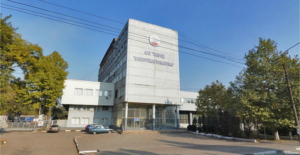
According to Fixygen, PJSC “Zaporozhavtomatika Plant” plans to hold a general meeting of shareholders on April 29, 2026. The company is registered in Zaporizhzhia and specializes in the production of instruments and equipment for measurement, research, and navigation. The company’s primary business activity is the production of instruments and equipment for measurement, research, and navigation. According to Opendatabot, the company’s authorized capital is 662,760 UAH, and its director is Serhiy Poplavka.
Ownership of the company is concentrated among its shareholders. Among shareholders with large stakes, Opendatabot lists Sergey Poplavka with a 43.5731% stake and Anna Poplavka with a 37.8525% stake. Anna Poplavka is listed as the ultimate beneficial owner.
The company’s latest available financial figures for 2025 are modest: revenue amounted to 2.626 million UAH, net loss was 1.293 million UAH, and total assets at year-end stood at 11.03 million UAH. Public registries also indicate that the company has tax debts and enforcement proceedings pending.



