

According to Fixygen, Poltavakholod JSC will hold its annual general meeting of shareholders on April 30, 2026, via remote participation. The agenda includes the approval of financial statements and results for 2025.
Poltavakholod JSC is one of Ukraine’s leading ice cream manufacturers; the company’s products are sold under the “Kashstan” brand and other trademarks. The company operates in the domestic market and partially for export.
According to the Opendatabot system, the company is registered in Poltava and operates in the production of ice cream and frozen products. The company’s financial indicators are disclosed only partially in the public section of the service. Poltavakholod is owned by private Ukrainian investors. Andriy Matyukha is listed as the ultimate beneficiary and exercises control over the company.
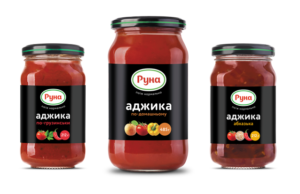
PJSC “Lutsk Foods” (Volyn Oblast), one of Ukraine’s largest producers of grocery products (under the “Runa” brand), reported a net profit of UAH 39.425 million for 2025, which is 22.1% higher than in 2024 (UAH 32.284 million), the company announced in the disclosure system of the National Securities and Stock Market Commission (NSSMC).
According to the draft resolution of the annual general meeting of shareholders, scheduled for April 30, 2026, to be held remotely, it is proposed that the profit earned remain undistributed. Shareholders adopted a similar resolution last year as well.
In addition, shareholders intend to elect a new composition of the supervisory board for a three-year term due to the expiration of the terms of the current board members—S. Valiev, O. Khodachuk, and M. Datsenko.
The agenda also includes granting approval for significant transactions with a maximum value of up to UAH 300 million each to attract investments for the modernization of facilities.
According to data from the OpenDataBot service, the company’s revenue in 2025 increased by 1.5% to UAH 840.7 million, compared to UAH 828.13 million a year earlier; assets increased by 3.4% to UAH 315.42 million, and debt obligations by 1.5% to UAH 120.11 million.
The company’s authorized capital is UAH 16 million. The ultimate beneficial owner of the company, through JSC “ZNVKIF ”Theseus” (99.49% stake), is Artem Khodachuk.
PJSC “Lutsk Foods” was founded in 1991. It produces sauces based on tomato paste, ketchup, adjika, mustard, and vinegar under the “Runa,” “Ridny Krai,” and “Sribnytsia” brands. The products are exported to markets in over 20 countries worldwide.
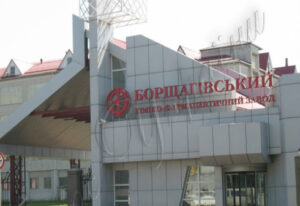
According to Fixygen, OJSC “Research and Production Center ‘Borshchahivsky Chemical and Pharmaceutical Plant’” will hold a general meeting of shareholders on April 30, 2026, via remote participation. The agenda includes the approval of the annual financial statements, profit distribution, and operating results for 2025.
Borshchagovsky Chemical and Pharmaceutical Plant is one of Ukraine’s largest pharmaceutical manufacturers and produces a wide range of medicines for the domestic market and export.
According to Opendatabot, Borshchagovsky Chemical and Pharmaceutical Plant increased its revenue by 7.8% in 2025 compared to 2024—to 2.241 billion UAH. It was previously reported that by the end of 2024, the company had increased its net profit by nearly 17% compared to 2023—to 273.4 million UAH.
Currently, BHFZ’s shareholders include PJSC “Pharmaceutical Firm ‘Darnitsa’” (Kyiv), which owns 31.8% of the shares, as well as “Beldor Group” (21.26%) and “Lenik Group” (20.32%).
The ultimate beneficiaries of the company are Gleb Zagoriy, Yevgeniy Sova, Tatyana Artemenko, Nikolay Bezpalko, and Oleg Goloborodko.
Borshchahivsky Chemical and Pharmaceutical Plant, shareholders' meeting
On April 2, the municipal enterprise Kyivpastrans announced its intention to enter into an agreement with Guardian Insurance Company for carrier liability insurance covering damage to the life and health of passengers, as well as damage to luggage during transport, on motor vehicles and urban electric vehicles.
According to the Prozorro electronic public procurement system, the estimated cost of the services was UAH 15.111 million, while the bid from the company—the sole participant in the tender—was UAH 14.429 million.
Insurance Company “Guardian” is a member of the Presidium of the League of Insurance Organizations of Ukraine. Since January 2020, it has held full membership status in the Motor Transport Insurance Bureau of Ukraine (MTIBU) and is authorized to issue “Green Card” policies.
According to the NBU, the company ranks 15th among Ukraine’s non-life insurers in terms of premiums collected in 2025.

Serbia will allocate EUR2 million to support Ukraine’s energy sector במסגרת a joint project with the United Nations Development Programme (UNDP), the Telegram channel “Serbian Economist” reported, citing official data.
According to the report, the Government of the Republic of Serbia and UNDP signed an agreement providing for the financing of the procurement and delivery of high-voltage transformers. These are critical pieces of equipment needed to restore electricity transmission systems and ensure stable power supply.
The funds will be provided under UNDP’s green energy recovery programme for Ukraine. The initiative is aimed at supporting basic services in the regions most affected by the war, including electricity, heating and water supply.
Serbian Ambassador to Ukraine Andon Sapundji said that Belgrade’s contribution is intended to support critical infrastructure and help ensure uninterrupted energy supply for the population.
In turn, UNDP Resident Representative in Ukraine Auke Lootsma stressed that Serbia’s assistance will contribute not only to the restoration of damaged facilities, but also to the modernization of Ukraine’s energy system.
According to international estimates, since 2022 Ukraine’s energy infrastructure has suffered extensive destruction. Total losses in the sector are estimated at $88.2 billion, of which about $17.1 billion relates specifically to the power sector, including generation and transmission.
The project is being implemented as part of cooperation between Ukraine and the United Nations in the field of sustainable development and is in line with the strategic goal of transitioning to a more resilient and modern energy system.

According to Fixygen, PJSC “European Insurance Alliance” will hold a shareholders’ meeting on April 30, 2026, via remote format. The agenda includes approval of financial statements, financial results, and decisions regarding current corporate governance.
The company operates in the Ukrainian insurance market and serves corporate and private clients. According to Opendatabot, the key beneficiaries are Ukrainian private shareholders.
The company is among the prominent players in the insurance sector.



