
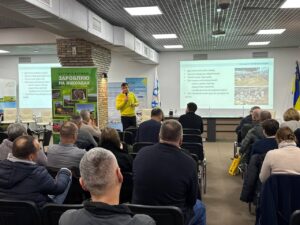
In the context of the war, Ukrainian dairy farms are facing an acute shortage of staff. Forced migration, mobilization of workers, and reduced opportunities for professional training have created serious challenges for the development of the industry.
This was stated during the XVII International Dairy Congress by Valery Lototsky, associate professor of the Department of Animal Reproductology at Bila Tserkva National Agrarian University, head and co-founder of the AVM Advisory Center and Veterinary Service Centers, and AgriAcademy expert.
The International Dairy Congress, organized by the Association of Milk Producers (AMP), is the most powerful event of the year in the dairy industry. This year, it brought together hundreds of leading industry representatives: producers, scientists, and businesspeople to exchange experiences and the latest achievements in the dairy business.
“Today, dairy farm managers are forced not only to maintain production, but also to invest in knowledge to compensate for staff shortages and adapt their work to European requirements for animal welfare and product safety,” the expert emphasized.
That is why, in November 2025, the educational platform AgriAcademy will launch a new certified online course, “Best Practices for Cattle Welfare and Responsible Use of Antibiotics to Prevent the Development of Antibiotic Resistance.”
Three key risk periods and how to control them
The author of the course, Valery Lototsky, notes that the training will help farm workers understand where mistakes are most often made when using antimicrobial drugs and how to avoid them.
The course covers three critical stages in cattle breeding:
“During the third module, participants will learn to identify critical points for the onset of mastitis, follow the milking protocol, select the right antibiotics, and develop their own treatment and prevention plan,” said Valery Lototsky.
AgriAcademy is a free platform that is changing agricultural education
AgriAcademy is a modern online platform for agribusiness, created in 2022 by the EBRD. It is a free online training platform for agricultural workers and students of agricultural education institutions, launched by the EBRD in December 2022 as part of a program to support food security in Ukraine. Its goal is to strengthen the competitiveness and sustainable development of agriculture, which has suffered significant losses due to the war.
Today, the platform offers 28 online courses – over 300 hours of practical training in agronomy, management, technology, processing, storage, and more. Each course includes a test of the students’ knowledge.
The creation and management of the platform (including course development, training tours, etc.) is supported and funded by the EBRD, as well as:
Today, the platform offers:
AgriAcademy is not just about learning. It is a response to the challenge facing the Ukrainian agricultural sector: how to preserve and develop human capital in times of war. Choose a course and grow with us!
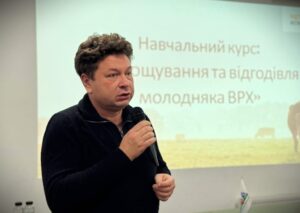
On October 27, a new course, “Rearing and Fattening Young Cattle,” by Yevgen Shatokhin, an international expert on animal husbandry at the Food and Agriculture Organization of the United Nations (FAO) and the EBRD, became available on the AgriAcademy platform. The course was announced on October 18 during the International Dairy Congress, writes SEEDS.
The course “Raising and Fattening Young Cattle” is designed for owners, managers, and employees of farms who want to develop cattle breeding and fattening or start a business in this segment.
“Today, Ukrainian farmers are looking for proven solutions that will help reduce risks, increase production efficiency, and achieve stable profitability. That is why we have prepared a course that brings together the practical experience gained over 25 years of work in animal husbandry,” said Yevgen Shatokhin.
Education that helps you earn money
The course “Raising and Fattening Young Cattle” is a new training program that will soon be available on the AgriAcademy.org platform, which brings together dozens of free practical courses for Ukrainian agribusiness.
AgriAcademy is a free online learning platform created on the initiative of the EBRD as part of its program to support food security in Ukraine. Its goal is to strengthen the competitiveness and sustainable development of agriculture, which has suffered significant losses due to the war.
The platform’s creation and management (including course development, training tours, etc.) is supported and funded by the EBRD, as well as:
The course covers key business organization issues:
“We wanted to create not a theoretical lecture, but a step-by-step guide that farmers can immediately apply in practice. All modules were filmed on real farms, demonstrating technological solutions that have already proven their effectiveness,” explains the course author.
Course structure
The program consists of six modules covering the entire production cycle:
After each video module, participants take a short test to reinforce what they have learned.
The total duration of the course is 4 hours.
Who can take the course
The course will be useful for:
The course is available free of charge on the AgriAcademy.org platform.
Upon completion, participants receive a certificate and access to other training programs, ranging from agricultural enterprise management to product processing and sustainable production.
AgriAcademy provides practical education that helps farmers develop their businesses and move forward.
Practical knowledge, modern technologies, and a systematic approach to livestock development
Today, the platform already offers more than 30 certified courses for managers and specialists of agricultural companies, farmers, veterinarians, agronomists, students, and teachers.
The main areas of the courses are:
By the end of 2026, AgriAcademy will launch 20 new courses that address the most pressing challenges facing agribusiness.
Studying with AgriAcademy is easy, interesting, and useful
Go to training and get a certificate at AgriAcademy.org
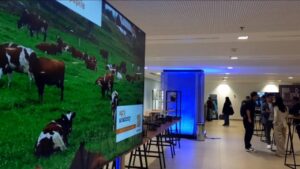
On October 22-23, 2025, Kyiv hosted the main event for Ukrainian agri-food business leaders — New Food Summit 2025, which traditionally brings together hundreds of innovators, producers, investors, and experts from across the entire “farm-to-table” chain. This year, the summit became a real platform for demonstrating breakthrough solutions in the field of food technology, where the key topic was the transformation of the agri-food industry through knowledge, innovation, and cooperation.

Education as a driver of progress: AgriAcademy among the summit participants
The educational platform AgriAcademy.org attracted particular attention. It is a free online learning platform created on the initiative of the EBRD as part of its food security support program in Ukraine. Its goal is to strengthen the competitiveness and sustainable development of agriculture, which has suffered significant losses due to the war.
The platform’s creation and management (including course development, training tours, etc.) is supported and funded by the EBRD, as well as:
Representatives of the platform took part in the event, talked to summit participants, presented training opportunities and new courses, and shared their vision of how education is becoming a key component of the development of the Ukrainian agricultural sector.
Videos of leading Ukrainian companies and organizations, including AgriAcademy, were shown on screens in the conference areas, which sparked lively interest among participants. Many specialists in the agricultural and food sectors learned about the platform for the first time, which already offers more than three dozen certified courses in Ukrainian, created in collaboration with universities, companies, and industry associations.
AgriAcademy – the platform of the future of agricultural education
The initiative aims to strengthen the competitiveness of Ukrainian agribusiness and provide access to practical knowledge and modern technologies for farmers, students, teachers, advisors, and managers of agricultural companies. The platform covers topics ranging from production and processing to sustainable development, climate adaptation, precision farming, and innovations in animal husbandry.
“Today, education is the best investment in the sustainability and recovery of the Ukrainian agricultural sector. Our task is to make knowledge accessible to everyone who produces food,” said AgriAcademy representatives during informal discussions at the summit.
Breakthrough products as a result of knowledge and innovation
The New Food Summit culminated in the presentation of the “Breakthrough Product of the Year” awards, which were given to the most innovative Ukrainian developments in the field of “food of the future.” This year, the jury recognized:
These examples show how the combination of technology, entrepreneurship, and education is shaping the new face of Ukrainian food.
The AgriAcademy online platform has already become a space that brings together producers, scientists, experts, and students around a common goal: to create sustainable, innovative, and competitive agricultural production. The platform’s participation in the New Food Summit confirmed its role as a catalyst for knowledge and partnership among all participants in the agri-food ecosystem.
Want to develop your agribusiness and get professional certified education for free?
Register for courses at AgriAcademy.org and learn from the best!
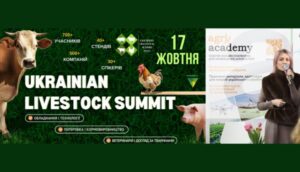
On October 17, 2025, ProAgro Group will hold the fourth Ukrainian Livestock Summit (Ukrainian Livestock Summit 2025) in Kyiv, a leading industry platform for discussing current trends and prospects for the development of livestock farming, poultry farming, livestock product processing, and feed production, writes SEEDS.
Among the speakers at the summit will be Oksana Yurchenko, coordinator of animal health and food safety projects at the FAO Investment Center and representative of the educational platform AgriAcademy, who will present an analytical report on “Livestock farming in Ukraine: trends, challenges, and prospects.”
Oksana Yurchenko will present an overview of key trends in the livestock industry, including issues of staff shortages, the transformation of agricultural professions, the sector’s adaptation to the requirements of European integration, and the role of modern informal education in training a new generation of agribusiness specialists.
“Today, the livestock industry is facing a number of serious challenges, one of the key ones being an acute shortage of qualified personnel. Companies are actively looking for specialists, but it is becoming increasingly difficult to find them, while a new generation of farmers with a completely different vision and approach to work is entering the market. That is why it is extremely important to integrate distance learning into the daily activities of farms, making it an integral part of the production process. AgriAcademy is an effective tool that will motivate employees and help improve their professional level,” emphasizes Oksana Yurchenko.
During the summit, a promotional video about AgriAcademy will also be shown, highlighting the opportunities offered by certified free online education for farmers. The platform currently offers more than 30 practical courses, created in collaboration with leading universities around the world, companies in the agricultural sector, and industry experts in Ukraine.
Oksana Yurchenko’s presentation is intended not only to assess the state of the livestock sector, but also to show how modern educational initiatives contribute to strengthening the human resources potential of Ukrainian agribusiness in the context of post-war recovery and European integration.
This is a free online learning platform created on the initiative of the EBRD as part of its food security support program in Ukraine. Its goal is to strengthen the competitiveness and sustainable development of agriculture, which has suffered significant losses due to the war.
The platform’s creation and management (including course development, training tours, etc.) is supported and funded by the EBRD, as well as:
AgriAcademy, ANALYTICS, livestock farming, market review, ProAgro Group, Ukrainian Livestock Summit 2025
AgriAcademy, an educational platform for agribusiness professionals, is now accepting registrations for a new course that will help agricultural producers gain up-to-date knowledge about legislative requirements, safe pesticide use, and innovative plant protection technologies, writes SEEDS.
The field of plant protection products is undergoing significant changes, including stricter legislation, safety requirements, new application technologies, and a shift to biological methods. In this environment, Ukrainian agricultural producers must be prepared to adapt to new rules and market expectations.
That is why AgriAcademy is offering a free new certified online course: “Regulation, Safety, and Innovation in the Use of Plant Protection Products” from national and international practitioners and experts.
What will course participants gain?
The approximate duration of the course is 5 hours. After completing the course, you will receive a certificate.
The course program features national and international experts:
Who is this course for?
For farmers, agronomists, consultants, equipment operators – anyone who works with pesticides and wants to reduce risks and increase efficiency.
This is a unique opportunity for Ukrainian farmers to gain knowledge that meets the requirements of the modern market and future regulatory standards. Participation in the course will help you avoid fines, increase the efficiency of your farm, and ensure safe working conditions.
Registration is open on the AgriAcademy website
AgriAcademy is a free online learning platform for agricultural workers and students of agricultural education institutions, launched by the EBRD in December 2022 as part of its food security support program in Ukraine. Its goal is to strengthen the competitiveness and sustainable development of agriculture, which has suffered significant losses due to the war.
Today, the platform offers 28 online courses – over 300 hours of practical training in agronomy, management, technology, processing, storage, and more. Each course includes knowledge testing and certification of participants.
The creation and management of the platform (including course development, training tours, etc.) is supported and funded by the EBRD, as well as:
All certified free courses are available here
AgriAcademy, a professional online education platform for Ukrainian agribusiness, has added two new free courses for farmers, created by experts from the Astarta-Kyiv agro-industrial holding. In June 2025, new training modules dedicated to the biological characteristics of corn and corn cultivation technologies became available on the AgriAcademy platform.
Course 1: “Corn. Biological characteristics of the crop”
The aim of the course is to provide farmers with a systematic understanding of:
Course 2: “Corn. Cultivation technology”
The aim of the course is to develop practical knowledge of agricultural technologies:
Both courses were developed by Pavlo Perkhalo, an experienced agronomist with over 10 years of practice at Astarta. Methodologist Svitlana Semenyuk and interactive materials designer Olga Veiler also contributed to the development of the courses.
Like all educational products on AgriAcademy, the new courses are free, available online at any time, and include a certificate upon successful completion.
As a reminder, the European Bank for Reconstruction and Development (EBRD) and Astarta-Kyiv agricultural holding signed a partnership agreement in 2024 to develop distance learning for Ukrainian farmers.
The partnership provides for the creation of 25 online courses on the cultivation, storage, and processing of field crops.
In addition to the new training modules, previously created courses are also available on the platform: “Sunflower. Biological characteristics” and “Sunflower. Cultivation technology”.
AgriAcademy – training for Ukrainian farmers that is changing the industry
AgriAcademy is a free online training platform for agricultural workers and students of agricultural educational institutions, launched by the EBRD in December 2022 as part of its food security support program in Ukraine.
Its goal is to strengthen the competitiveness and sustainable development of agriculture, which has suffered significant losses due to the war.
Today, the platform offers 25 online courses — 300 hours of practical training in agronomy, management, technology, processing, storage, and more. Each course includes a knowledge test and certification for participants.
The platform is created and managed (including course development, study tours, etc.) with the support and funding of the EBRD, as well as:
We invite farmers to register on the platform and take practical courses at the link: https://agriacademy.org/courses-catalog
Astarta-Kyiv is a vertically integrated agro-industrial holding in Ukraine, a public European company that conducts socially responsible business and produces food products for global markets.
The company was founded in 1993 by Viktor Ivanchyk, who remains its majority owner and CEO. Since 2006, Astarta’s shares have been listed on the Warsaw Stock Exchange.
Main activities:



