

According to Fixygen, the cryptocurrency market maintained a moderately positive sentiment last week, although growth slowed toward the end of the period. Bitcoin traded around $77,800 on Friday, while Ethereum traded around $2,310, according to market data as of April 24.
The market saw its strongest movement in the middle of the week. According to Reuters, on April 22, Bitcoin rose to $78,866, gaining 4.13% for the day, while Ethereum climbed to $2,398, up 3.48% on the day. This occurred amid an improvement in global risk appetite and a general rise in stock markets.
However, momentum weakened in the second half of the week. On April 23, Reuters noted a pullback in cryptocurrencies amid rising oil prices, tensions in the Middle East, and more cautious investor sentiment: at that time, Bitcoin fell to $77,682, and Ethereum to $2,316. By April 24, the market had stabilized, but without a new strong upward surge.
Institutional money remained the key support factor for Bitcoin this week. According to industry publications, the inflow of funds into spot Bitcoin ETFs continued, and Strategy purchased an additional 34,164 BTC for approximately $2.54 billion, marking its largest purchase since late 2024. This reinforced the perception of Bitcoin as an asset that continues to be actively bought up by major players, even following the March-April recovery.
Another positive signal for the sector was the continued push by traditional financial firms toward the crypto market. Reuters previously reported that Charles Schwab plans to launch spot cryptocurrency trading, which the market interprets as another step toward the further institutionalization of digital assets.
Ultimately, the week ended on a somewhat bullish note for the crypto market, though without a full-fledged breakout. Bitcoin managed to hold near $78,000 and remained close to the week’s local highs, while Ethereum showed less resilience and retreated from the $2,400 range by the end of the period. If the external backdrop does not deteriorate, the market may continue its attempts to rise, though dependence on geopolitics and investors’ overall risk appetite remains high.
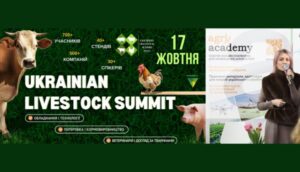
On October 17, 2025, ProAgro Group will hold the fourth Ukrainian Livestock Summit (Ukrainian Livestock Summit 2025) in Kyiv, a leading industry platform for discussing current trends and prospects for the development of livestock farming, poultry farming, livestock product processing, and feed production, writes SEEDS.
Among the speakers at the summit will be Oksana Yurchenko, coordinator of animal health and food safety projects at the FAO Investment Center and representative of the educational platform AgriAcademy, who will present an analytical report on “Livestock farming in Ukraine: trends, challenges, and prospects.”
Oksana Yurchenko will present an overview of key trends in the livestock industry, including issues of staff shortages, the transformation of agricultural professions, the sector’s adaptation to the requirements of European integration, and the role of modern informal education in training a new generation of agribusiness specialists.
“Today, the livestock industry is facing a number of serious challenges, one of the key ones being an acute shortage of qualified personnel. Companies are actively looking for specialists, but it is becoming increasingly difficult to find them, while a new generation of farmers with a completely different vision and approach to work is entering the market. That is why it is extremely important to integrate distance learning into the daily activities of farms, making it an integral part of the production process. AgriAcademy is an effective tool that will motivate employees and help improve their professional level,” emphasizes Oksana Yurchenko.
During the summit, a promotional video about AgriAcademy will also be shown, highlighting the opportunities offered by certified free online education for farmers. The platform currently offers more than 30 practical courses, created in collaboration with leading universities around the world, companies in the agricultural sector, and industry experts in Ukraine.
Oksana Yurchenko’s presentation is intended not only to assess the state of the livestock sector, but also to show how modern educational initiatives contribute to strengthening the human resources potential of Ukrainian agribusiness in the context of post-war recovery and European integration.
This is a free online learning platform created on the initiative of the EBRD as part of its food security support program in Ukraine. Its goal is to strengthen the competitiveness and sustainable development of agriculture, which has suffered significant losses due to the war.
The platform’s creation and management (including course development, training tours, etc.) is supported and funded by the EBRD, as well as:
AgriAcademy, ANALYTICS, livestock farming, market review, ProAgro Group, Ukrainian Livestock Summit 2025



