

International support, the development of vocational education, and the rapid implementation of practice-oriented educational solutions are critically important for maintaining the competitiveness of Ukraine’s agricultural sector, which, despite the war, remains a key source of foreign exchange earnings and one of the drivers of the economy, stated participants at the press conference “International Partnership for the Development of Education in Ukraine’s Agricultural Sector.”
During the discussion, speakers emphasized that the agricultural sector is increasingly facing a shortage of personnel, the need for staff retraining, adaptation to new EU standards, and demand for modern digital knowledge—from post-harvest grain processing to artificial intelligence technologies in agricultural production.
Maksym Urakin, founder of the Experts Club information and analytical center and deputy director of the Interfax-Ukraine agency, emphasized that under current conditions, the development of education in the agricultural sector is directly linked to issues of the country’s economic stability.
“Today, Ukraine’s economy depends to a significant extent on assistance from international partners, and this must be stated plainly. But Ukraine cannot build its future solely on external support, so we need industries that generate foreign exchange revenue, sustain employment, and form the tax base, and the agricultural sector remains precisely such a sector,” he emphasized at a press conference at the Interfax-Ukraine agency on Tuesday.

According to Urakin, one example of such a practical partnership is the launch of the online course “Application of Artificial Intelligence Technologies in Agricultural Production,” implemented by Experts Club in collaboration with AgriAcademy at the initiative of the EBRD as part of food security support programs. He emphasized that solutions allowing Ukrainian farmers not just to talk about innovation but to translate it into concrete business tools are particularly important.
“The goal of this course is to shift the conversation about artificial intelligence from the level of abstractions to the level of concrete business solutions. Today, Ukraine needs a new system for training farmers—one that is more technologically advanced, systematic, and combines international best practices, business expertise, and applied tasks,” noted Urakin.
In turn, Oksana Yurchenko, project coordinator at the FAO Investment Center in Ukraine, emphasized that the labor shortage in the agricultural sector is a chronic problem that has not disappeared either after the pandemic or amid a full-scale war, and therefore, accessible remote learning formats are becoming one of the few realistic ways to quickly improve workers’ qualifications.
“The shortage of skilled workers in the agricultural sector has been, is, and will continue to be one of the key challenges. It is often difficult for farm workers to attend in-person training due to their schedules and the remote locations of their farms, so the industry needs accessible, practical, and flexible training that can be completed without taking time off from work,” she noted.

Yurchenko noted that the AgriAcademy platform was created in response to a request from major agribusinesses and international partners for systematic training for the sector amid the war. According to her, the platform already hosts over 40 courses, which are developed in collaboration with businesses, Ukrainian and international experts, and adapted to the sector’s current needs. Particular emphasis is placed not only on crop production but also on livestock farming, where requirements for biosecurity, animal health, welfare, and compliance with European standards have risen sharply.
“If we look at the number of diplomas and certificates issued by the AgriAcademy platform, we’re already talking about over 3,500 documents. At the same time, the number of registered students who are still taking courses or plan to complete their studies is approximately three times higher, which indicates a steady growth in interest in the platform,” Yurchenko reported.
She also noted that as of January 1, 2026, mandatory animal welfare requirements will apply to all agricultural enterprises that keep animals, and therefore the demand for specialized training will only increase. According to the expert, the courses on the platform are not yet legally mandatory, but they are effectively becoming an important practical tool for the correct interpretation and implementation of new regulations at enterprises.
Rodion Rybchynskyi, Director of the “Flour Millers of Ukraine” Association and a grain sector expert at the UN FAO, noted that the staffing problem affects not only agricultural production but the entire agri-food sector, including processing and the food industry, where automation of many processes cannot yet replace human labor.
“The labor shortage in the food industry is even more acute today than in agricultural production itself. Unmanned combines or tractors can already be used in the fields, but no one has figured out how to produce bread, grains, pasta, or other food products without people, so the issue of staff quality and knowledge is the number one challenge here,” he added.
Rybchynskyi emphasized that in the context of European integration, food industry enterprises must not only seek out employees but also quickly upgrade their qualifications in accordance with new regulations, technological requirements, and quality standards. That is why, he said, educational platforms such as AgriAcademy must develop in parallel with formal education.

The expert also noted that a course on post-harvest processing and grain storage is already available on the platform, and a course on processing grain crops is expected to be released soon. At the same time, as the expert emphasized, the main goal of such programs is to provide specialists with a solid foundation, without which innovation is impossible.
Maksym Hopka, head of the “AgroKebeti PRO: Grains and Oilseeds” project at the UCAB association, stated that retraining, short applied programs, and training with a practical component are currently among the most effective tools for addressing the labor shortage in the agricultural sector.

“Today, the agricultural sector in Ukraine is facing a serious labor shortage, so rapid, practice-oriented educational solutions are becoming crucial. Our approach is not just about training, but about developing a new quality of human capital for the agricultural sector by combining theory, practice, and direct interaction with businesses,” he noted.
According to Hopka, nearly 984 people registered for training under one of the programs, and 552 have already completed it. Some participants also completed the practical component, after which some graduates found employment or continued working in a related field within the industry. He noted that special attention in such programs was given to internally displaced persons, youth, people with disabilities, and war veterans.
Gopka also emphasized that it is important not only to create new educational products but also to ensure their close connection with higher education institutions. He reported that, as part of educational projects, more than seven memorandums have already been signed with leading agricultural universities, and certain programs are being implemented as supplements to master’s degree courses with the involvement of business representatives and foreign educational partners.
Serhiy Shylko, founder of TATFooD and a recruitment media agency, commenting on the situation in the labor market, noted that for employers in the current conditions, the main challenge is not simply finding a specialist, but the ability to retain an employee by offering them stability, clear working conditions, and opportunities for professional development.

“Today, success in the agri-food business is determined not by the search for the perfect specialist, but by the ability to become an integral part of a person’s life, providing them with stability and a sense of purpose. A production technologist must now serve as both a mentor to line staff and a process manager, so training platforms should help adapt specialists to new working conditions,” he said.
Shilko also emphasized the importance of the concept of lifelong learning and noted that the market already needs programs that employees can complete alongside their work, without a prolonged interruption in the production cycle. In his view, public and private initiatives in this area should not duplicate one another but rather address different segments of demand—from blue-collar professions to modern digital competencies, which are currently lacking even in formal retraining programs.
During the discussion, the speakers also focused on the state of academic education. They noted that the traditional system of workforce training in many cases is no longer keeping pace with the pace of change in the industry, particularly due to a weak material base, low teacher salaries, and a lack of sufficient resources for laboratories and modern equipment. At the same time, as the participants noted, it is precisely the alliance of business, universities, and professional associations that can become the model capable of producing tangible results.
Rodion Rybchynskyi cited examples of involving faculty from specialized Ukrainian universities in developing and teaching courses, as well as business collaboration with universities in creating modern laboratories, particularly at specialized higher education institutions. Participants in the press conference agreed that without such a partnership, a full-scale renewal of the workforce for the agricultural sector would be impossible.
A separate topic was the issue of potentially bringing foreign workers to Ukraine amid a labor shortage. Representatives of the processing sector noted that there is already some demand for such workers, but in practice, it often runs into obstacles due to immigration laws and organizational challenges. At the same time, according to Oksana Yurchenko’s assessment, while such a scenario is partially feasible for processing and certain production sectors, it is unlikely to become widespread in the livestock segment.
Overall, the participants of the press conference concluded that, given the war, demographic pressures, and tougher competition in foreign markets, the agricultural sector can no longer rely solely on traditional approaches to workforce training. In their view, international partnerships, digital educational platforms, short practical programs, business involvement in training, and the modernization of academic education should form the basis of a new workforce model for Ukrainian agribusiness.
AGRO, EXPERTS, EXPERTS CLUB, FAO, Flour Mills of Ukraine, GRAIN, MAXIM GOPKA, MAXIM URAKIN, RECRUITING, RODION RYBCHINSKY; AGROKEBETI PRO, SERGEY SHILKO, TATFOOD, ОКСАНА ЮРЧЕНКО

More than 8 thousand agricultural companies have been opened in Ukraine since 2021, according to the Unified State Register. The peak occurred a year before the full-scale invasion, when 2678 agribusinesses opened in a year. At the same time, another 3.4 thousand companies ceased operations from 2021 to 2025. Most often, agribusinesses are started in Odesa, Kyiv, and Lviv regions. More than 346 companies relocated to the western regions during this time.
8,644 agricultural companies have been registered in Ukraine since 2021. The most active year was 2021, when 2,678 companies were registered. With the start of the full-scale invasion, the number of registrations dropped to 1,558. However, in 2023, the agricultural sector revived: 1,697 new companies were registered in a year. 869 new agricultural enterprises have already been registered this year.
At the same time, 3,416 agricultural enterprises closed in Ukraine from 2021 to 2025. The largest number of closures occurred in 2021 (1,070 companies) and in 2024 (685). This year, 536 agricultural companies decided to cease their operations.
The largest number of new agricultural companies was recorded in Odesa region – 612. This is followed by Kyiv (600), Lviv region (597), Vinnytsia (591), and Dnipropetrovs’k region (535). The lowest number is in the frontline Luhansk region (40), Donetsk (101), and Zaporizhzhia (147). However, agrarians in Chernivtsi (120) and Zakarpattia (171) regions are not very active in opening their businesses.
Most agricultural companies closed in Odesa region – 606. There are also a lot of closures in Dnipropetrovska (225), Khmelnytska (201), Kyivska (199), and Mykolaivska (191) regions. The lowest number of closures was in Luhansk (21), Donetsk (49), Ivano-Frankivsk (49), and Kyiv (55).
1738 agricultural companies relocated to other regions during this period. Of these, 346 agribusinesses moved to the western regions of Ukraine over the past 5 years. Almost half of the relocators who decided to move to the west chose Lviv region as a new business location – 166 companies. Rivne region (54 companies), Volyn (39), Khmelnytsky (30), and Zakarpattia (19) are also in demand among businesses that change their residence.
Some agricultural companies that have opened during this time are steadily increasing their fortunes.
● Farmzaat Ukraine – in 2024, the company’s revenue grew 3.3 times and reached UAH 770 million
Niva-Plus – last year the company earned UAH 530 million, which is one and a half times more than in 2023.
● Agropromtekhnika – revenue grew 2.7 times year-on-year to UAH 392 million
Krasnopavlivskyi CPP – UAH 308 million, up 1.3 times compared to 2023
● Malynivska Agrofirm – the company’s revenue grew 2.8 times over the year to UAH 299 million
https://opendatabot.ua/analytics/agro-in-war


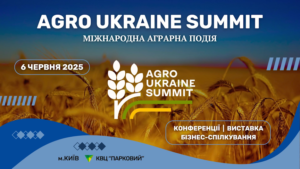
On June 6, 2025, Agro Ukraine Summit will take place, a major international agricultural event that will bring together all key stakeholders in Ukraine’s agricultural and food sectors.
The summit aims to identify current challenges and opportunities for the development of the agricultural sector, discuss ways of integration into the EU, and formulate a vision of Ukraine’s agri-food future.
Venue: 16a Parkova Road, Kyiv, CEC “Parkovy”
For whom the event is intended: crop and livestock producers, elevators, agro-processors, logisticians, traders and all companies providing equipment, technologies and services to the relevant industries.
Number of participants: 2500+
The Summit will include:
6 conferences:
– “Agro Ukraine Summit” conference
– Conference “AgriTech Conference”
– Conference “Futurology or the future of grain storage”
– Conference “Effective livestock and poultry farming”
– Conference “Processing trends in crop production”
– Conference “Solar Agro Conference”
Presentations by industry experts with cases of effective agribusiness, government officials and experts;
Exhibition of technological solutions and equipment from leading manufacturers (100+ stands);
Live music, lounge area;
Coffee breaks, receptions.
For more information, please visit the official website: https://agro-ukraine-summit.com
For partnership and participation in the exhibition, please contact the organizers:
+38 096 899 4272 | +38 067 243 3803 | proagro-inform@ukr.net
Interfax-Ukraine is the official media partner of the event.
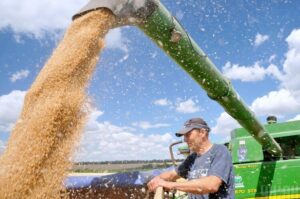
Hungarian Minister of Agriculture Istvan Nagy is not satisfied with the work of European solidarity corridors and believes that the expansion of the traditional maritime transport route, which now takes only 12% of Ukrainian agricultural products, will help to reduce the pressure on domestic markets of the EU.
“The current solidarity routes are not fulfilling their role, as the products remain in Ukraine’s neighboring countries. We used to have 40-50 thousand tons of grain, now we have 2.5 million tons. The purpose is to expand the traditional sea transport route, by which now only 12% of Ukrainian products leave. This will reduce the load on the land route and reduce the pressure on EU domestic markets,” the Hungarian Ministry of Agriculture quoted him as saying at a press conference with his Polish counterpart Robert Telusz in Warsaw on Thursday.
Nagy said he had asked his Polish counterpart for a mandate to negotiate with the Turkish side to open new sea routes for grain exports in addition to the existing three Black Sea ports.
He called it important to maintain and expand cooperation among the five EU member states. “We are determined to continue to cooperate (…) to find a common European solution to this problem; it is an important humanitarian and solidarity goal,” the Hungarian minister stressed.
Nagy praised the joint actions of the five EU member states – Bulgaria, Romania and Slovakia, as well as Poland and Hungary – in suspending imports of Ukrainian grain. Thanks to the joint implementation of the will “today we can protect our borders and farmers as a result of measures of the European Union, not national measures,” he said, and expressed regret that the restrictive measures are valid only until September 15.
Hungarian and Polish ministers stated that the restriction period until Sept. 15 was too short. “For example, the corn harvest will still be going on, so we definitely need to push for the extension (of restrictive measures – IF),” Nagy said.
Polish Minister of Agriculture Robert Telusz called important the Hungarian initiative to expand the Black Sea Route, which he said Warsaw would support. At the same time, he stressed the need for the development of land transport routes.
Telusz praised the merits of the Hungarian side in the creation of the five-member coalition on the grain issue. He noted that without the actions of this association the European Commission “would not have seen the problem at all”.
The Polish minister also stressed the importance of maintaining this alliance. “Together we can fight not only for issues important to our countries, but also for the future of Europe,” he said.
According to him, after the war is over, the process of Ukraine’s integration into the European Union can continue, and with it, “the issue of Ukrainian products will come up again.” “If today we do not make the European Commission develop real tools to solve this problem, the problem will have unpleasant consequences,” Telusz said.
He also said that he agreed with his Hungarian colleague to organize a meeting with Ukrainian Minister of Agrarian Policy and Food Nicholas Solsky to find common solutions to solve the problem of grain imports.

The concentration of land in one hand by leasing land plots from their owners over the years of independence has led to the degradation of the Ukrainian agricultural industry, this problem can be solved by legally operating associations of landowners, consolidating in matters of growing and selling crops, head of the Ukrainian Association of Land Owners Roman Holovin said.

At a press conference at the Interfax-Ukraine agency on Thursday, he noted that the main problem of land lease relations in Ukraine is the concentration of land in one hand. Thus, 10% of the country’s agricultural land is concentrated in the ten largest Ukrainian tenants.
In addition, the user of the land, who is not its owner, is not interested in investing in the land asset, as well as in the further processing of agricultural products and the development of animal husbandry, the expert explains.
Holovin specified that the launch of the land market in 2021 did not change the situation for the better for the land owner, but continued the concentration of land in the hands of tenants. With its appearance, the rent for agricultural plots did not increase, the owner of the land did not receive the right to dispose of the land without the permission of the tenant, and the lease agreement is almost impossible to terminate. According to the expert, due to lack of prospects and intimidation by tenants, land owners are increasingly deciding to sell land for next to nothing.
“Ukraine found itself in a situation of a dead end in the implementation of land relations, which led to the decline of the agricultural sector, gave rise to socio-economic and socio-political contradictions and conflicts. Such land relations do not exist in any civilized country,” the head of the union emphasized during the press conference.
Holovin noted that associations of land owners are capable of resolving this issue, which consolidate joint efforts to sell their crops at the highest possible price, resolve the issues of production services and hiring subcontractors, accounting and tax administration. Such public independent management of land through participation in the community of land owners created by Holovin makes it possible to receive profit from the use of land by its owner 2-2.5 times more than non-public (shadow) agriculture, or management through the registration of the land owner as a private entrepreneur.
The community of land owners is a legal entity created by uniting land owners to consolidate the use of land plots in independent agricultural activities, at the same time socially significant for its participants, the society and the state as a whole. The organization is a single taxpayer of the fourth group and a value added tax payer, which implies a special taxation regime for the community and the owner of the land entering it.
“The community does not pay income tax, which means that the owner of the land does not pay it either. The land owner participating in the community does not pay the minimum tax liability (UAH 1,500-2,000 per ha of land), land tax (UAH 300-600 per ha), personal income tax (UAH 2,000-8,000 per ha of land) in the form of a tax liability and does not pay social security tax (22% of income received),” the expert specified.
At the same time, he clarified that community members have the opportunity to sell their crops at market value with VAT refunds, while individual farmers who grow agricultural products without state registration are forced to sell them 40-50% cheaper due to the lack of documents confirming their ownership of the crop.
Also, the community has the right to VAT refunds on the purchase of goods and services, pays a single tax in the amount of 0.95% of the normative monetary value of the cultivated land. In addition, it maintains personal accounting records for each participant, which means accounting for personal expenses and personal profits.
According to Holovin, the above tax and administrative preferences allow a land owner who independently cultivates land through participation in the community to have a significant advantage over illegal land owners and landlords. This way of managing allows him to receive an average of UAH 12,000-20,000 of profit per hectare of land.
According to his calculations, with a crop value of UAH 28,000/ha, the land owner can receive UAH 8,000-12,000 per hectare by optimizing taxation and accounting, and with a crop value of UAH 42,000/ha, he will earn UAH 14,000-22,000/ha.
“In the system of self-management, the income of millions of land owners is significantly increased, control of the agricultural sector and its centralized support are ensured, and most importantly, the country’s food security is guaranteed,” he summed up.

Virtual reality: to what extent does technology affect the success of a grower?
Date December 2, 2021 (Thursday)
Time 14:00
Link
Technology has changed dramatically over the last twenty years. Thanks to its rapid development, we explore, interact, buy and live differently. Agriculture is no exception. Growers can no longer work without satellites, drones and artificial intelligence. Technologies that help to collect data are becoming very important. However, perception of modern agriculture can be quite different – from a small farmer in a cab of old tractor to highly mechanized operations full of tractors and thousands of hectares. Sometimes it may seem that only high-tech farms use digital technology. But this is not quite true. Similar to how everyone on the planet uses smartphones, growers protect their crops with digital technology. But can digitalization really transform agriculture? Can a farmer grow more using less?
This is what we will discuss on December 2 during the panel discussion “Transformation of Agriculture through Digital Technology”:
These and other important topics our participants will be discussing during the panel discussion:
Moderator: Oleg Nivievskyi, Assistant Professor/Center for Food and Land Use Research at Kyiv School of Economics
Partner: Bayer.



