
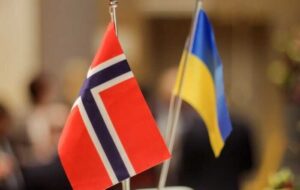
The Norwegian government will propose to the Storting (parliament) to extend emergency aid to Ukraine in the amount of 85 billion Norwegian kroner (approximately $9.1 billion) into 2027 as well, the government’s press service reported.
“Norway will continue to support Ukraine’s defense efforts. Ukraine is facing a difficult winter. We are now sending a clear signal that Norway will continue to support Ukraine, both through civilian and military aid,” said Prime Minister Jonas Gar Støre.
As noted, the government’s proposal was conveyed to Ukrainian President Volodymyr Zelenskyy during a meeting between Stere and Zelenskyy in Kyiv on Sunday.
The Norwegian prime minister noted that supporting and rebuilding Ukraine is also important for European security. Norwegian support is provided through the Nansen Program for Ukraine and is directed toward both civilian and military purposes.
“The bulk of the funds will go toward military support, specifically purchases from the Ukrainian defense industry. The government will revisit the distinction between military and civilian services at a later date,” the press release states.
The Nansen Program for Ukraine is Norway’s long-term government program to support Ukraine, launched in February 2023 with broad cross-party support from the Norwegian parliament—the Storting. It initially allocated 75 billion NOK for 2023–2027, but the program was subsequently expanded and extended through 2030.
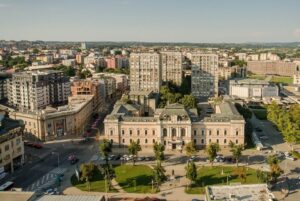
According to Serbian Economist, the Serbian city of Kragujevac organized a summer camp for 19 children from Zaporizhzhia, aged 13–16, who stayed at a children’s health resort in the city of Kopanik from August 1 to 10.
A sports, recreational, and cultural program was prepared for the Ukrainian children. They took part in walks and group activities, learned about Serbian traditions, and studied elements of Serbian folk dances alongside choreographers from the “Abrasevic” Center for Traditional Culture in Kragujevac.
The trip was part of a humanitarian initiative to organize recreational stays in Serbia for children from Ukrainian regions affected by the war.
Kragujevac is located in central Serbia and is one of the country’s largest industrial and university centers. Thanks to its location in central Serbia, the city has convenient connections to Belgrade, Kopaonik, and other tourist and business centers in the country.
https://t.me/relocationrs/3464
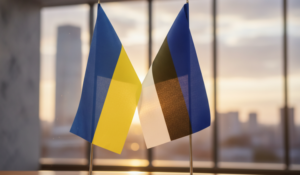
The Estonian Ministry of Foreign Affairs announced the allocation of EUR340,000 to help Ukrainians living near the front lines cope with damage to energy infrastructure caused by Russia’s ongoing attacks.
As the Ministry of Foreign Affairs emphasized, Estonia’s aid will help families heat their homes and prepare their livestock for winter, improve the thermal insulation of shelters for internally displaced persons, and purchase mobile emergency response centers for Ukrainian rescue workers. The aid will be delivered through the Ministry of Foreign Affairs’ long-standing humanitarian partners: the non-governmental organization Mondo, the Estonian Refugee Council, and the Estonian Rescue Association.
“Putin still hopes that attacks, cold, and darkness will break the Ukrainians’ resistance. We will not let that happen. As a result of Russia’s ongoing aggression, Ukrainians are facing yet another harsh wartime winter. With the onset of cold weather, people across the country will have to contend with power and heating outages and worry about how to keep their homes warm,” emphasized Foreign Minister Margus Tsahkna.
“The situation is particularly difficult near the front lines, where the need for assistance is greatest due to the fighting. As Estonians, we know very well what a cold winter means. That is why we are directing our aid first and foremost to where it is needed most—to families trying to cope in their own homes, to people forced to flee their homes because of the war, and to rescue workers who come to the aid of others even in the most difficult circumstances,” added Tsahkna.
Estonia is providing the non-governmental organization Mondo with 160,000 euros to help shelters for internally displaced persons near the front lines in the Sumy, Dnipropetrovsk, and Kharkiv regions prepare for winter. Thirteen shelters will be supplied with heating equipment and materials, and two of them will also undergo repairs and improvements to their thermal insulation. Thanks to Estonia’s support, approximately 860 internally displaced persons—primarily the elderly, people with disabilities, women, and children—will have warm housing this winter.
The Estonian Refugee Council will receive EUR160,000 to support families living near the front lines in the Kharkiv, Dnipropetrovsk, and Zaporizhzhia regions. The funding will help families heat their homes and cover the costs of maintaining livestock throughout the winter, as livestock farming is an important source of livelihood for many. The project is co-financed by the European Commission’s Directorate-General for Civil Protection and Humanitarian Aid (DG ECHO).
The Estonian Rescue Association will receive EUR 20,000 to purchase equipment for two mobile emergency aid stations for rescuers from the State Emergency Service of Ukraine (SES). The mobile emergency aid stations will provide people in crisis zones with a place where they can warm up, access electricity, and, if necessary, receive psychological support.
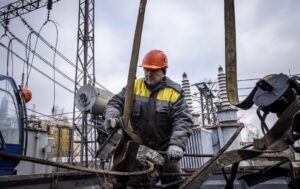
The European Union has transferred an additional 30 million euros to the Ukraine Energy Support Fund, thereby increasing its total contribution to the fund to 279 million euros, according to Ukraine’s First Deputy Prime Minister and Minister of Energy Denys Shmyhal.
“The funds received through this financial instrument are helping us restore energy infrastructure damaged by Russian attacks, purchase urgently needed equipment for our energy companies, and ensure a reliable energy supply, first and foremost for critical infrastructure,” – Shmyhal was quoted as saying by the Ministry of Energy’s press service on its Telegram channel on Saturday.

According to The Serbian Economist, Serbia has provided Ukraine with humanitarian aid totaling approximately 63 million euros since the start of the full-scale war, said Andon Sapundži, Serbia’s ambassador to Ukraine.
About 10 million euros of this amount was allocated to support Ukraine’s energy sector and restore damaged infrastructure.
Serbia also announced an additional contribution of 2 million euros as part of the UNDP’s “Green Energy for Ukraine” program.
The funds are planned to be used to install transformer equipment with a total capacity of 63 MW to meet the needs of Kryvyi Rih. The equipment is expected to be commissioned in early 2027.
According to the ambassador, Serbian companies are already exploring opportunities to participate in Ukrainian reconstruction projects. Areas of particular interest include energy, construction, the production of building materials, transportation infrastructure, and industrial cooperation.
He emphasized that Ukraine’s reconstruction should not be postponed until the end of the war, as some energy and infrastructure needs must be addressed immediately.
Serbian business participation in major projects is currently in the stage of assessing opportunities and seeking specific partnerships.
https://t.me/relocationrs/3406
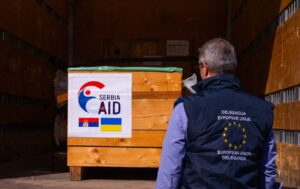
According to “Serbian Economist”, Serbia has provided Ukraine with humanitarian aid totaling approximately 63 million euros since the start of the full-scale war, said Andon Sapundži, Serbia’s ambassador to Ukraine.
About 10 million euros of this amount was allocated to support Ukraine’s energy sector and restore damaged infrastructure.
Serbia also announced an additional contribution of 2 million euros as part of the UNDP’s “Green Energy for Ukraine” program.
The funds are planned to be used to install transformer equipment with a total capacity of 63 MW to meet the needs of Kryvyi Rih. The equipment is expected to be commissioned in early 2027.
According to the ambassador, Serbian companies are already exploring opportunities to participate in Ukrainian reconstruction projects. Areas of particular interest include the energy sector, construction, the production of building materials, transportation infrastructure, and industrial cooperation.
He emphasized that Ukraine’s reconstruction should not be postponed until the end of the war, as some energy and infrastructure needs must be addressed immediately.
Serbian business participation in large-scale projects is currently in the stage of assessing opportunities and identifying specific partnerships.



