
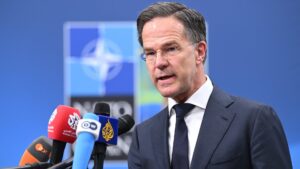
The United Kingdom and France blocked a proposal for NATO member states to allocate 0.25% of their GDP to military aid for Ukraine, according to The Telegraph.
Earlier this week, NATO Secretary General Mark Rutte acknowledged that his plan would not be implemented because it had not received sufficient support.
“I don’t think this proposal will be put to a vote,” he told reporters, without naming the opponents.
According to The Telegraph, the idea was blocked by the United Kingdom, France, Spain, Italy, and Canada.
Rutte had hoped to secure approval for this proposal at the upcoming annual NATO summit in Ankara, Turkey.
This week, ministers began discussing what, in the opinion of the alliance’s civilian chief, should become a concrete manifestation of support for the war-torn country.
“An alliance insider reported that at least seven member states, which spend more than 0.25% of their GDP on military aid to Ukraine, have expressed their support. However, any proposals adopted by NATO require unanimous support from all member capitals,” the report states.
According to publicly available data compiled by the Kiel Institute, the Netherlands, Poland, as well as the Nordic and Baltic countries, provide aid at a level of 0.25% of GDP or higher. The size of the UK’s military contribution—the third largest after the US and Germany—is also uncontroversial, despite the fact that it does not reach the 0.25% of GDP mark.
Prime Minister Keir Starmer has pledged to allocate at least £3 billion per year—approximately 0.1% of GDP—in the near future.
Most of the criticism is directed at countries such as France, Spain, Italy, and Canada, which have repeatedly been accused of not doing their part. These countries—three of which are Europe’s third, fourth, and fifth-largest economies—lag behind many of their smaller allies in terms of aid levels.
Rutte argues that aid to Ukraine “is not distributed evenly within NATO,” and that many countries “are not spending enough to support Ukraine.”
The NATO chief, who served as the Dutch prime minister for 14 years, has long argued that Europe must take on greater responsibility for supporting Ukraine, in response to Donald Trump’s complaints about the continent “freeloading.”
A spokesperson for the Foreign, Commonwealth, and Development Office stated: “The UK continues to work with NATO allies on all proposals to ensure the best possible support for Ukraine from the alliance.”
Representatives from France, Italy, Spain, and Canada did not respond to The Telegraph’s requests for comment.

According to Serbian Economist, the authorities in Kotor, Montenegro, welcomed a group of 40 children from Ukraine aged 14 to 18, who arrived in the city as part of a humanitarian visit organized with the participation of the municipality and the Ukrainian Embassy in Montenegro.
According to a municipal announcement, the children are staying in Kotor from March 23 to 28, and the Ukrainian association “Dobro djelo” also participated in organizing the trip. At an official reception at the Byzantine Palace, the guests were welcomed by the Mayor of Kotor, Vladimir Jokić; the Ambassador of Ukraine to Montenegro, Oleg Gerasymenko; the Chairman of the Municipal Assembly, Vojin Batuta; Deputy Mayor Stojan Milović; and the Secretary for Culture, Sports, and Community Activities, Tatjana Krieštorac.
As Jokić noted, the host’s mission is to give the children at least a few days of peace and a sense of a normal childhood, interrupted by the war. During the meeting, city representatives emphasized that they want the stay in Kotor to become a bright memory for the Ukrainian teenagers and a time of respite from the realities of war.
The Ukrainian Ambassador to Montenegro thanked the municipality and residents of Kotor for their support, emphasizing the importance of such initiatives for children experiencing the consequences of war.
A packed program was prepared for the guests, including visits to Kotor’s museums, a boat ride around the bay, a trip to Perast, a tour of St. Tryphon’s Cathedral, a trip to Plavi Horizonti, a walk along the city’s fortress walls, as well as sports and other group activities.
https://t.me/relocationrs/2518
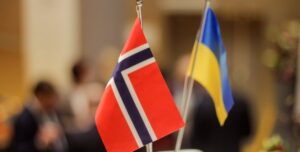
The Norwegian government has approved a decision to allocate 85 billion Norwegian kroner (1 krone = $0.1) to support Ukraine in 2026, of which 70 billion kroner will go to military aid and 15 billion kroner to support civil society, the government press service reported on Tuesday.
“In close dialogue with the Ukrainian authorities, the government has now determined the main direction of military support for Ukraine in 2026. We will use the funds where they will have the greatest effect for Ukrainians,” said Prime Minister Jonas Gahr Støre.
Priority attention in the field of military support will be given to drones, air defense, artillery ammunition, and the training and equipping of Ukrainian military personnel, the statement said.
Thus, more than 12 billion kroner will be allocated for drones and their autonomy (equipment capable of operating independently), about 9 billion kroner for air defense and F-16 fighter jets, about 6 billion kroner for maritime security, more than 8 billion kroner for international cooperation mechanisms and strategic projects, etc.
In addition, 11.5 billion kroner allocated in 2025 will be spent on military needs in 2026.
As the prime minister noted, if during the year it becomes necessary to change the areas of support, “they will be carried out in close cooperation with the Ukrainians.”
The Netherlands has increased its total financial assistance to Ukraine through the Energy Support Fund to EUR100 million, allocating additional funds to strengthen energy resilience and support critical infrastructure, according to First Deputy Prime Minister and Minister of Energy of Ukraine Denys Shmyhal.
“The Netherlands has increased its total assistance provided through the Ukraine Energy Support Fund to EUR 100 million. The Netherlands will allocate an additional EUR 35 million,” according to a statement posted on social media.
The purpose of the additional funding is to ensure a stable power supply to critical infrastructure facilities after Russian attacks, in particular by installing solar power plants on the roofs of buildings as part of the “Ray of Hope” initiative.
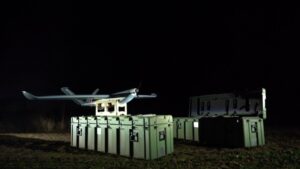
As part of Rinat Akhmetov’s Steel Front military initiative, Metinvest provided the 1st Corps of the National Guard of Ukraine (NGU) Azov with a batch of drones worth UAH 214 million, with total assistance for the year reaching UAH 600 million.
According to a statement released by the group on Wednesday, Akhmetov’s Steel Front military initiative delivered another large batch of drones to the 1st Corps of the NGU Azov. The cost of the equipment delivered is 214 million hryvnias. This delivery was the next stage in the Metinvest Group’s systematic support for the corps in 2025.
It is specified that the total amount of aid to the Azov Corps during the year reached UAH 600 million. The funds were used to provide the most critical technological solutions for the front line, as well as logistical and technical support for the units.
‘In 2025, we continued to support the 1st Corps of the National Guard of Ukraine ’Azov” in areas that are critical for combat operations: electronic warfare, UAVs, communications, as well as logistical and technical support. The total amount of this assistance is UAH 600 million,‘ said Alexander Vodoviz, Head of the Office of the CEO of Metinvest.
In turn, the 1st Corps of the National Guard of Ukraine ’Azov” emphasised that this support is very important, as modern warfare requires constant and rapid updating of the technological base.
‘In 2025, the requirements for equipment have increased significantly. REBs, drones, and secure communications determine the success of operations and save the lives of our soldiers,’ said Ivan Ignatiev, deputy commander of the corps for logistics.
Since the start of the full-scale war, Metinvest has reportedly delivered more than 1,500 UAVs to various units of the Ukrainian Armed Forces. Recently, another batch of ‘birds’ was received by the 27th Military Unit of the Ukrainian Ground Forces. The shipment included 200 FPV drones, 30 DJI Mavic FMC drones and 20 DJI Mavic 3T drones with thermal imaging cameras. Earlier, the Azov special forces brigade of the National Guard of Ukraine received a large shipment of vehicles and equipment worth UAH 40 million from Metinvest.
In total, over the course of a year and a half of full-scale war, Metinvest has allocated UAH 2 billion to support the Ukrainian army as part of Rinat Akhmetov’s Steel Front military initiative.
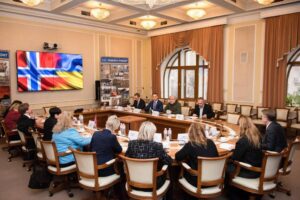
Foreign Minister Espen Barth Eide, who is visiting Kyiv, announced the allocation of 4 billion kroner in aid to Ukraine, which will be directed to the energy sector and the functioning of the Ukrainian state.
“Today in Kyiv, it is 16 degrees below zero. We can only imagine how cold it is when the electricity disappears, often for six hours at a time. This is money that Ukraine desperately needs and needs now. Several times a week, Russia attacks the infrastructure that provides electricity to ordinary people in Ukraine. Ensuring that Ukrainians can keep warm, cook food and live their lives more or less as usual is very important for them to be able to continue to endure this war. A war they are fighting on behalf of all of us,” Eide said.
It is noted that Norway is in constant dialogue with the authorities in Kyiv and other stakeholders regarding the distribution of Norwegian support to the energy sector. The goal is to meet Ukraine’s needs and share the risks. It is important to support energy production and strengthen the resilience of the energy sector.
‘It is necessary to finance the purchase of gas that can be delivered quickly. At the same time, it is necessary to repair damaged infrastructure and purchase spare parts,’ Eide explained.
Norway’s contribution will be channelled through partners such as the European Bank for Reconstruction and Development (EBRD) and the European Energy Community, which aims to extend the EU’s internal energy market to third countries such as Ukraine. This has been agreed with other key donors.
The official exchange rate on Monday was 1 Norwegian krone to 4.2606 hryvnia (or about $0.1).



